Reconstructive nasal surgery.
The nose is not only a central element of our face but also a sensitive organ that can be severely affected by accidents, illness or congenital malformations. A reconstructive nose operation — also called reconstructive rhinoplasty — aims to restore the form and function of the nose as far as possible.
Restoring lost or damaged structures.
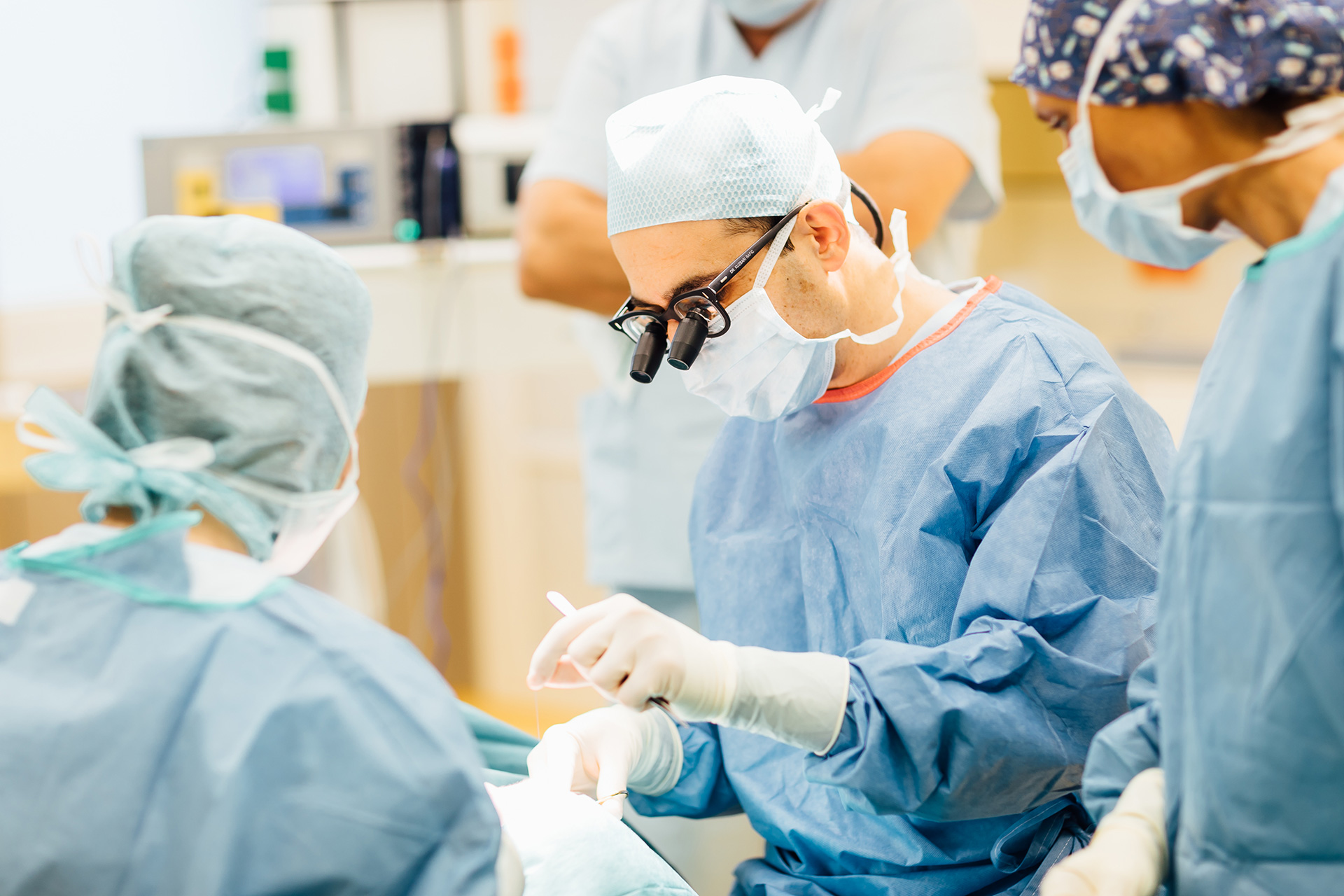
Reconstructive nasal surgery goes beyond pure aesthetics: it reconstructs lost or damaged structures of the nose in order to restore both function (e.g. breathing) and appearance. It is frequently medically necessary and is combined with further treatments — for instance with the removal of tumours or the management of the consequences of accidents.
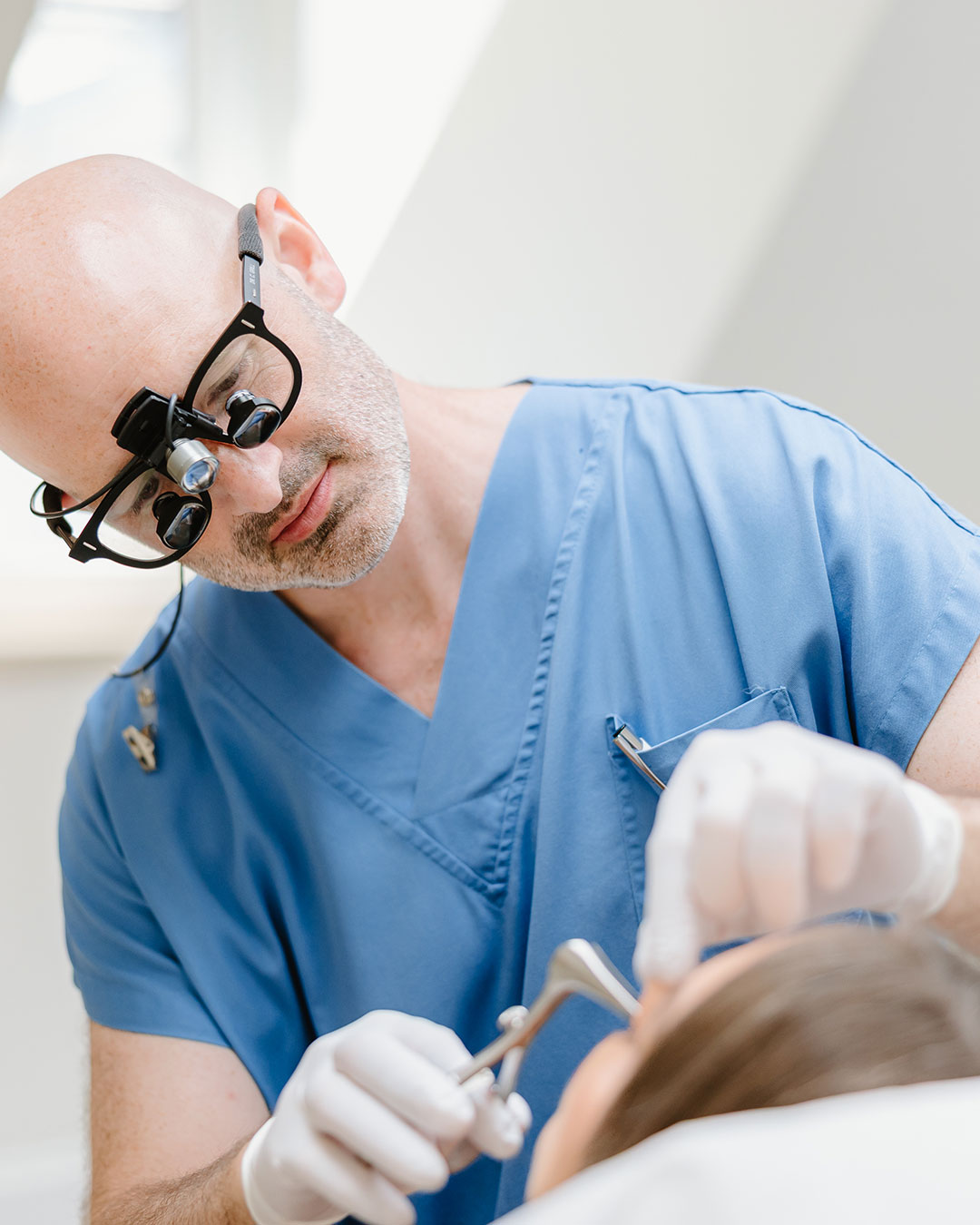
At the Kuzbari Centre these complex operations are carried out by our specialists — Univ.-Doz. Dr. Rafic Kuzbari, Dr. Christoph Grill and DDr. Jessica Wittmann. Thanks to modern techniques such as cartilage or skin grafts, flap techniques (flap) and, in selected cases, custom-made implants, we achieve results that look as natural as possible. The patient's own cartilage remains the gold standard. Our Vectra 3D simulation makes it possible to visualise, before the operation, how the reconstructed nose will look and function.
Why is cartilage grafted?
Univ. Doz. Dr Rafic Kuzbari explains why cartilage is grafted in rhinoplasty and how it stabilises the shape in the long term.

Which situations we treat
Reconstructive nose surgery is usually made necessary by traumatic events or illnesses. These are the most common scenarios we encounter at the Kuzbari Centre. What they have in common: tissue is missing, and this tissue has to be replaced layer by layer — not merely covered at the surface.
-
Accidents and injuries
With fractures caused by accidents (car accidents or falls, for example) the nose can be deformed or shattered. We reconstruct the bone and cartilage structure with the body's own cartilage — from the septum, the ear or a rib, for example — and thus restore stability and shape.
-
Tumours
Skin cancer (basal cell carcinoma in particular, more rarely melanoma) or tumours in the nose often require the removal of tissue. In cooperation with oncologists we reconstruct these areas step by step — from wound care through tissue grafts to fine modelling.
-
Congenital malformations
Clefts (a cleft lip and palate involving the nose, for example) or asymmetrical noses can affect self-image and social perception from birth. We correct these with step-by-step operations — in childhood, adolescence or in adults.
-
Scars and irregularities
Scars from previous operations, burns or infections can affect the nose and weigh on the mind. We use laser therapies, dermabrasion or surgical revisions to smooth scars and improve the texture of the skin.
Three layers — and each one must be replaced.
A nose consists of three layers that work together like a tent: the lining on the inside, the framework of cartilage and bone in the middle and the outer cover of skin on the outside. In a reconstruction one simple but unrelenting rule applies: every layer that is missing must be replaced. If one of them is skipped, the result will not hold.
The lining. It is the layer nobody thinks of — and the one on which reconstructions most often fail. Without inner lining the tissue contracts, the nasal opening narrows, and a framework that has been built up is drawn inwards. Depending on the size of the defect, it is replaced with mucous membrane from the nose itself, with a turn-in technique using neighbouring tissue or with a thin graft.
The framework. It gives the nose its shape and keeps the airway open. It is replaced with the patient's own cartilage — from the nasal septum, the ear or the rib area. Ear (conchal) cartilage is naturally curved and is particularly suitable for the alar rims and the nasal tip; rib cartilage provides volume and firmness for load-bearing parts. The body's own material is accepted as its own tissue and becomes incorporated — no foreign body remains under the skin.
The outer cover. Small defects can be closed directly or covered with a skin graft. Larger defects require tissue that brings its own blood supply with it — a flap. Here skin is moved from the neighbouring area without detaching it completely from its blood supply.
One detail that shapes the result: the skin of the nose is not the same everywhere. On the nose bridge it is thin and mobile; at the nasal tip and on the alar rims it is thick, rich in sebaceous glands and firmly attached. Replacement tissue is therefore chosen according to its similarity — skin from the forehead resembles the nasal tip more closely than skin from the neck. And that is why, wherever possible, reconstruction is carried out in whole aesthetic units rather than in patches: a scar running along the natural border of an alar rim is barely noticeable; the same scar in the middle of the alar rim is always noticeable.
Why a reconstruction often requires several steps.
Unlike an aesthetic rhinoplasty, one procedure is rarely enough in larger reconstructions. This is not a setback and not a sign that something has not worked — it is the method.
The reason lies in the blood supply. Transferred tissue needs weeks before it has built up its own vascular connections in its new location. If work continues too early, the very tissue on which the reconstruction is built is put at risk. The first step is therefore followed by a waiting period of usually several weeks before the next one is due.
A typical sequence for a larger defect looks like this: in the first step, the lining and the framework are built up and the outer cover is laid on. In the second step, a few weeks later, the tissue bridge through which the flap was initially supplied is divided, and the shape is roughly adjusted. In the third step comes the refinement: thinning, contouring, scar revision.
We discuss this path in full before the first procedure takes place — with all its stages, waiting periods and intermediate states. Knowing that the state after the first step is an intermediate one makes it considerably easier to bear. And throughout this entire time you have the mobile number of your surgeon.
„Patients with traumatic histories in particular are especially close to our hearts — we do everything we can to remove unwanted irregularities.“
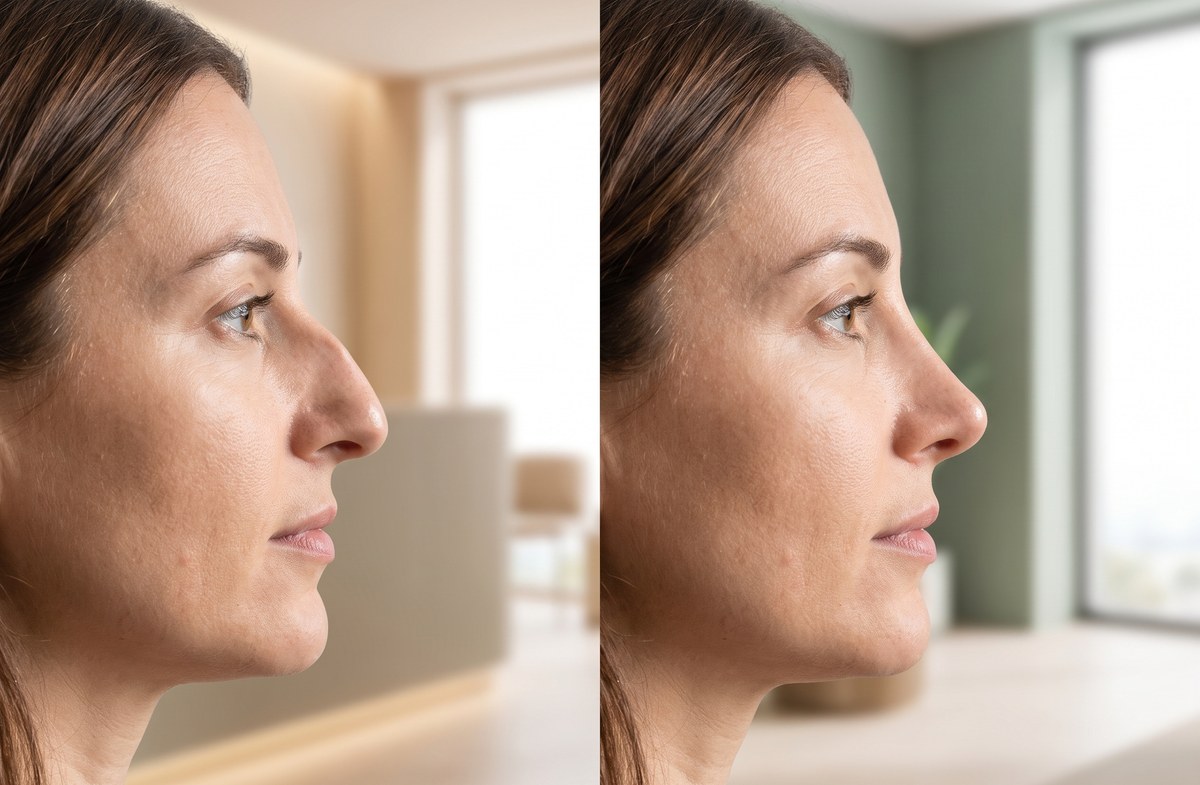
Elisabeth's new nose after an accident
For over 20 years Elisabeth suffered from her nasal hump after an accident — today she enjoys looking in the mirror again.

Why reconstructive surgery relieves the mind too.
The emotional aspect is central: many patients report distress or social withdrawal because of visible defects. A successful reconstruction can restore an inconspicuous, harmonious appearance that strengthens self-confidence.
What this means in concrete terms is often described by patients with the same image: that other people's eyes no longer linger on their nose. The aim is not perfection but inconspicuousness — the return to a face that is not talked about.
At the Kuzbari Centre we attach particular importance to empathetic care. In this situation people rarely come with a surgical question alone; often there is a diagnosis, an accident or a long history behind it. We take time for that — and we say openly what can be achieved at which step, so that nobody hopes for a picture we cannot deliver.
We strive for results that appear inconspicuous and natural — combining surgical precision with the necessary sensitivity.
The previously operated nose is one of our specialist areas.
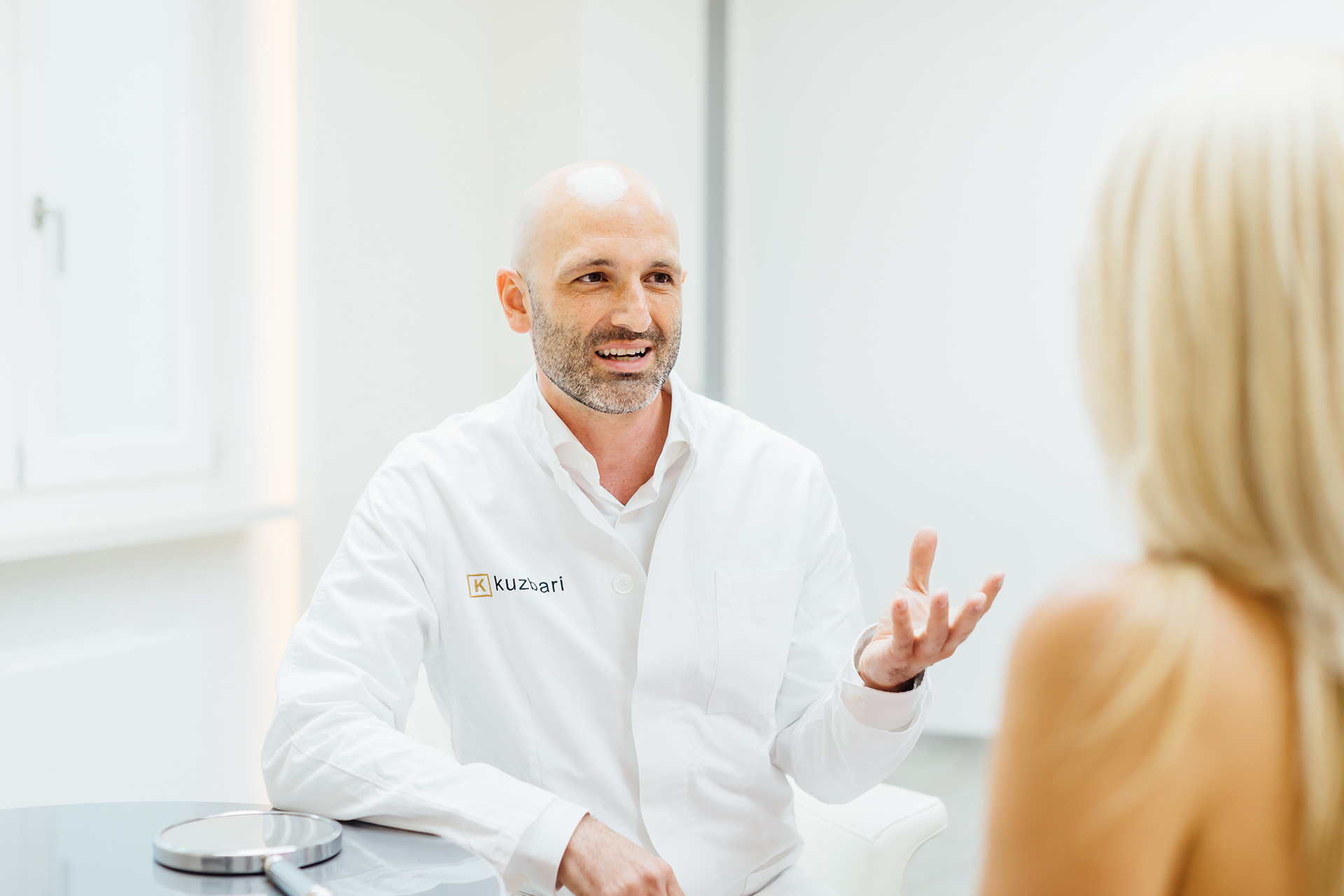
Four in ten nose operations at the Kuzbari Centre are revision rhinoplasties on a nose that has already been operated on. These procedures require particular experience: the tissue is scarred, cartilage is sometimes missing, and the starting point is different for every patient. We deliberately take on such cases.
In a reconstructive context this means two things. On the one hand, there are noses in which structure is missing after an earlier procedure — a collapsed nose bridge, a retracted nasal tip, an alar rim that has been drawn inwards. Here the focus is on building up, not on reduction: the framework is restored, usually with cartilage from the ear or the rib area, because the nasal septum is often no longer available as a source.
On the other hand, the tissue behaves differently. Scars connect layers that ought to be separable from one another; exposing them takes longer and demands greater care, especially under thin skin. And scar tissue contracts — a reconstruction therefore has to be built more robustly than a first operation, because it has to withstand this pull.
Healing also takes more time. Here the final result is to be expected at twelve to eighteen months rather than at six. We say this before the operation, plan the follow-up appointments accordingly and monitor the course with photographic documentation.
A reconstructed nose must also be able to breathe.
In a reconstruction the appearance is usually in the foreground — understandably, because a visible defect has an immediate effect on everyday life. Even so, function must not be lost along the way, and it is the part that is difficult to make up for later.
Two points are decisive. The first is the lining: if it is missing, the tissue contracts and the airway narrows — which is why it is always reconstructed as well, even though nobody sees it from the outside. The second is the framework: it keeps the nasal opening and the internal valves open. A purely skin-covering closure without a framework looks inconspicuous at first and, over months, leads to the alar rim being drawn inwards.
That is why, even with defects that appear purely external, we consistently build up the framework as well and stabilise the nasal tip in a cartilage-supported manner. This considerably reduces the risk of drooping of the nasal tip over the years — and all the more so in reconstructed noses, in which scar contraction is at work.
Without time pressure — particularly in a reconstruction.
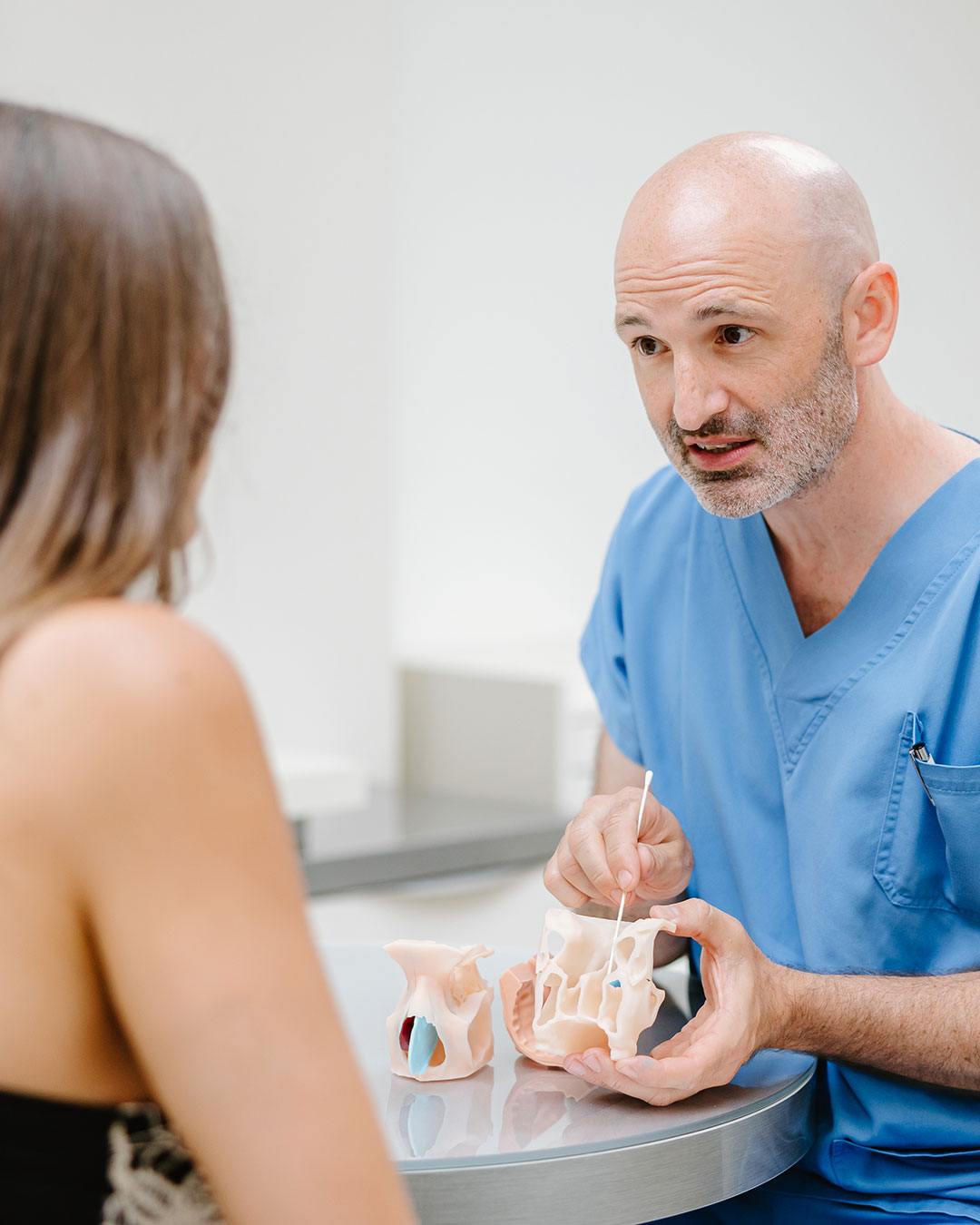
A rhinoplasty with us takes one to four hours. This range is intentional: we operate in our own operating theatres and therefore without time pressure — for as long as it takes until every detail is right. How long a procedure takes is decided by the findings, not by the appointment schedule.
Reconstructive procedures regularly lie at the upper end of this range, and with extensive defects beyond it. There are three layers instead of one, there is tissue from several donor sites, and every suture determines the blood supply of the transferred tissue. Nothing here can be shortened without jeopardising the result.
That we are able to take this time is due to the fact that the operating theatres belong to us and that our team performs only nose and facial operations. Nobody is waiting for the room.
How a reconstruction proceeds
Every case is different — this sequence describes the general framework within which we work, and what you can expect at each stage.
-
First consultation and assessment
We listen, examine the nose from the outside and from the inside, and establish which of the three layers are affected. In the case of a tumour disease we coordinate with the treating doctors; the reconstruction only begins once the lesion has been completely removed and the tissue examination is complete.
-
Planning the overall concept
We determine where the lining, the framework and the outer cover will come from, in how many steps the work will be done and how long the waiting periods in between will be. You learn the complete pathway before the first procedure takes place — including the intermediate states.
-
First procedure
Building up the lining and the framework, covering with the outer cover. After this step the nose does not yet look like the result; it is swollen and the contours are rough. This is to be expected and is part of the method.
-
Waiting time
Transferred tissue needs several weeks to build up its own vascular connections. During this time we see you regularly for check-ups and support the wound care. You have your surgeon's mobile number throughout.
-
Second procedure
Division of the tissue bridge, rough adjustment of the shape and, if required, addition to the framework. From this point on it becomes apparent what the reconstruction is leading to.
-
Refinement
Thinning, contouring, adjusting the transitions, scar revision. This step turns a covered nose into an inconspicuous one — and it is not skipped, even if the interim result already looks good.
-
Aftercare over months
Scars mature over one to two years. We accompany this course with check-ups, photographic documentation and clear recommendations — above all consistent sun protection, because fresh scars can darken under UV light.
What a reconstruction can achieve — and what it cannot.
What is readily achievable: a nose that no longer stands out in the face. A restored contour, an open airway, scars that run along natural borders and fade over the years. For many patients the decisive point is not perfection, but that other people's eyes no longer linger on the nose.
There are limits too, and we name them. A reconstructed nose is not identical to the original one. Scars remain visible — they become inconspicuous, but not invisible. Transferred tissue partly retains the properties of its origin, for instance in colour and texture. Sensation in the reconstructed skin often remains permanently altered. And how much can be achieved over several steps depends on the size of the defect, on the blood supply, on any radiotherapy in your history and on smoking: nicotine considerably impairs the blood supply of transferred tissue — it is the most important point that you yourself can influence.
And the time frame. A reconstruction is a path over months, sometimes over a year. Anyone who knows this beforehand walks it differently from someone who had hoped for a single operation. That is why we set out the entire plan before the first procedure.
The Kuzbari surgical wing.
The Kuzbari Centre has its own state-of-the-art operating theatres — perfectly equipped for rhinoplasty, with the luxury of completely free scheduling. Our well-practised team of doctors, anaesthetists and assistants performs only nose and facial operations.
For a reconstruction this is more than comfort. A procedure that extends over several steps requires predictability: that the same surgeon, the same team and the same routines are available from the first to the last stage. And it requires time that is governed by the findings and not by a theatre schedule.
Why replacement tissue is chosen according to similarity.
The skin of the nose is not the same everywhere, and this difference determines how inconspicuous a reconstruction appears in the end.
On the nose bridge and on the side walls the skin is thin, mobile and relatively smooth. At the nasal tip and on the alar rims it is thick, rich in sebaceous glands, firmly attached to the underlying tissue and noticeably coarser in texture. When tissue is moved from one place to another, it brings its properties with it — thin skin on the nasal tip looks sunken and shiny, thick skin on the nose bridge looks applied on top.
Replacement tissue is therefore chosen according to its similarity, not according to its availability. For the nasal tip, skin from the forehead area is more suitable than skin from the neck area, because it is closer in thickness and texture. For small defects on the nose bridge it is often sufficient to move neighbouring skin.
Equally important is the question of where the scar will lie. The nose has natural borders — the rim of the nostril, the fold towards the cheek, the line between the nose bridge and the side wall. A scar running along such a border is read by the eye as a shadow and overlooked. The same scar in the middle of a surface is permanently noticeable. That is why we reconstruct in whole aesthetic units wherever possible — even if this means replacing somewhat more tissue than the size of the defect itself.
Reconstructive nasal surgery — key facts
| Aim | Restoration of form and function after loss or damage |
|---|---|
| Operation | Our own surgical wing at the Kuzbari Centre |
| Duration of surgery | 1 – 4 hours longer with extensive defects |
| Number of steps | One procedure for small defects, several for larger ones |
| Stay | As a rule 1 night as an inpatient |
| Material | The patient's own cartilage from the nasal septum, the ear or the rib area |
| Scar maturation | 1 – 2 years |
| Specialists | Kuzbari, Grill, Wittmann |
Corrections that grow with life.
Congenital differences of the nose range from pronounced asymmetry to involvement of the nose in a cleft. What sets them apart from an accident or a tumour case: there is no earlier state to take as a reference — and there is a long shared history with one's own face.
Where the nose is involved in a cleft, one side is typically affected: the alar rim sits flatter and broader, the nasal tip deviates, the columella is tilted, and the nasal opening on this side is often narrower. Because the soft tissues, the cartilage and the bony base are all affected together, the work is done in several steps — matched to growth, to the situation at school and at work, and to what really needs to be done at each stage of life.
A final correction is usually carried out once facial growth is complete. It then generally combines several aims: the symmetry of the nasal tip, the position of the columella, the shape of the alar rim and the width of the airway on the affected side. In doing so we consistently stabilise the nasal tip in a cartilage-supported manner, because scar contraction is particularly pronounced in such noses.
And a correction is also readily possible in adulthood. Many patients come only then — because as adults they decide on it for themselves. That is a good moment.
How the reconstruction follows the tumour treatment.
The nose is one of the most common sites for non-melanoma skin cancer, because it is exposed to the sun throughout life. For those affected this means a double burden: the diagnosis itself and a defect in the middle of the face.
The order is unambiguous. First the tumour must be completely removed and the result of the tissue examination secured. Only then is the reconstruction carried out. This is not negotiable — a reconstruction over remaining tumour tissue would be a serious mistake. Sometimes this means leaving a defect open and dressed for a few days until the findings are available. We prepare you for this, so that this intermediate state does not come as a surprise.
Then it is planned, not improvised. The size and the position of the defect, the layers affected and the quality of the surrounding skin determine the concept. If the defect lies at the nasal tip or on the alar rim, reconstruction is often carried out in whole aesthetic units — because scars along natural borders are barely noticeable, and scars in the middle of a surface always are.
Working together. In the case of tumour disease we coordinate with the treating dermatologists and oncologists. Each of them contributes what they are responsible for — and the treatment plan is established jointly, not improvised one step after another.
And we take time for what lies behind the diagnosis. In this situation patients rarely come with a surgical question alone.
What matters immediately and what is planned later.
After an accident, two things need to be distinguished: acute care and reconstruction.
Acutely, one thing above all matters — whether blood has collected between the cartilage and the mucous membrane of the nasal septum. If that happens, the cartilage is cut off from its nutrition and can perish within days. This is one of the few genuine emergencies in nasal surgery and a frequent reason for a nose collapsing weeks later. Anyone who, after a blow to the nose, suddenly cannot get any air through either side should have this assessed quickly.
Everything else is planned. Once the acute phase is over there is no time pressure: reconstruction is carried out when the tissue has healed and the situation is stable. As a rule, a planned correction leads to a more precise result than an immediate measure, because swelling, scarring and the actual loss of structure only become apparent over time.
Typical consequences that we then correct: a nasal bone that has healed in a displaced position, a buckled nasal septum with impaired breathing, a collapsed nose bridge and scars that distort the contour. Often everything is connected and is treated within a single concept.
For your first consultation
Questions that matter in a reconstruction
- Which of the three layers — lining, framework, outer cover — is missing in my case?
- Where does the tissue for each of these layers come from?
- In how many steps will the work be done, and how long does it take altogether?
- How will I look between the individual steps?
- Where will the scars run?
- Will the framework be built up as well, even if the defect appears external?
- Will my nasal breathing be preserved?
- What does radiotherapy in my history mean for healing?
- What can I contribute myself to the success?
- Who can I reach if something is unclear between the steps?
Related topics
-

Saddle nose & nasal reconstruction
When the supporting structure has been lost and the nose bridge collapses.
Learn more → -
Revision rhinoplasty
Four in ten nose operations with us are revision rhinoplasties on a nose that has already been operated on.
Learn more → -

Functional correction
So that a reconstructed nose does not only look right, but also breathes.
Learn more →
Your reconstruction from start to finish
Before the first procedure
- Detailed first consultation, without obligation
- Examination from the outside and from within
- Coordination with the treating specialists
- Complete overall concept with all steps and waiting periods
- Vectra 3D simulation where it is useful
- Written cost estimate
During the treatment
- Our own operating theatre at the Kuzbari Centre
- Reconstruction of all affected layers
- The patient's own cartilage as the first choice for the framework
- Cartilage-supported stabilisation of the nasal tip
- Check-up appointments between the individual steps
- Your surgeon reachable throughout
Afterwards
- Refinement as a separate, firmly scheduled step
- Scar care over one to two years
- Clear recommendations on sun protection
- Photographic documentation of the entire course
- All follow-up appointments up to the final result included
Answers on reconstructive nasal surgery
How many operations will I need?
Small defects can often be treated in a single procedure. Larger reconstructions are carried out in several steps with waiting periods in between, because transferred tissue needs weeks to build up its own vascular connections. A typical pathway comprises building up, division of the tissue bridge and refinement. We set out the complete plan before the first procedure.
Why do three layers have to be reconstructed?
Because a nose consists of lining, framework and outer cover, and each layer has a task. If the lining is missing, the tissue contracts and the airway narrows. If the framework is missing, the alar rim is drawn inwards over months. If the outer cover is missing, the defect is visible. If one layer is skipped, the result will not hold.
What is a flap?
Here skin from the neighbouring area is moved to the nose without detaching it completely from its blood supply — the transferred tissue brings its own blood supply with it. That is why, in larger defects, it heals in more reliably than a free skin graft, and at the same time it is the reason for the staged approach: the tissue bridge is only divided once its own vessels have grown in the new location.
Where does the cartilage for the framework come from?
From the nasal septum, the ear or the rib area. Ear (conchal) cartilage is naturally curved and is particularly suitable for the alar rims and the nasal tip; rib cartilage provides volume and firmness for load-bearing parts. The body's own material is accepted as its own tissue and becomes incorporated — no foreign body remains under the skin. We use custom-made implants only in selected situations, and we discuss this expressly.
How noticeable will the scars remain?
Scars remain visible — they become inconspicuous, but not invisible. We do not promise otherwise. What we do to keep them as inconspicuous as possible: we place them along natural borders and reconstruct, where possible, in whole aesthetic units. Over one to two years scars mature and fade; consistent sun protection during this time is the most important contribution from your side.
When can reconstruction take place after removal of skin cancer?
Only once the tumour has been completely removed and the result of the tissue examination is secured. This is not negotiable. Sometimes it means leaving a defect dressed and open for a few days until the findings are available — we prepare you for this, so that this intermediate state does not come as a surprise.
Does it matter whether I smoke?
Yes, and more so than with any other procedure on the nose. Nicotine considerably impairs the blood supply of transferred tissue — and the blood supply determines whether a reconstruction heals in. It is the most important point that you yourself can influence, and we raise it openly at the first consultation.
What if I have had radiotherapy?
Irradiated tissue has a poorer blood supply and heals more slowly. This does not rule out a reconstruction, but it does change the planning: we choose tissue with its own strong blood supply, allow for longer waiting periods and proceed in smaller steps. So please do tell us about any radiotherapy in your history.
Will my nasal breathing be preserved?
That is an explicit aim of every reconstruction. That is why we build up the lining and the framework as well, even when the defect appears external: without lining the airway narrows through contraction, and without a framework the alar rim is drawn inwards on breathing in. A purely skin-covering closure looks inconspicuous at first and leads over months to exactly these problems.
Will the nose be exactly as it was before?
No — a reconstructed nose is not identical to the original one. Transferred tissue partly retains the properties of its origin in colour and texture, and sensation in the reconstructed skin often remains permanently altered. The aim is a result in which other people's eyes no longer linger on the nose. For most patients that is precisely the decisive point.
Are congenital malformations corrected as well?
Yes. This includes asymmetrical noses and involvement of the nose in clefts. Such corrections are often carried out in several steps over a number of years — matched to growth and to the patient's circumstances in life. A correction is also readily possible in adulthood.
Can a nose that has already been operated on be reconstructed?
Yes. Four in ten nose operations at the Kuzbari Centre are revision rhinoplasties on a nose that has already been operated on. These procedures require particular experience: the tissue is scarred, cartilage is sometimes missing, and the starting point is different for every patient. We deliberately take on such cases — in reconstructive terms the focus is on building up, not on reduction.
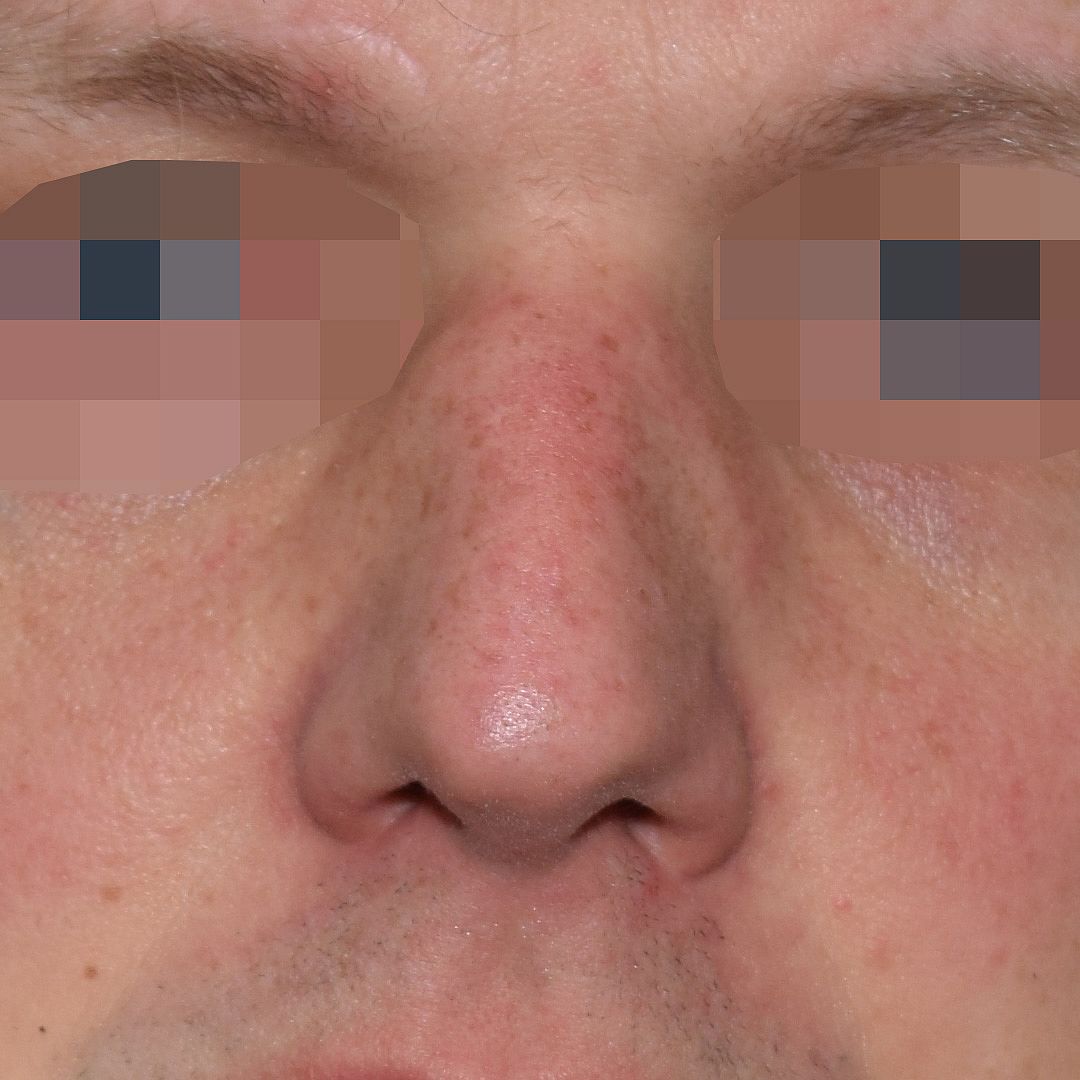
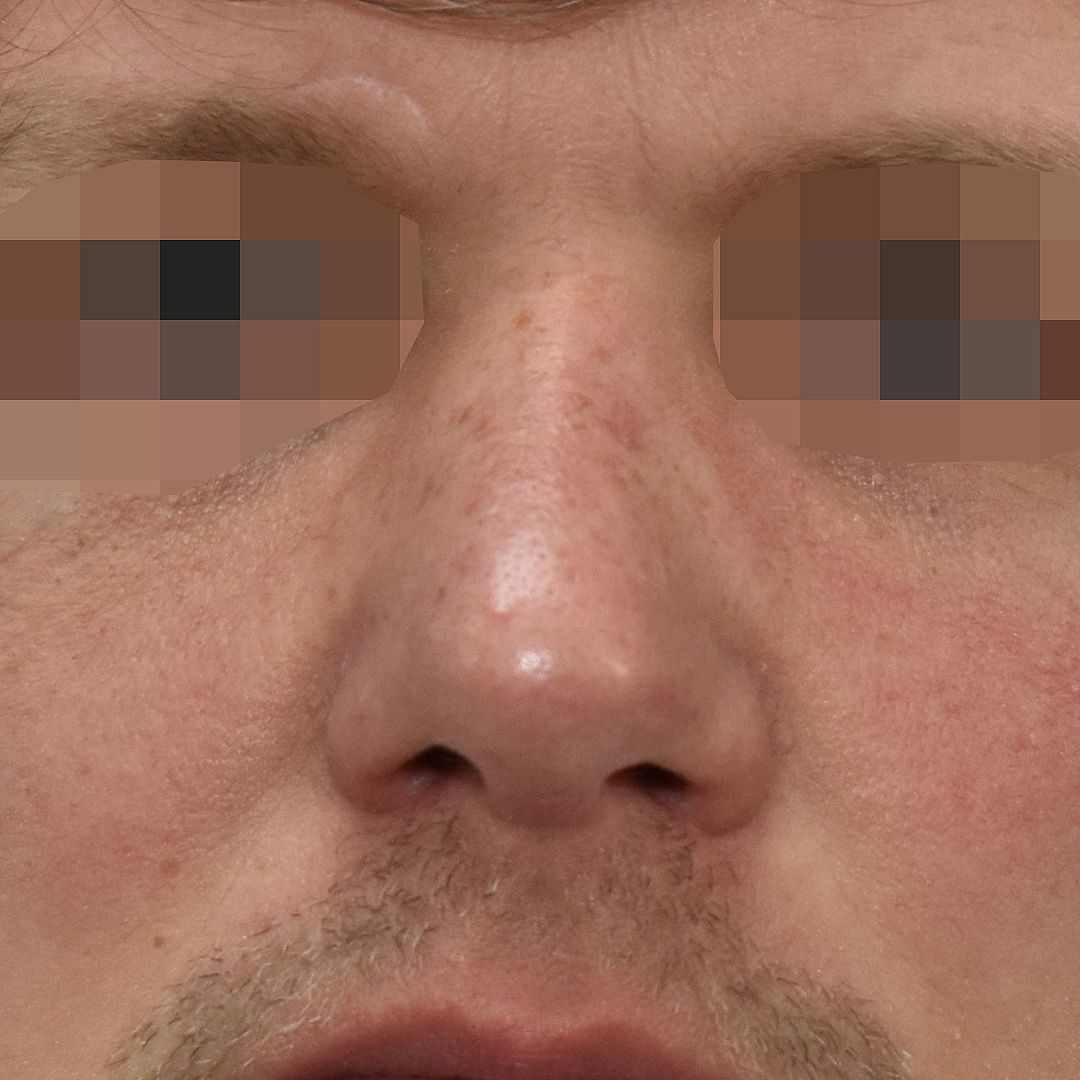
Rhinoplasty, 39
Operation performed: Functional and aesthetic nose surgery with a rib cartilage graft.


A result that lasts.
An initial consultation with three-dimensional simulation, a technique that suits your nose, and an operating time that follows the findings — this effort is the reason why rhinoplasty with us has its price. It is also the reason why the result is meant to hold: for a lifetime, not for a few years.
Three surgeons for your nasal reconstruction
-
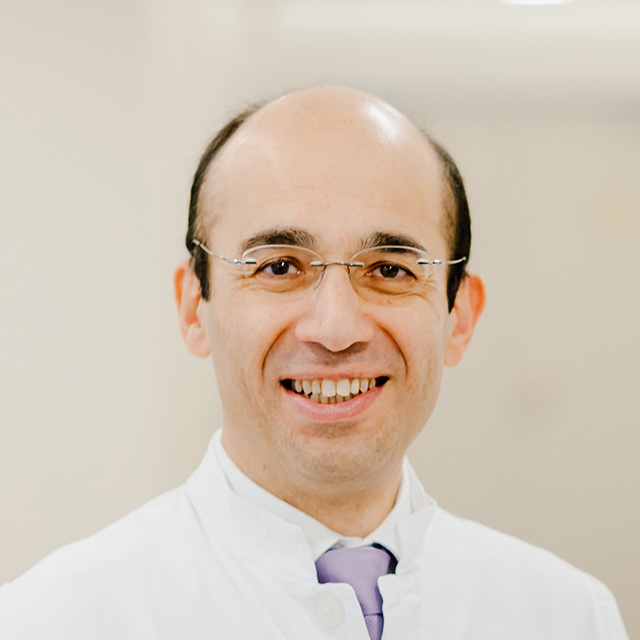
Univ. Doz. Dr Rafic Kuzbari
Specialist in Plastic, Aesthetic and Reconstructive Surgery
Over 30 years of experience; internationally regarded as an expert in revision procedures and complex rhinoplasty.
-
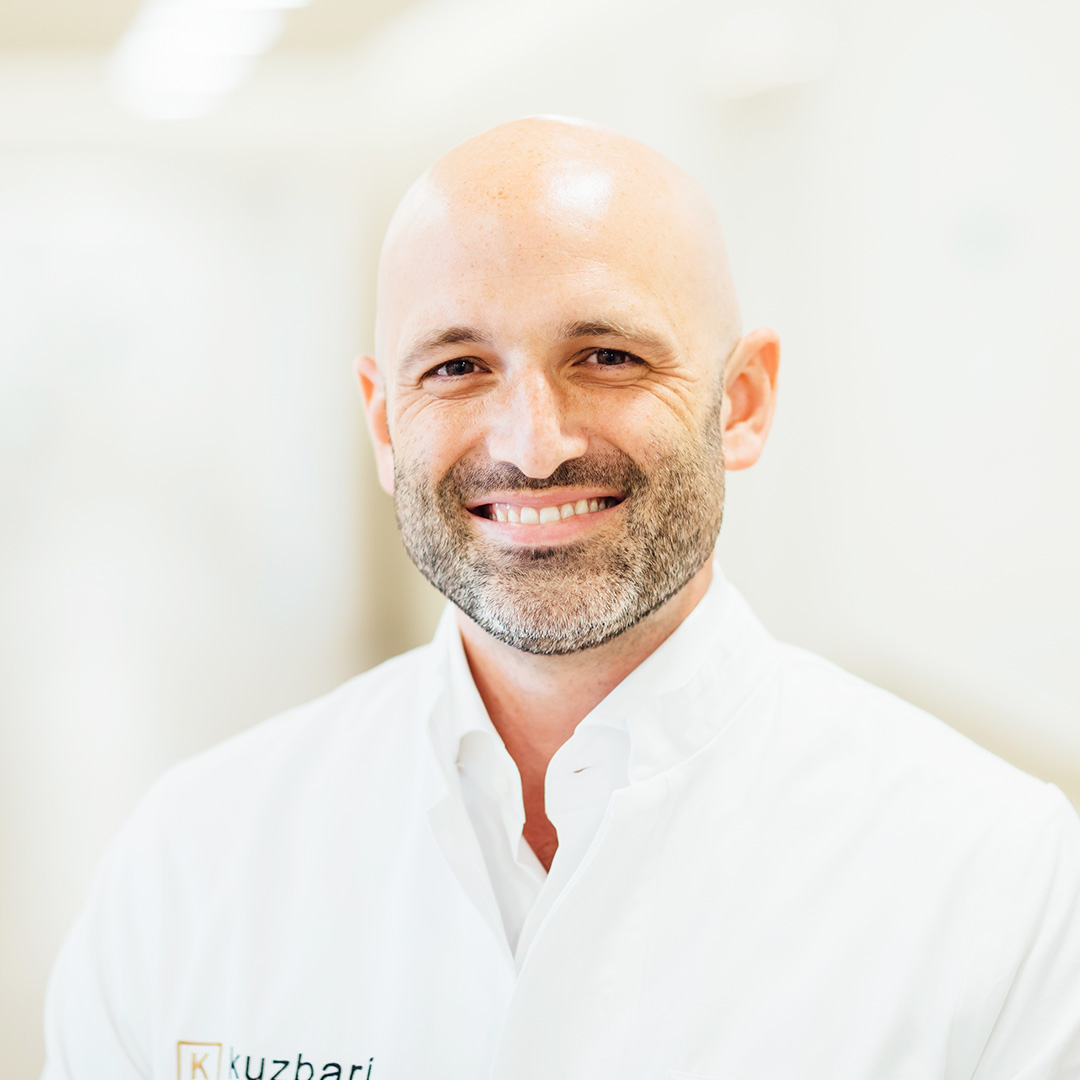
Dr Christoph Grill
Specialist in Plastic, Aesthetic and Reconstructive Surgery
A specialist in aesthetic and functional rhinoplasty with a focus on natural results.
-
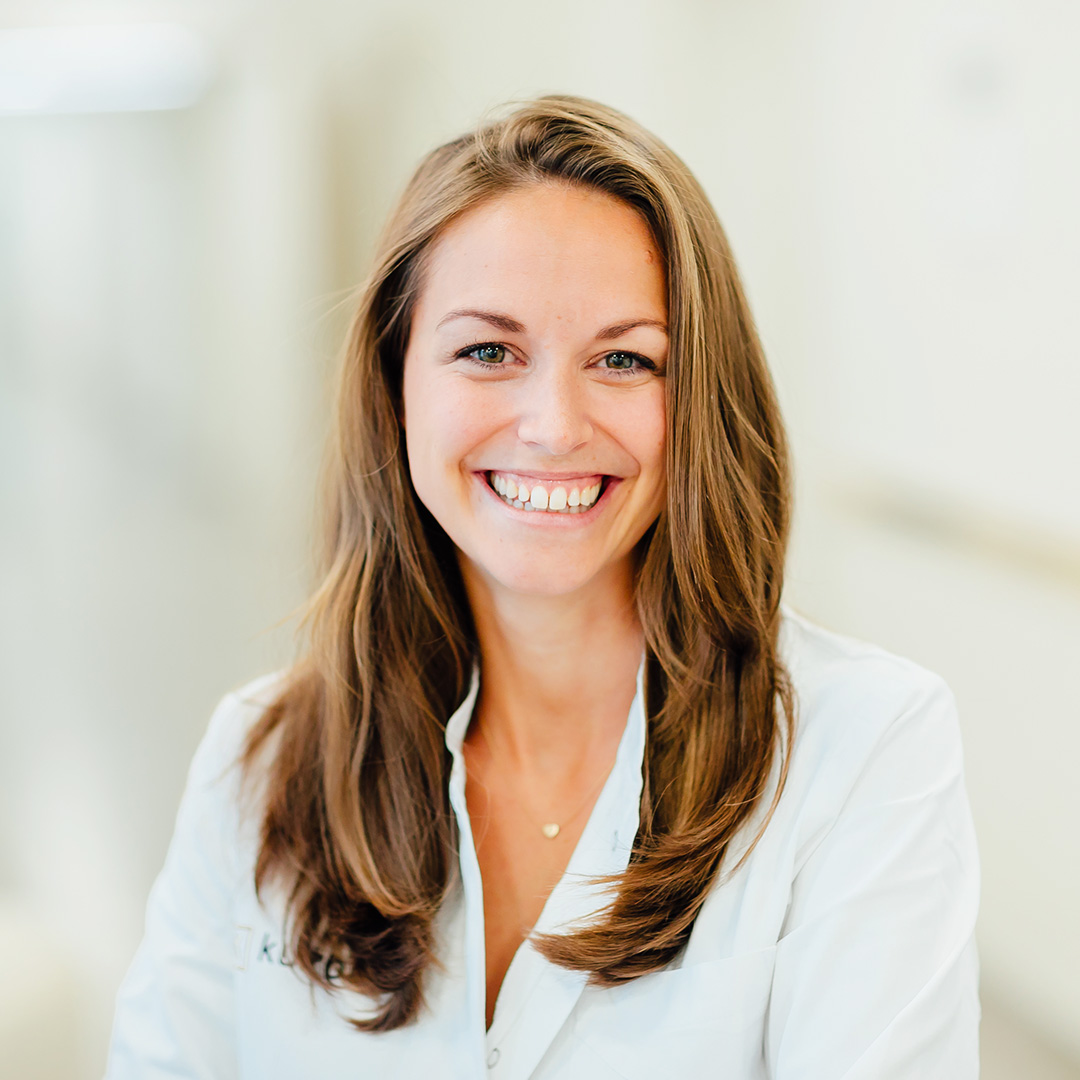
DDr. Jessica Wittmann
Specialist in Oral and Maxillofacial Surgery
Combines the surgical and the aesthetic eye: precise nasal surgery with a sense for harmonious proportions.
Book your rhinoplasty consultation now
Our rhinoplasty specialists
Univ. Doz. Dr Rafic Kuzbari
Specialist in Plastic, Aesthetic and Reconstructive Surgery
Dr Christoph Grill
Specialist in Plastic, Aesthetic and Reconstructive Surgery
DDr. Jessica Wittmann
Specialist in Oral and Maxillofacial Surgery