Functional rhinoplasty.
Our nose is not only a central feature of our face but above all an essential organ for breathing. When nasal breathing is obstructed, that can weigh considerably on daily life — from exhaustion through restless sleep to a drop in performance.

Restoring unrestricted nasal breathing.
Functional rhinoplasty, also called septorhinoplasty or rhinoplasty with a functional focus, aims primarily at restoring unrestricted nasal breathing. It corrects anatomical problems in the nose that obstruct the airflow.
At the Kuzbari Centre these procedures are carried out by experienced specialists such as Univ. Doz. Dr Rafic Kuzbari, Dr Christoph Grill and DDr. Jessica Wittmann. Thanks to our Vectra 3D simulation you can visualise in advance how the correction will improve your breathing and, optionally, refine the external shape of the nose as well. This operation is medically indicated and is carried out as an inpatient procedure with an overnight stay.
Which causes we treat surgically
Many obstructions to breathing arise from structural problems in the nose. They can be congenital, caused by accidents or infections, or develop with age. The symptoms range from chronic congestion through mouth breathing to snoring, disturbed sleep or headaches.
-
A deviated septum (septal deviation)
A deviation of the septum often blocks one side, which leads to one-sided congestion, frequent sinus infections or disturbed sleep. We straighten the septum in a septoplasty — often with the body's own cartilage for stability.
-
Enlarged turbinates (turbinate hypertrophy)
The turbinates regulate the moisture and temperature of the air, but can swell through allergies, infections or environmental influences. A turbinoplasty reduces these structures gently, without impairing their function.
-
Collapse of the nasal valves (nasal valve insufficiency)
Weak nasal walls fold in when breathing in, which leads to breathlessness — often during sport or when lying down. We stabilise the valves with spreader grafts or cartilage implants.
-
Further causes
Diseases of the paranasal sinuses (sinusitis or polyps, for example), scars from previous surgery or a crooked external nose can also disturb the breathing. With sinus findings we work together with ENT specialists — the sinus operation itself belongs in their field, while we coordinate and carry out the nasal surgery.
Where the air is actually held up inside the nose.
The nose is not an open tube. It is a system of narrow points that slows the air, makes it swirl, warms, moistens and cleans it — which is precisely why nasal breathing feels different from mouth breathing. Breathing is almost always obstructed at one of four places, and each of them calls for a different treatment.
The internal nasal valve. A narrow cleft between the nasal septum and the lower edge of the upper lateral cartilages, a few millimetres wide — the narrowest point of the entire airway, and not visible from the outside. Even a slight narrowing has a large effect here, because the resistance rises disproportionately as the width decreases.
The nasal septum. It stands vertically in the middle and separates the airways. If it is bent, it narrows one side — often so gradually since childhood that those affected take it for normal.
The turbinates. Three paired, shell-shaped projections on the side wall, covered with mucous membrane that has a rich blood supply. They are not an obstacle but the climate organ of the nose: they warm and moisten the air. If they swell permanently, they narrow the passage.
The external nasal valve. The region of the nostrils, held open by the lateral crus of the alar cartilage. If these cartilages are weak or bent inwards, the side wall of the nostril is drawn inwards on forceful inhalation.
One detail that surprises many: the turbinates swell and subside in alternation — every few hours one side takes on more work than the other. This normal alternation goes unnoticed as long as both sides are clear. If one side is permanently narrow, it is noticed immediately: at night the clear side changes with the sleeping position, and during the day there are phases in which you get almost no air at all. Anyone who recognises this usually has more than just a blocked nose.
What permanently obstructed nasal breathing does to everyday life.
A blocked nose is regarded as a trifle. Anyone who has lived with one for years experiences it differently — and usually not as a problem of the nose, but as a series of complaints that at first sight have nothing to do with one another.
Sleep. Anyone who does not breathe through the nose at night switches to mouth breathing. Sleep becomes more restless, you wake more often, the throat is dry in the morning and the lips are chapped. Many of those affected do not consider themselves poor sleepers — they simply know nothing else.
Performance. Being short of sleep costs concentration. During exercise the effect is immediate: the nose becomes the bottleneck, you switch to mouth breathing sooner and tire more quickly.
The nose itself. Mouth breathing bypasses the air-conditioning system of the nose — the air arrives in the throat cold, dry and unfiltered. Sore throats and lingering colds become more frequent. And the permanently irritated mucous membrane swells further, which compounds the situation.
Reaching for the nasal spray. Decongestant sprays work immediately and reliably — and that is precisely where their danger lies. With continuous use, the mucous membrane swells more strongly than before each time the effect wears off. What began as a help becomes a dependence that masks the actual condition.
What matters to us about this: these complaints are not a price that has to be paid. Where an anatomical narrow point is the underlying cause, it can be corrected — and most patients, once healed, describe not so much a freer nose as better sleep.
Self-assessment
Signs that point to an anatomical narrow point
The more of these you recognise, the more likely a structural cause is — and the more worthwhile an examination becomes.
- You breathe through your mouth at night and wake up with a dry throat.
- One side is permanently narrower than the other.
- During exercise, nasal breathing is not sufficient.
- When you lie down, your breathing becomes markedly worse depending on the side.
- You regularly use a decongestant nasal spray.
- Your sleep is restless and you are tired during the day.
- You snore — or are told that you do.
- When you pull the alar rim outwards with a finger, you can breathe better straight away.
- You have had a broken nose or a heavy blow to the nose.
- Your nose is visibly crooked.
- You frequently have headaches or a feeling of pressure in the face.
- Your colds last noticeably long.
This list is no substitute for an examination — it helps you to prepare for the consultation.
What we look at before we recommend anything.
A functional rhinoplasty does not begin with a technique, but with the question of where exactly the air is being held up. That question can only be answered by an examination from the inside — a nose that looks unremarkable from the outside can be considerably narrowed within, and the reverse is also true.
We look at the nasal septum along its entire length, assess the size and condition of the turbinates and examine the internal nasal valve. We test the external nasal valve during forceful inhalation: if the side wall of the nostril is drawn inwards, we see it. Added to this is a look at the mucous membrane itself, because an irritated or permanently swollen mucous membrane has causes other than a bony narrow point — and needs a different treatment.
Your own account is just as important: since when, on which side, when it is particularly bad, what helps. A broken nose in your history, including one that went unnoticed in childhood, changes the assessment, as does a known allergy.
At the end of the examination we tell you which of your complaints will benefit from an operation — and which will not. That is the most important sentence of the entire consultation.

Technique & background
Univ. Doz. Dr Rafic Kuzbari explains the surgical technique and cartilage reconstruction.
-
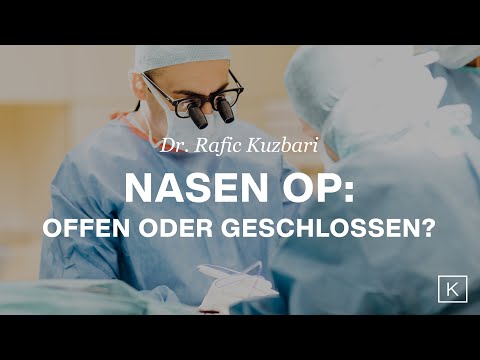
Open or closed nose surgery? — Univ. Doz. Dr Rafic Kuzbari
-

Why is cartilage grafted? — Univ. Doz. Dr Rafic Kuzbari
Why the two often go hand in hand.
A purely functional rhinoplasty addresses the breathing first and foremost — but at the Kuzbari Centre we always incorporate aesthetic considerations as well, where possible and desired. Why? The internal structure of the nose (the septum, for example) is closely connected with the external shape. A correction of the septum can affect the nasal tip or the hump — and vice versa.
Where necessary we bring in a specialist in ear, nose and throat medicine and coordinate with them, to draw up a treatment plan for you together.
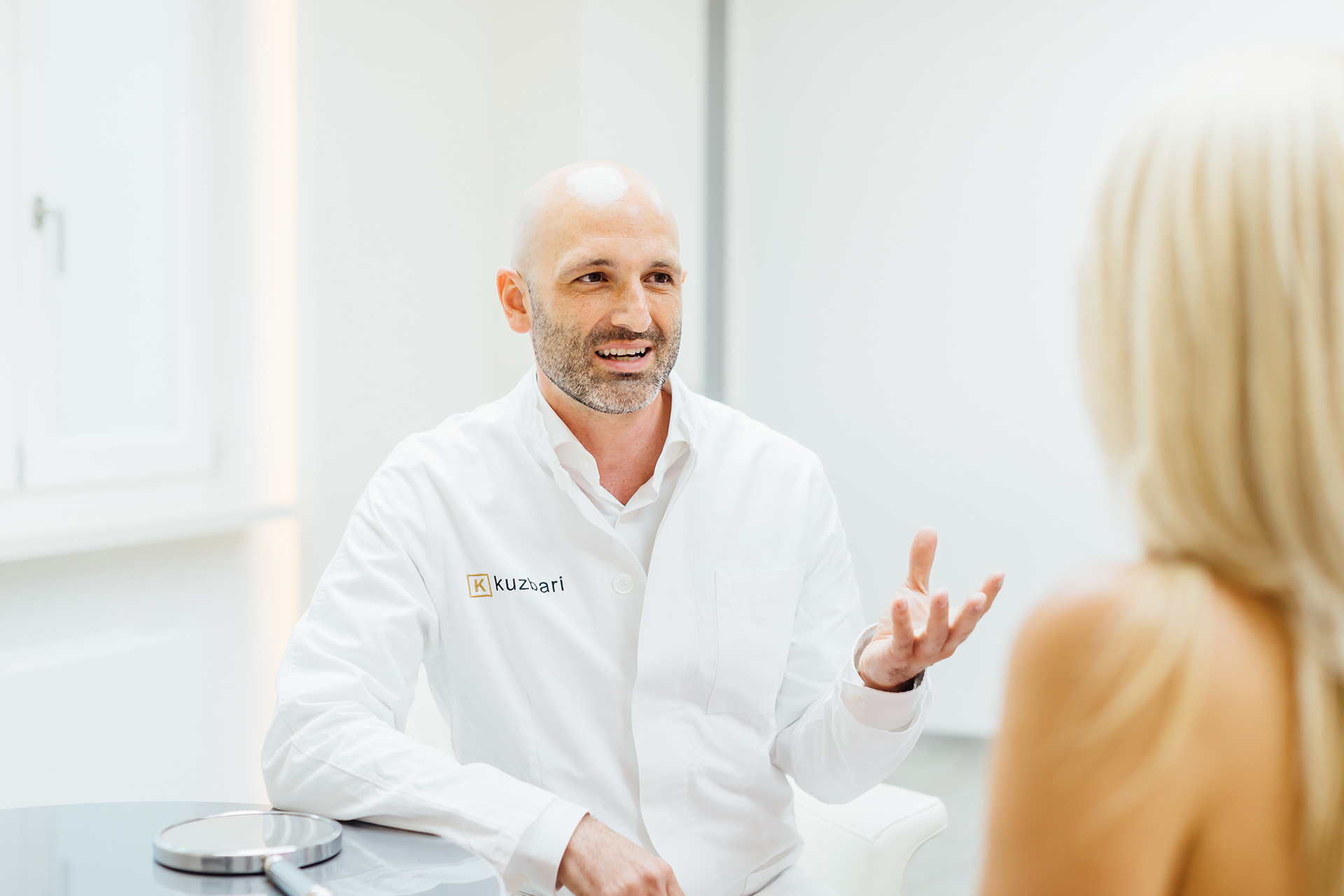
What we do at which narrow point.
Septoplasty — straightening the nasal septum. The bent portions are released from their tension, realigned and, where necessary, held in the middle with fine sutures or strips of cartilage. A supporting marginal strut always remains in place: the nasal septum is the support of the nose and must not be weakened. The cartilage obtained in the process is at the same time the material for the stabilisations elsewhere.
Turbinoplasty — reducing the turbinates. Gently and preserving their function. The turbinates should go on warming, moistening and cleaning — they are reduced, not removed. Too radical an approach at this point leads to a dry, uncomfortable nose that paradoxically feels blocked even though it is wide open. That is why we deliberately remain restrained here.
Spreader grafts — opening the internal nasal valve. Narrow strips of cartilage that are placed between the nasal septum and the upper lateral cartilages. They hold the narrowest point of the airway open and at the same time stabilise the line of the middle third of the nose. They are often of different thickness, because they have to compensate for an asymmetry.
Reinforcing the alar cartilages — stabilising the external nasal valve. Thin strips of cartilage give firmness to weak or inward-bent alar cartilages, so that the nostril stays open on forceful inhalation. For many patients this is the measure with the most noticeable effect during exercise.
Cartilage-supported stabilisation of the nasal tip. Even where the concern is purely functional, the same applies: if work is done on the nasal septum, that affects the support of the tip. We stabilise it with modern cartilage-supported techniques — which markedly reduces the risk of the tip dropping over the years. A functional operation should not make the shape worse along the way.
Where work is done on the bony base, the piezotome is used — an ultrasound instrument that cuts and smooths bone while leaving soft tissue, mucous membrane and vessels untouched. That means more precise work on the bone and, as a rule, less bruising and swelling. The piezotome is not a method in its own right; it is a tool for one part of the procedure. We use it as standard in every nose operation.
Not every blocked nose is a case for surgery.
An operation helps where an anatomical narrow point is the cause. Where the cause lies in the mucous membrane, it does not help — and then it is our task to say so.
Allergies cause the mucous membrane to swell without the structure being altered. Here allergological assessment and treatment come first. If there is an anatomical narrow point in addition, an operation can relieve the situation considerably — but it does not treat the allergy itself.
Disorders of the paranasal sinuses and polyps belong to the field of ear, nose and throat medicine. In such cases we work together with ENT specialists: they take on the sinuses, we take on the nasal surgery, and the treatment plan is agreed jointly.
Continuous use of decongestant nasal sprays leads to a dependence in which the mucous membrane swells more strongly than before each time the effect wears off. This cycle has to be broken first — otherwise an operation will be addressing the wrong place.
After the examination we tell you openly which of these categories your findings fall into. And if an operation is not the right means, we do not recommend one.

Functional rhinoplasty — key facts
| Operation | Our own surgical wing at the Kuzbari Centre |
|---|---|
| Stay | 1 night as an inpatient |
| Presentable again | After 1 – 3 weeks |
| Fit for work | After 3 – 7 days |
| The first consultation | incl. Vectra 3D simulation |
| Aftercare | close follow-up checks |
The Kuzbari surgical wing.
The Kuzbari Centre has its own state-of-the-art operating theatres. They are not only perfectly equipped for rhinoplasty — they also give us the luxury of completely free scheduling. Our well-established team of doctors, anaesthetists and assistants carries out nose and facial surgery exclusively, and thus creates the best conditions for your nose operation.
You cannot hide a nose — which is precisely why you should choose a team specialised in nasal surgery in a private clinic, as at the Kuzbari Centre. Here surgeons specialised in the nose operate in their own operating theatres, without time pressure and with full concentration on your result.
When breathing becomes self-evident again.
Anyone who breathes badly through the nose often only notices after the correction how much that had affected their daily life — sleep, sport, concentration. Free breathing is quality of life.
For us function and aesthetics belong together: a nose should look good and work well.

A functional procedure takes time as well.
A rhinoplasty with us takes one to four hours. That range is deliberate: we operate in our own operating theatres and therefore without time pressure — for as long as it takes until every detail is right. How long an operation takes is decided by the findings, not by the schedule.
In a functional procedure it is the nasal septum that determines the time. Straightening it means working with a material that is under tension and strives to return to its old shape. That happens in many small steps: releasing, aligning, checking, stabilising, checking again. Added to this are the measures at the nasal valves, which can differ between the two sides because the two sides are narrowed to different degrees.
That we are able to run through these loops is due to the operating theatres being our own. And it is worth it: breathing that is only “somewhat better” after healing would not be a good result for us.
When breathing actually becomes free
After a functional operation the nose is initially more blocked than before. That is to be expected — and it is the most common reason for uncertainty during the first week.
-
First week
Internal splints protect the straightened nasal septum and the mucous membrane is swollen. In this phase nasal breathing is considerably worse than before the operation — that is due to the swelling, not to the result. Nasal care with rinses and ointments now matters more than anything else.
-
After the splints are removed
About a week after the procedure the splints and sutures are removed. Many patients describe the days that follow as the real turning point: for the first time the air comes through again — not yet fully, but noticeably.
-
Weeks 2 to 6
The mucous membrane regenerates, crusts loosen and breathing improves from week to week. In this phase the nose can be dry at times; regular care helps. Light endurance exercise is possible again from about four to six weeks — and often that is the moment at which the difference is most noticeable.
-
Months 2 to 6
The mucous membrane has largely recovered, the feeling in the nose returns to normal and the sense of smell is unimpaired again. Breathing is now stable — fluctuations due to the weather, colds or the natural alternation of the turbinates remain, and they are normal.
-
After a year
The result is final. If work was done on the shape at the same time, that now shows itself fully. The structure is stable — and should remain so, which is why in every functional operation we consistently spare and stabilise the supporting parts.
Why we plan the shape even when the concern is breathing.
The internal structure of the nose carries its external shape. That is not an aside but the reason why a functional operation is never entirely free of aesthetic consideration.
An example: if the nasal septum is straightened, the support of the nasal tip changes — it can sink downwards if nothing is done about it. A second: if the internal nasal valve is opened with strips of cartilage, the width of the middle third of the nose changes and the nose looks different from the front. Anyone who has only breathing in view accepts such changes.
We do not. We stabilise the nasal tip with modern cartilage-supported techniques so that it stays in its position. And we plan the lines of the nose as well, so that after a functional operation it does not look different from before — unless you expressly wish it to. In that case we talk about a functional and aesthetic correction that combines both in one procedure: one anaesthetic, one healing phase.
If you expressly do not want any change to the shape, tell us at the consultation. We will then direct the whole plan towards that.

„Most patients, once healed, describe not so much a freer nose — but better sleep.“
When a functional correction makes sense.
Age. Where breathing is markedly obstructed, a correction can make sense earlier than it would for a purely aesthetic concern — we discuss that on an individual basis. For procedures that also affect the external shape, the rule still applies: after facial growth is complete, as a rule from about the age of 16 in women and somewhat later in men. There is no upper age limit.
Before the operation. In the two weeks beforehand, avoid blood-thinning preparations, unless they are medically prescribed, and avoid nicotine — smoking measurably impairs the healing of the mucous membrane. If there is a dependence on decongestant nasal sprays, we break that cycle beforehand; otherwise the operation would be addressing the wrong place.
Afterwards. Allow a week until the splints are removed, and expect the nose to be more blocked during that time than it was before. Light endurance exercise is possible again after about four to six weeks — often the moment at which the difference is most noticeable.
What you yourself contribute after the operation.
After a functional procedure, nasal care is not an accessory but a part of the treatment. The mucous membrane has to regenerate, and in doing so it forms crusts that further block a passage that is swollen in any case. Those who care for the nose consistently breathe freely sooner.
Rinsing. Saline rinses keep the mucous membrane moist and loosen crusts without tearing them off. How often and from when, we tell you on discharge — and we show you, so that it does not founder on the handling.
Moisturising. Nourishing ointments and sprays without decongestant active ingredients support healing. Decongestant sprays, by contrast, you use only if we expressly prescribe them.
Do not blow your nose. In the first few weeks the nose is not blown forcefully but dabbed carefully. When sneezing, it helps to open your mouth so that the pressure does not go into the nose.
Patience with crusts. Crusts come away by themselves if the mucous membrane is kept moist. Helping them along risks bleeding and delays healing.
You receive all of this in writing — along with the mobile number of your surgeon, in case anything is unclear.
Rhinoplasty, 26
The patient has been affected by the shape and function of her nose for a very long time / for years. The shape, however, matters more to her. She has already seen an ENT doctor, who diagnosed a deviated septum. Her breathing has got worse. She does not want a snub nose. She is affected by the following changes: the nose should be straight seen from the front; the nose should be straight seen from the side, by which she means removing the hump; the tip should be lifted a little, both when smiling and at rest
Operation performed: Open septorhinoplasty. The current photos are 7 weeks post-operative


What a functional operation can achieve — and what it cannot.
What is readily achievable: considerably freer nasal breathing, where an anatomical narrow point is the cause. Less mouth breathing at night, better sleep, more air during exercise. And in many cases less snoring — although snoring has many causes and does not arise in the nose alone.
There are limits, too. An allergy is not treated by the operation. Nor are disorders of the paranasal sinuses. Nasal breathing also remains subject to fluctuation: weather, colds and the normal alternation of the turbinates between the two sides are part of a healthy nose and do not disappear. And with obstructive sleep apnoea the nose is usually only one element — the assessment belongs in a sleep laboratory.
What we advise against: a radical reduction of the turbinates. It creates a great deal of space in the short term and leads in the long term to a dry nose that paradoxically feels blocked. And an operation before a dependence on decongestant nasal sprays has been broken.
And one point that matters to us: if after the examination we come to the conclusion that an operation will not help you, we say so — and we do not recommend one.
When the shape comes in alongside the breathing
-
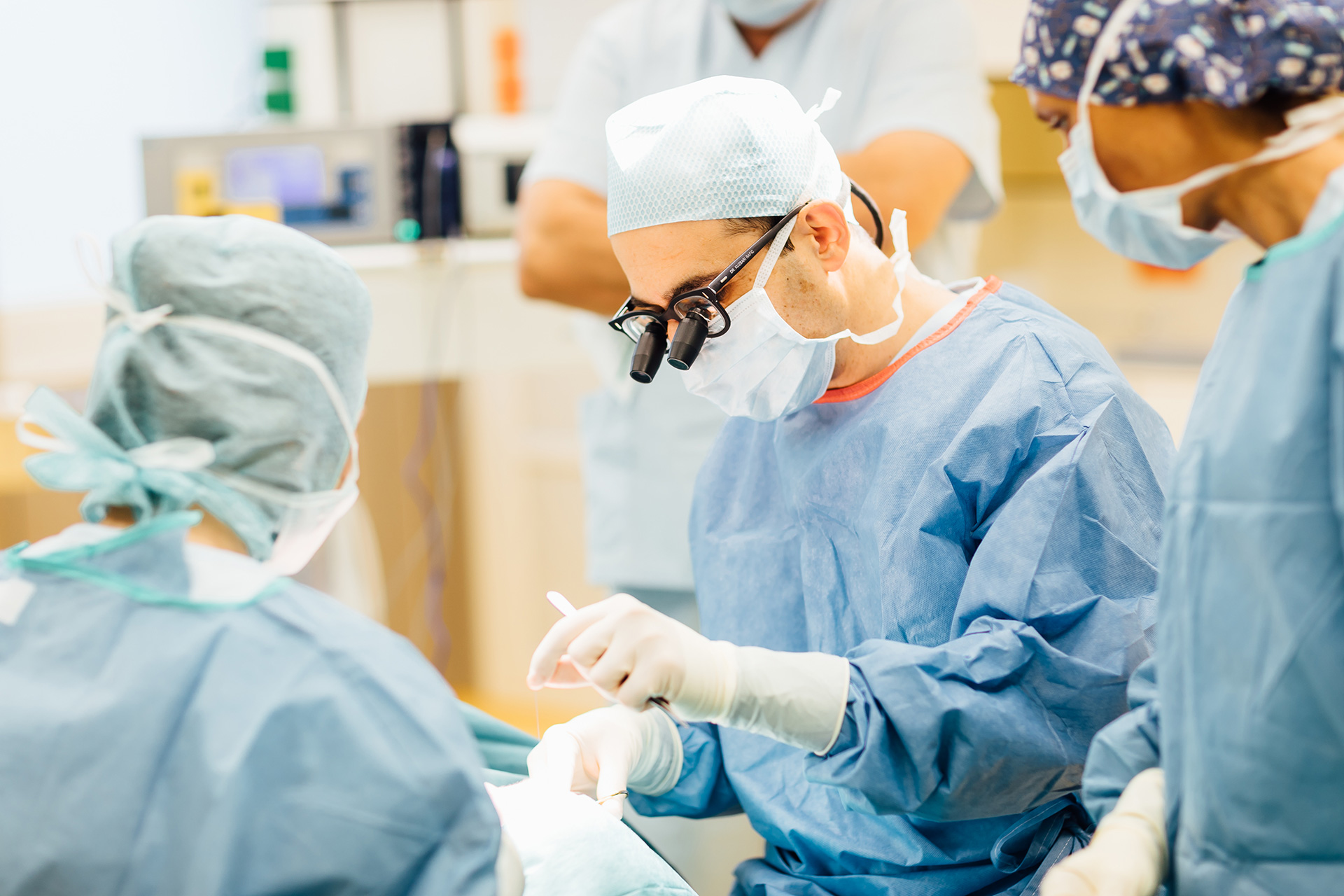
Functional-aesthetic
Breathing and shape in one procedure — one anaesthetic, one healing phase.
Learn more → -

Crooked nose
A crooked nose almost always goes together with a bent nasal septum.
Learn more → -
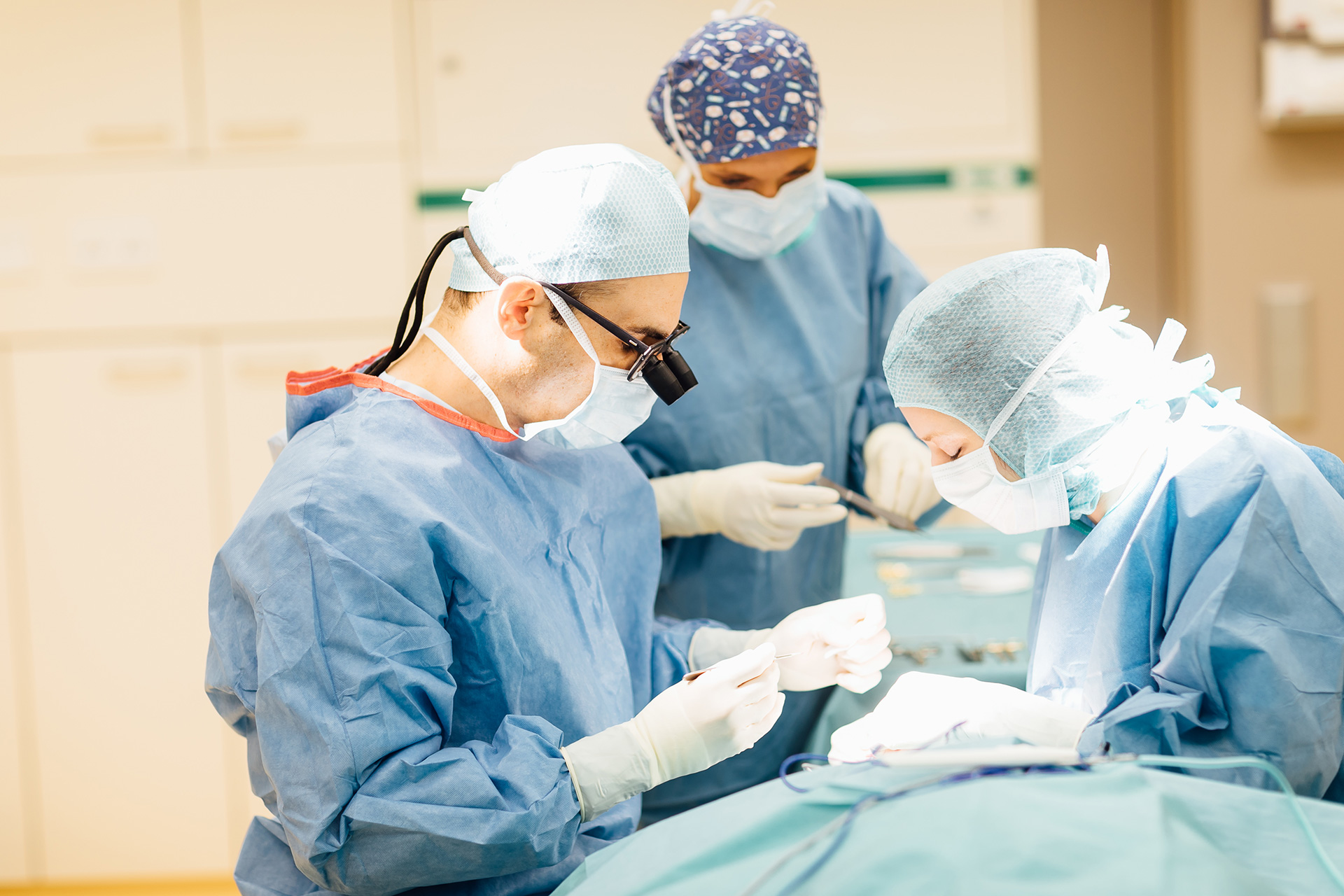
Surgical methods
Septoplasty, turbinoplasty, spreader grafts — an overview of the techniques.
Learn more →
Your functional rhinoplasty from beginning to end
Before the operation
- Initial consultation of around an hour, without obligation
- Examination of the nose from the inside, narrow point by narrow point
- Testing the external nasal valve during forceful inhalation
- Coordination with an ENT specialist where the sinuses or an allergy are involved
- Vectra 3D simulation where the shape is also a topic
- Written cost estimate
On the day of the operation
- Our own operating theatre at the Kuzbari Centre
- One to four hours — according to the findings, not to a plan
- Septoplasty with the supporting marginal strut preserved
- Function-preserving treatment of the turbinates
- Opening the internal and stabilising the external nasal valve
- One night as an inpatient with round-the-clock care
After the operation
- A follow-up talk on the morning after the operation
- The mobile number of your surgeon
- Removal of the splints after about a week
- Instruction in nasal care with rinses and ointments
- All follow-up appointments up to the final result included
Answers on functional rhinoplasty
How do I tell that my obstructed breathing has an anatomical cause?
Typical indications are: one side is permanently narrower, you breathe through your mouth at night, nasal breathing is not sufficient during exercise, your breathing becomes worse when you lie down depending on the side, and a decongestant nasal spray reliably helps. Only an examination from the inside gives certainty, though — a nose that looks unremarkable from the outside can be considerably narrowed within.
What is a septoplasty?
The straightening of the nasal septum. The bent portions are released from their tension, realigned and, where necessary, stabilised. A supporting marginal strut always remains in place, because the nasal septum is the support of the nose. The cartilage obtained in the process also serves as material for stabilisations elsewhere.
Will my turbinates be removed?
No. The turbinates are the climate organ of the nose — they warm, moisten and clean the air you breathe. They are reduced gently, not removed. Too radical an approach leads to a dry nose that paradoxically feels blocked even though it is wide open. We deliberately remain restrained here.
What is the internal nasal valve?
A narrow cleft between the nasal septum and the lower edge of the upper lateral cartilages — the narrowest point of the entire airway, and not visible from the outside. Even a slight narrowing has a large effect here. It is opened with narrow strips of cartilage, the spreader grafts, which at the same time stabilise the line of the middle third of the nose.
When I pull my nostril outwards, I breathe more easily. What does that mean?
That is a strong indication of a weak external nasal valve: the wall of the nostril is drawn inwards when you breathe in forcefully. This is not treated by removing tissue, but by supporting it — thin strips of cartilage give the alar cartilages firmness. For many people this is the measure with the most noticeable effect during sport.
Why is my nose more blocked at first after the operation?
Because the mucous membrane is swollen and internal splints protect the straightened nasal septum. During the first week, nasal breathing is therefore worse than before the procedure — this is due to the swelling, not to the result. After the splints are removed at about one week, the air noticeably returns, and over the following weeks it improves continuously.
Will the operation help with my snoring?
In many cases snoring becomes quieter or less frequent, because mouth breathing decreases. We cannot promise it: snoring often also arises in the throat and not in the nose alone. If sleep apnoea is suspected, the assessment belongs in a sleep laboratory — and we will tell you so.
Will the operation help with an allergy?
It does not treat the allergy itself — in that case the swelling of the mucous membrane has a different cause than an anatomical narrowing. If there is also a structural narrowing, however, surgery can relieve the situation considerably, because the allergy-related swelling then meets a wider airway. Allergy assessment always comes first.
What about the sinuses and polyps?
These findings belong to the field of ear, nose and throat medicine. In such cases we work together with ENT specialists: they take care of the sinuses, we take care of the nasal surgical aspects, and the treatment plan is agreed jointly.
Will the appearance of my nose change?
The two cannot be separated entirely: the internal structure carries the external shape. If work is done on the nasal septum, this affects the support of the nasal tip and the line of the nose bridge. We therefore always plan the shape as well — and we stabilise the nasal tip in a cartilage-supported manner so that a functional operation does not incidentally worsen the shape. If you expressly do not wish the shape to change, tell us: we will then plan accordingly.
Will the result be permanent?
A straightened nasal septum stays straight if the tension has been released cleanly and the structure stabilised. The mucous membrane, on the other hand, remains reactive: colds, weather and the natural alternation of the turbinates between the two sides are part of a healthy nose and do not disappear.
Can a nose that has already been operated on still be corrected functionally?
Yes. Four in ten nose operations at the Kuzbari Centre are revision rhinoplasties on a nose that has already been operated on. These procedures require particular experience: the tissue is scarred, cartilage is sometimes missing, and the starting point is different for every patient. Functionally, it is then usually a matter of supporting and building up rather than removing.
A nose that looks good and works well.
An initial consultation with three-dimensional simulation, a technique that suits your nose, and an operating time that follows the findings — this effort is the reason why rhinoplasty with us has its price. It is also the reason why the result is meant to hold: for a lifetime, not for a few years.
Three surgeons for your functional rhinoplasty
-
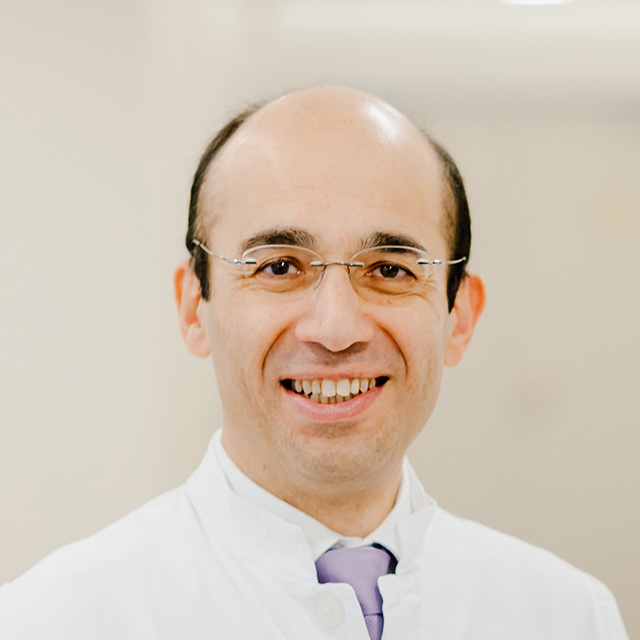
Univ. Doz. Dr Rafic Kuzbari
Specialist in Plastic, Aesthetic and Reconstructive Surgery
Over 30 years of experience; internationally regarded as an expert in revision procedures and complex rhinoplasty.
-
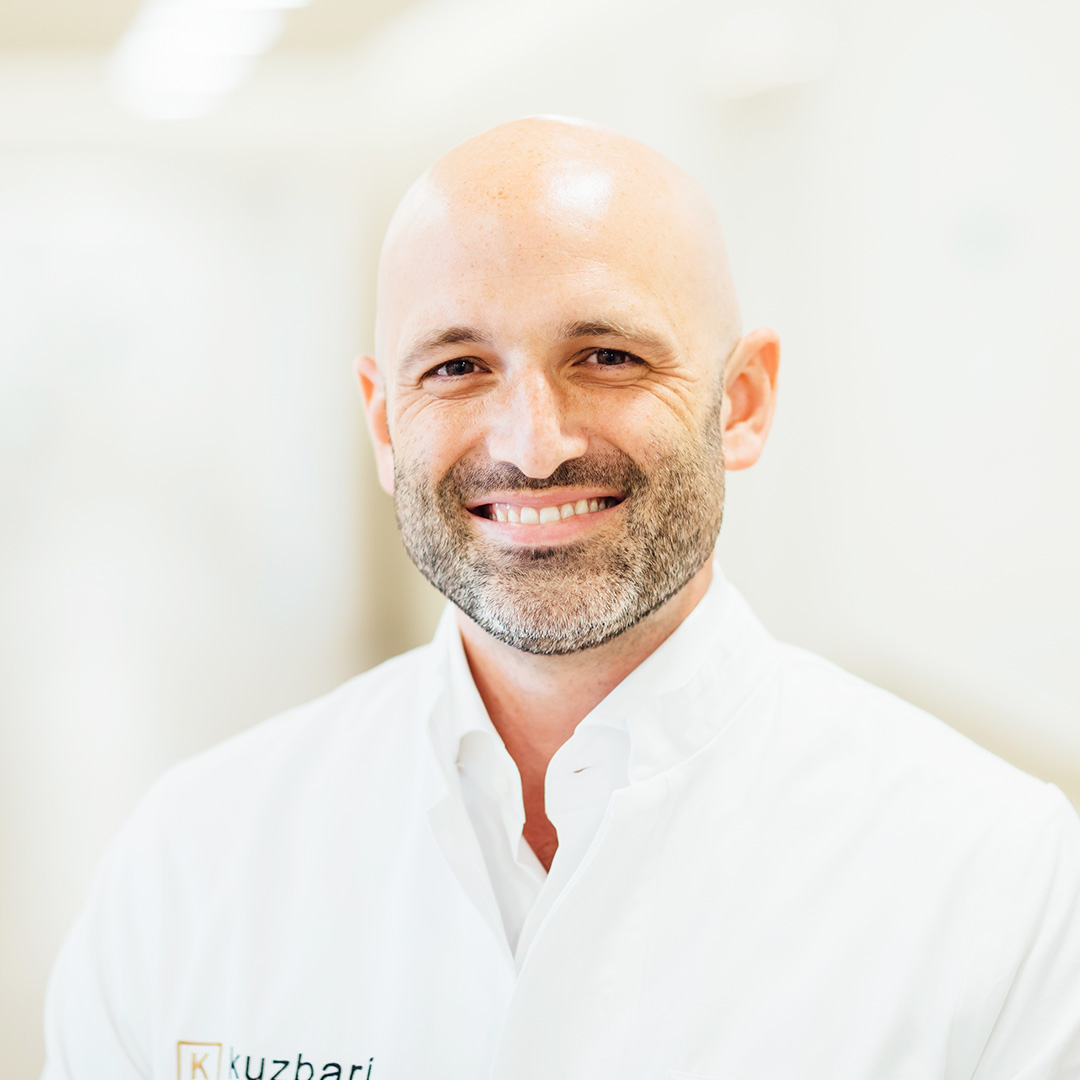
Dr Christoph Grill
Specialist in Plastic, Aesthetic and Reconstructive Surgery
A specialist in aesthetic and functional rhinoplasty with a focus on natural results.
-

DDr. Jessica Wittmann
Specialist in Oral and Maxillofacial Surgery
Combines the surgical and the aesthetic eye: precise nasal surgery with a sense for harmonious proportions.
Book your rhinoplasty consultation now
Our rhinoplasty specialists
Univ. Doz. Dr Rafic Kuzbari
Specialist in Plastic, Aesthetic and Reconstructive Surgery
Dr Christoph Grill
Specialist in Plastic, Aesthetic and Reconstructive Surgery
DDr. Jessica Wittmann
Specialist in Oral and Maxillofacial Surgery