Saddle nose & nasal reconstruction.
With a saddle nose the bridge of the nose has collapsed — the profile looks dented and the tip is often turned upwards. A saddle nose can arise after an accident, after previous surgery, through inflammatory disease or through a natural predisposition. In nasal reconstruction we restore the natural height and structure of the bridge — preferably with the body's own cartilage.

When the bridge of the nose lacks support.
With a saddle nose the bridge — usually in the middle and lower third — has collapsed. In profile the characteristic “saddle” appears, the nose looks shortened and the tip is often raised. The cause is a lack of supporting structure: cartilage or bone that would normally hold the nose in shape is missing or has lost stability.
The reasons range from accidents and injuries through previous operations to inflammatory diseases or a constitutional weakness. Because the support of the nose also carries its function, a saddle nose is not infrequently associated with obstructed breathing.
Why is cartilage grafted?
Univ. Doz. Dr Rafic Kuzbari explains why cartilage is grafted in rhinoplasty and how it stabilises the shape in the long term.

Why the nasal septum is the load-bearing component.
The nose stands not because its skin is taut but because a framework carries it from within. The most important element of this framework is the nasal septum: a plate of cartilage and bone standing vertically in the middle. Its front and its upper margin together form an L-shaped strut — it holds the nose bridge at height and the nasal tip in position. If this strut gives way, the nose collapses in on itself.
That is precisely what a saddle nose is. The nose bridge sinks, above all in the middle and lower third, and the characteristic hollow appears in profile. Because the support also holds the tip, the tip frequently rotates upwards with it; this makes the nose look additionally shortened and the nostrils more visible from the front. In pronounced cases the alar base also widens, because the collapsed framework pushes the soft tissue outwards.
Three degrees of severity are broadly distinguished, and they call for very different operations. Mild: only the line of the nose bridge has sunk, the load-bearing structure is intact at its core — here an onlay of cartilage is often enough to restore the profile. Moderate: the strut has lost height and the tip is affected as well — this requires building up and fresh support for the tip. Pronounced: the load-bearing L-strut is largely lost — it has to be rebuilt, as a rule from rib cartilage, because only rib cartilage provides the necessary quantity and firmness.
We make this assessment during the examination — from the outside, from the inside and by palpation. It determines the extent of the work, the source of cartilage, the duration of the operation and the period within which you can expect the final result.
How a saddle nose develops
The cause changes the planning — above all because it determines how much tissue is scarred and how much material is still available.
-
Accident and fracture
A blow can buckle the nasal septum without this being immediately apparent from the outside. If the nose bridge only sinks weeks later, the connection is often not recognised. What is decisive for the reconstruction is how much of the load-bearing cartilage has been preserved.
-
Haematoma in the nasal septum
If blood collects between cartilage and mucosa after an injury, the cartilage is cut off from its nutrient supply and can perish within days. This is one of the few genuine emergencies in nasal surgery — and a frequent cause of saddle noses that only become apparent years later.
-
After previous surgery
If a great deal of cartilage was removed during an earlier procedure, or the load-bearing marginal strip was weakened, the nose bridge can give way over months. Four in ten nose operations at the Kuzbari Centre are revision rhinoplasties on a nose that has already been operated on; we deliberately take on such cases.
-
Inflammatory diseases
Certain inflammatory and rheumatological diseases can attack the cartilage of the nasal septum. Here the investigation and treatment of the underlying disease is the first step — reconstruction follows only once the disease is stably controlled.
-
Damage to the nasal mucosa
Persistent irritation or damage to the mucosa can lead to a hole in the nasal septum and, as a consequence, to the loss of support. Here too the rule applies: first the cause must be removed, then reconstruction follows.
-
Constitutional weakness
Less commonly, the nose bridge has always been flat, without any preceding injury or illness. The tissue is then unscarred and the structure intact — in these cases building the nose up is more predictable than after previous surgery.
Saddle nose & nasal reconstruction at a glance
| The aim of the operation | Building up and stabilising the bridge of the nose, restoring the profile and the breathing |
|---|---|
| Duration of surgery | 1 – 4 hours |
| Fit for work | After 3 – 7 days |
| Presentable again | After 1 – 3 weeks |
| Recovery, sport | 4 – 6 weeks |
| Final result | 6 – 12 months in rare cases later still |
| Specialists | Kuzbari, Grill, Wittmann |
A stable structure from your own cartilage.
To build up a collapsed bridge we prefer to use the body's own cartilage — it grows in, is accepted by the body as its own tissue and provides a natural, lastingly stable foundation. Depending on the amount required, cartilage from the nasal septum, the ear or the rib area can be used.
Which route is best in your case we establish together in the consultation — matched to your anatomy, the nature of your skin and the result you want.
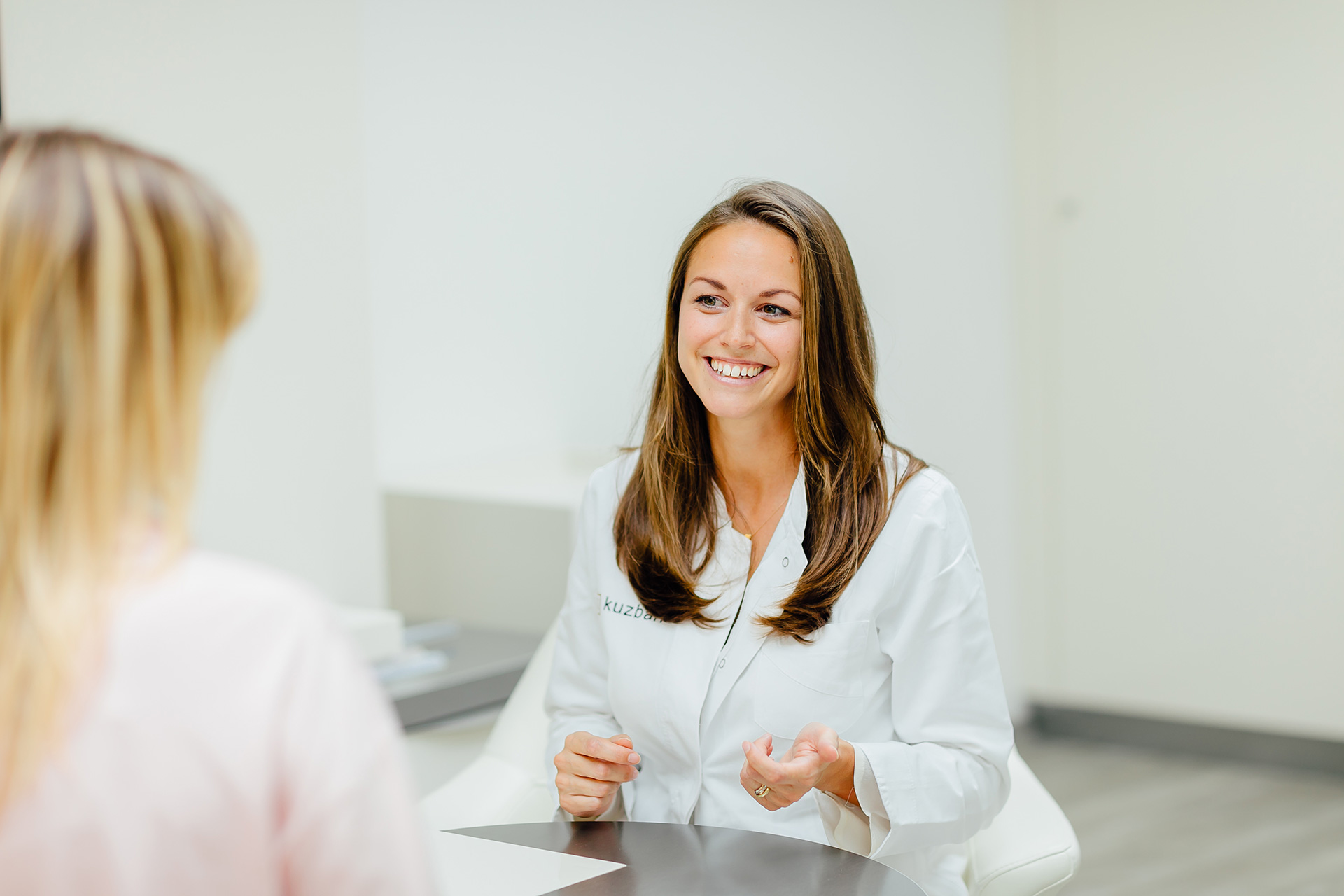
How thick is your skin?
In nasal reconstruction the nature of the skin plays an important role in the result — Univ. Doz. Dr Kuzbari explains why.

Rebuilding the strut — not merely filling the hollow.
The most important distinction with a saddle nose is the one between filling and carrying. A hollow on the nose bridge can be evened out visually with an onlay — that looks good at first, but it does not change the fact that the nose no longer has any support on the inside. Over the years it sinks further, the nasal tip rotates further upwards, and the onlay becomes visible as a foreign body beneath thin skin. Our principle is therefore this: we rebuild the strut, not the surface.
Rebuilding the L-strut. If the load-bearing structure of the nasal septum is lost, it is replaced: a strong strip of cartilage along the front edge, a second along the nose bridge, both firmly joined to one another and to the remaining bone. This construction then carries the entire nose — its height, its length and the position of the tip all depend on it.
Building up the nose bridge. The dorsal line is modelled on the restored strut. Depending on the height required, this is done with a carved block of cartilage, with layered strips, or with finely diced cartilage filled into a thin outer cover of the body's own tissue — the last of these above all with thin skin, because the surface then stays particularly soft and no edges show through.
Cartilage-supported stabilisation of the nasal tip. Because with a saddle nose the tip is almost always affected as well, it forms part of the reconstruction. We stabilise the nasal tip using modern cartilage-supported techniques. This markedly reduces the risk of the tip dropping again over the years — and the new position into which we bring it is not the one it grew into, so it needs particularly reliable hold.
Securing the airways. With the strut, the width of the internal nasal valve also returns. Where necessary, narrow strips of cartilage are additionally inserted to hold the valve open.
A nasal augmentation is therefore almost always an operation at the upper end of the time range. A rhinoplasty with us takes one to four hours; this range is deliberate, because we operate in our own operating theatres and therefore without time pressure — for as long as it takes until every detail is right. How long a procedure takes is decided by the findings, not by the schedule.
What you should know about harvesting it.
With moderate and pronounced saddle noses, the cartilage from the nasal septum and the ear is usually not sufficient — neither in quantity nor in firmness. Cartilage from the rib region then comes into consideration. Because for many patients this is the point at which they hesitate, we address it openly.
Why rib cartilage. It is the only material from the body itself that is at once strong enough to carry a nose and available in sufficient quantity. It is accepted as the body's own tissue and becomes incorporated — unlike foreign material, which over the years carries the risk of rejection or of breaking through the skin. For a load-bearing reconstruction it is therefore our first choice.
Harvesting. This is carried out under the same anaesthetic through a short access incision in the inframammary fold; the scar is concealed there. The chest remains stable and breathing is not impaired. In the first few days this area is noticeable on deep inhalation, coughing and standing up — usually more so than the nose itself. After one to two weeks this subsides markedly.
And the honest caveat. Rib cartilage has a tendency to warp slightly after it has been cut to shape. We counter this through the manner of the cutting, through a resting period during the operation in which the material can show what it will do, and where needed through internal reinforcement. A minimal deformation over the years cannot be ruled out entirely — we say so beforehand rather than keeping quiet about it.
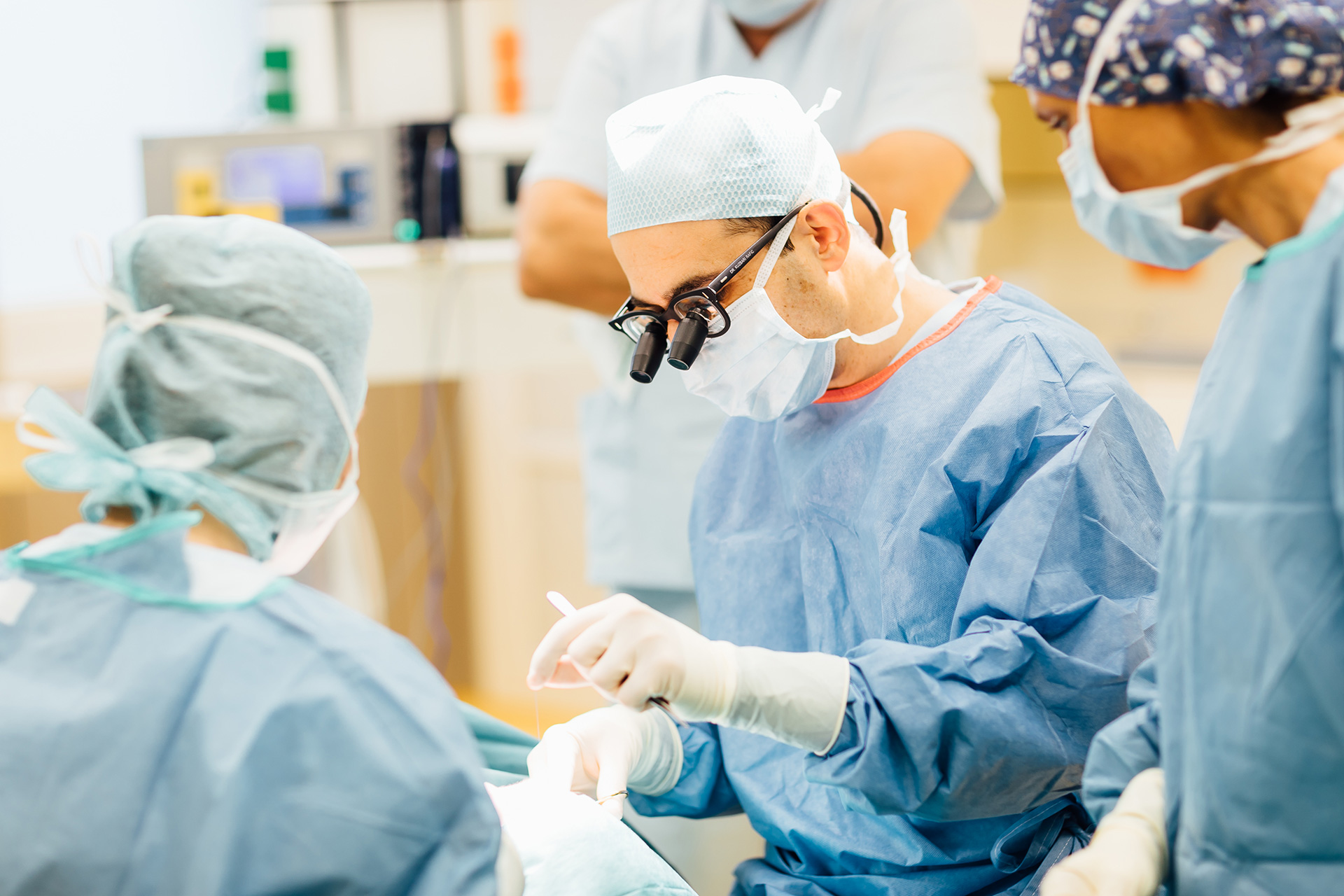
Your nasal reconstruction step by step
-
01
The first consultation
Getting to know each other personally, a detailed analysis, a 3D simulation with Vectra technology, before-and-after comparisons and a thorough explanation of the process.
-
02
Preparation
Medical examinations, an anaesthetic consultation, individual surgical planning — including the question of which area the body's own cartilage will be taken from.
-
03
The operation
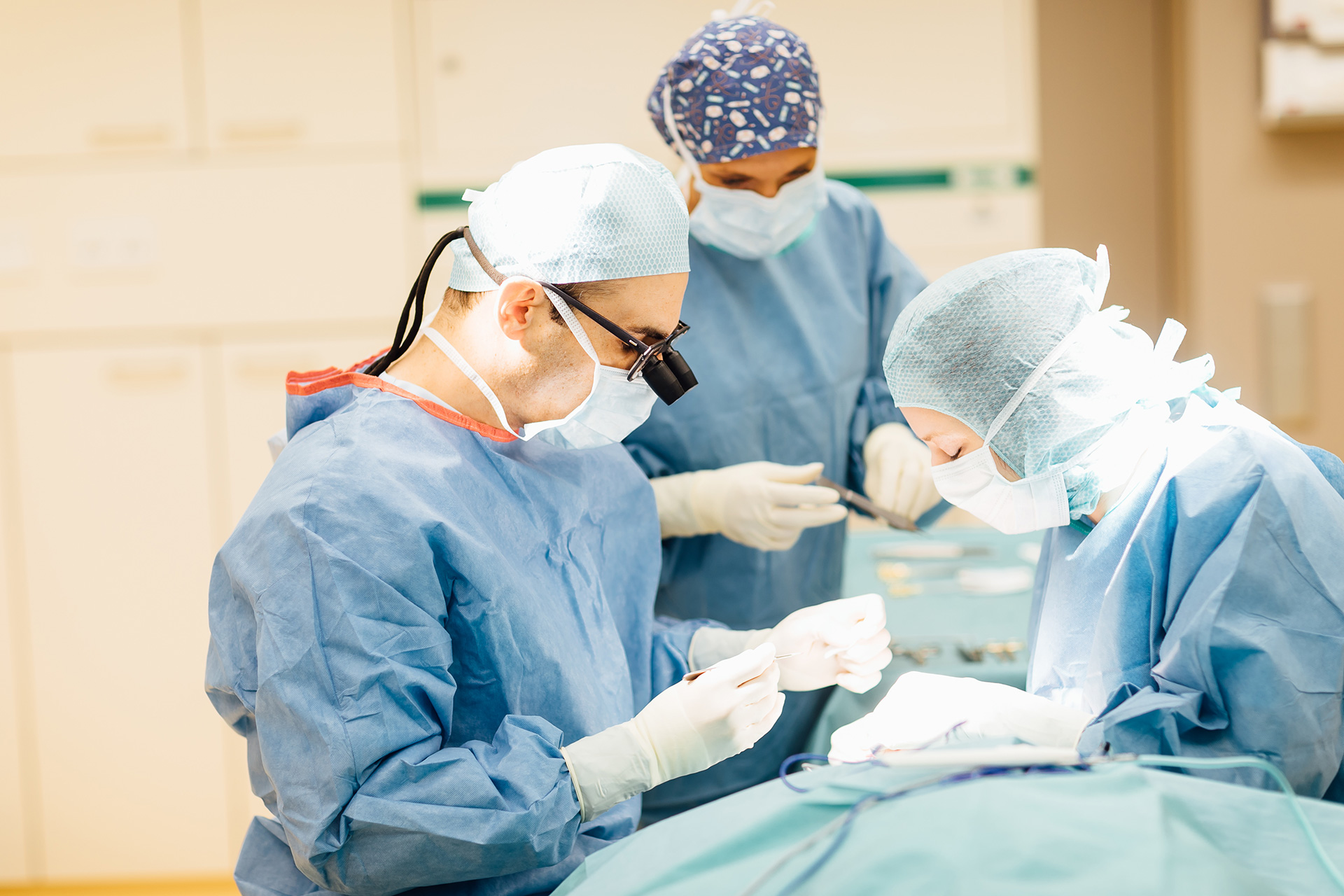
The procedure in one of our modern operating theatres. The bridge of the nose is built up and stabilised with the body's own cartilage, to restore its height, profile and structure.
-
04
Aftercare & healing
The recovery room, a follow-up conversation, discharge with your surgeon's emergency number, regular check-ups until the final result after 6 – 12 months.
What you receive with us
A nasal augmentation is among the most demanding procedures in nasal surgery: it calls for sufficient material, a load-bearing construction and time in the operating theatre. We bring both.
-
The body's own material
Preferably the body's own cartilage, for a natural, lastingly stable result.
-
Form and function
We restore the profile and keep free breathing in view.
-
Experienced specialists
Three specialists focused exclusively on facial surgery: Univ. Doz. Dr Kuzbari, Dr Grill and DDr. Wittmann.
-
State-of-the-art technology
Vectra 3D simulation and our own high-tech operating theatres.
-
Everything under one roof
Consultation, operation and aftercare — all in one place.
-
Experience with follow-up surgery
Even after previous operations we help previously operated noses to a stable result.
„A collapsed nasal bridge needs a stable support — the body's own cartilage is the most natural foundation for that.“
A profile that has its support back.
When the nose bridge has its natural height and line again, the whole profile appears more balanced — and for many patients the nose feels “complete” again for the first time in a long while.
A second point often comes with it that had hardly been a topic before: breathing. Because the same structure that carries the bridge also holds the inner airways open, the augmentation often improves both at once.
Our aim is a result that looks natural and remains stable — a nose that betrays neither its history nor the operation.

A large proportion of saddle noses have been operated on before.
Four in ten nose operations at the Kuzbari Centre are revision rhinoplasties on a nose that has already been operated on. These procedures call for particular experience: the tissue is scarred, cartilage is sometimes missing, and the starting point is different for every patient. We deliberately take on such cases.
In a nasal augmentation these difficulties come together. The tissue layers that can be separated cleanly from one another in a first operation are fused together by scarring — exposing them takes longer and demands greater care, especially beneath thin skin. The nasal septum is often no longer available as a source of cartilage, which is why ear or rib cartilage is needed. And scar tissue contracts: an augmentation has to be built more stably than a first operation, because it has to hold out against this pull.
For the same reason, healing takes longer. After an augmentation on a previously operated nose, the final result is to be expected at twelve to eighteen months rather than at six. We say this before the operation, plan the check-ups accordingly and follow the course with photographic documentation.
How high should the nose bridge become again?
Our 3D simulation shows your future nose not only in profile, but also from the front and from below. You therefore see your possible result from precisely those angles from which others see you every day — and before the operation we are discussing the same image.
In a nasal augmentation the height of the nose bridge is the central decision, and it has two sides. Too little augmentation leaves the nose still looking collapsed. Too much augmentation tightens the skin, makes contours appear hard and can make the nose dominant within the face. On the simulated image we show you several versions side by side — and tell you which of them we consider viable for your face and for the condition of your skin.
The frontal view is just as important: a collapsed bridge makes the nose appear broader from the front, and this impression changes markedly with the augmentation. The simulation remains a planning aid, not a promise — how tissue heals and how scar contraction acts has a part of its own in the result, particularly with an augmentation.
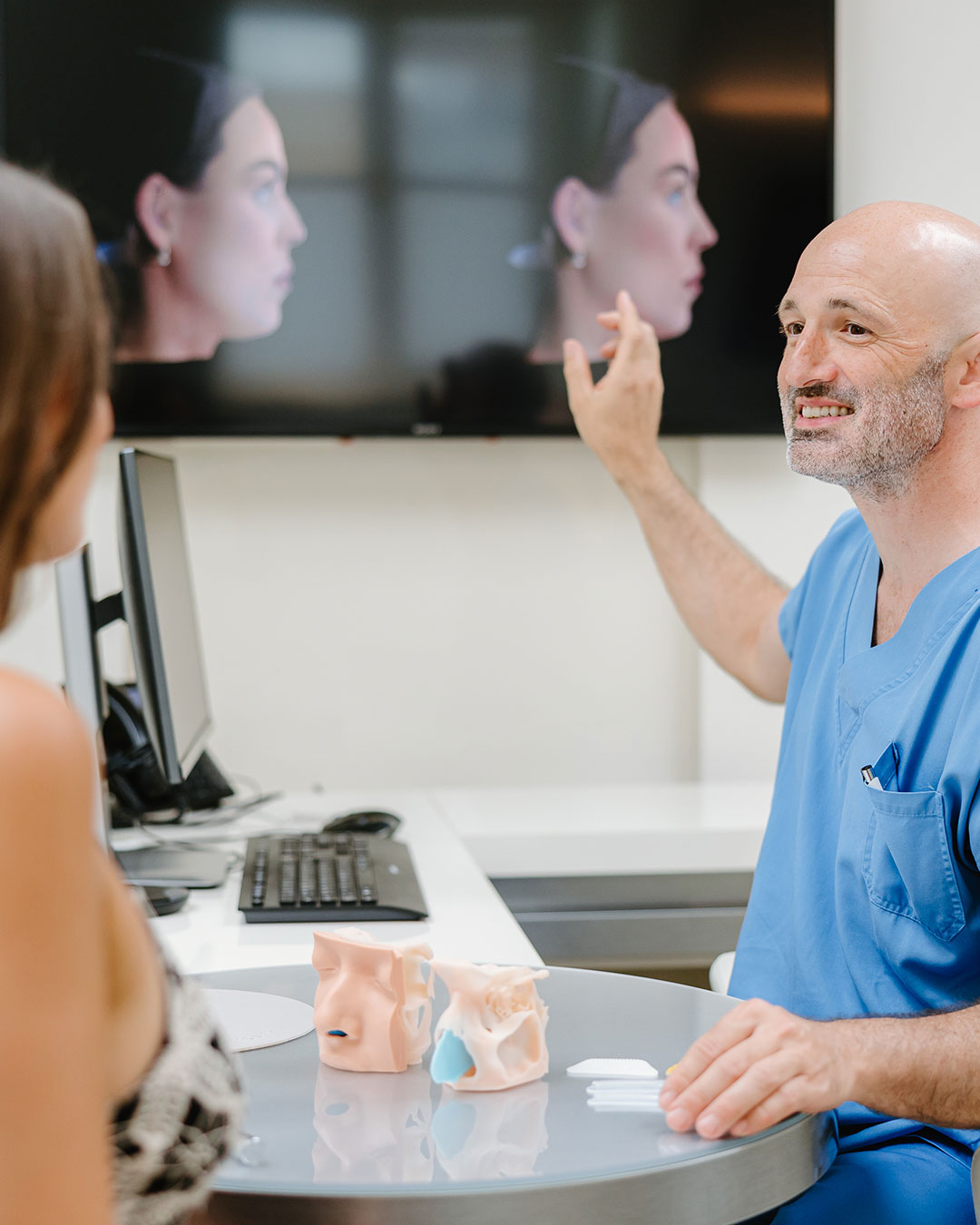
Why a nasal augmentation needs longer
With an augmentation it is not only the nose that heals but also the donor site — and transplanted tissue needs time until it has become incorporated.
-
First week
External splint, internal splints, a dressing at the donor site. If rib cartilage has been used, the chest area is noticeable on deep inhalation and when standing up — often more so than the nose. After about a week we remove the splint and the sutures.
-
Weeks 2 to 4
The nose already shows the new profile but looks broader and higher than planned — that is swelling over the augmentation. The discomfort at the donor site subsides markedly. You are presentable in public.
-
Months 2 to 4
The contour of the nose bridge becomes clear. During this phase transplanted cartilage becomes incorporated and joins with the surrounding tissue. We see you regularly in order to assess height and line.
-
Months 4 to 9
Scar tissue contracts — the phase in which it becomes apparent how stable the augmentation is. The nasal tip, too, finds its final position during this period.
-
Months 9 to 18
The final result. After a first operation often at around twelve months already, after previous surgery rather closer to eighteen. From then on the nose is stable and changes only as the rest of the face changes.
With the support, the air returns as well.
In hardly any other condition are shape and breathing as closely linked as in the saddle nose. The structure that carries the nose bridge also holds the inner airways open. If it collapses, the internal nasal valve narrows — the narrowest point of the entire airway, a slim gap between the nasal septum and the upper lateral cartilages. Many of those affected therefore describe not only a dented nose but also the feeling that the air “gets caught somewhere”, particularly during sport and when lying down.
For the procedure this means that rebuilding the structure is at the same time the treatment of the breathing. With the restored strut the width of the nasal valve returns; where necessary we additionally insert narrow strips of cartilage that hold it open. A deviated or partly lost nasal septum is realigned in the same step.
We expressly examine the breathing at every consultation — narrow point by narrow point: nasal septum, turbinates, internal and external nasal valve. And we tell you which part of your symptoms will benefit from the augmentation and which will not, so that you do not expect the operation to bring an improvement that has a different cause.
When a nasal augmentation makes sense.
After an injury. Immediately after an accident, acute care comes first — above all the question of whether blood has collected in the nasal septum, because that is one of the few genuine emergencies in nasal surgery. Once a saddle nose has developed, by contrast, there is no time pressure: reconstruction is carried out when the tissue has healed completely and the situation is stable.
After previous surgery. As a matter of principle we wait until the preceding operation has healed — as a rule at least twelve months. Scar tissue is still changing during this time, and an augmentation on unfinished tissue would be harder to plan. This waiting time is not a lost year: it is the precondition for a result that lasts.
With an underlying disease. If an inflammatory disease attacks the cartilage, reconstruction follows only once it is stably controlled. We coordinate this with the specialists treating you.
Age and everyday life. There is no upper age limit; what matters are your general health and the quality of your tissue. Allow two to three weeks in which you do not have to be in the public eye, and with an augmentation expect a longer path to the final result than with a purely shape-correcting procedure — twelve months is the rule, and after previous surgery rather eighteen.
„A saddle nose is not a surface problem but a problem of structural support. Merely filling the hollow has not carried the nose.“
Rhinoplasty, 39
Operation performed: Functional and aesthetic nose surgery with a rib cartilage graft.


What a nasal augmentation can achieve — and what it cannot.
Readily achievable: a nose bridge that regains its height and its line. A nasal tip that stands in position again and is held there. A nose that no longer looks collapsed in profile. And breathing that, with the restored structure, often improves markedly.
There are limits, too. The skin has to carry the new height with it: if it has shrunk or scarred over the years, it cannot be stretched indefinitely, and the augmentation has to be correspondingly more restrained. Transplanted cartilage can change minimally over the years — this cannot be ruled out entirely. And where there is an underlying disease, it must first be stably controlled, otherwise the augmentation will not last.
What we advise against: an augmentation that only fills the hollow without restoring the load-bearing structure — it looks good at first and does not last. And an augmentation that is too high: it tightens the skin, makes contours look hard and increases the risk of something showing through.
A small proportion of all nose surgery requires a fine correction. With an augmentation this proportion is naturally higher than with a straightforward shape-correcting procedure — we say so beforehand and assess such a question no earlier than twelve months.
For your consultation
Questions specific to nasal augmentation
- How pronounced is my saddle nose — mild, moderate or pronounced?
- Is the load-bearing part of my nasal septum still present?
- Will only the dorsal line be built up, or will the strut be restored?
- Where does the cartilage come from — nasal septum, ear or rib?
- What does harvesting from the chest mean for me in the first few days?
- How is transplanted cartilage prevented from warping?
- How high should the nose bridge become — and what will my skin carry?
- Will the nasal tip be stabilised at the same time?
- Will my breathing improve as a result of the augmentation?
- When may I expect the final result?
Topics that belong with nasal augmentation
-
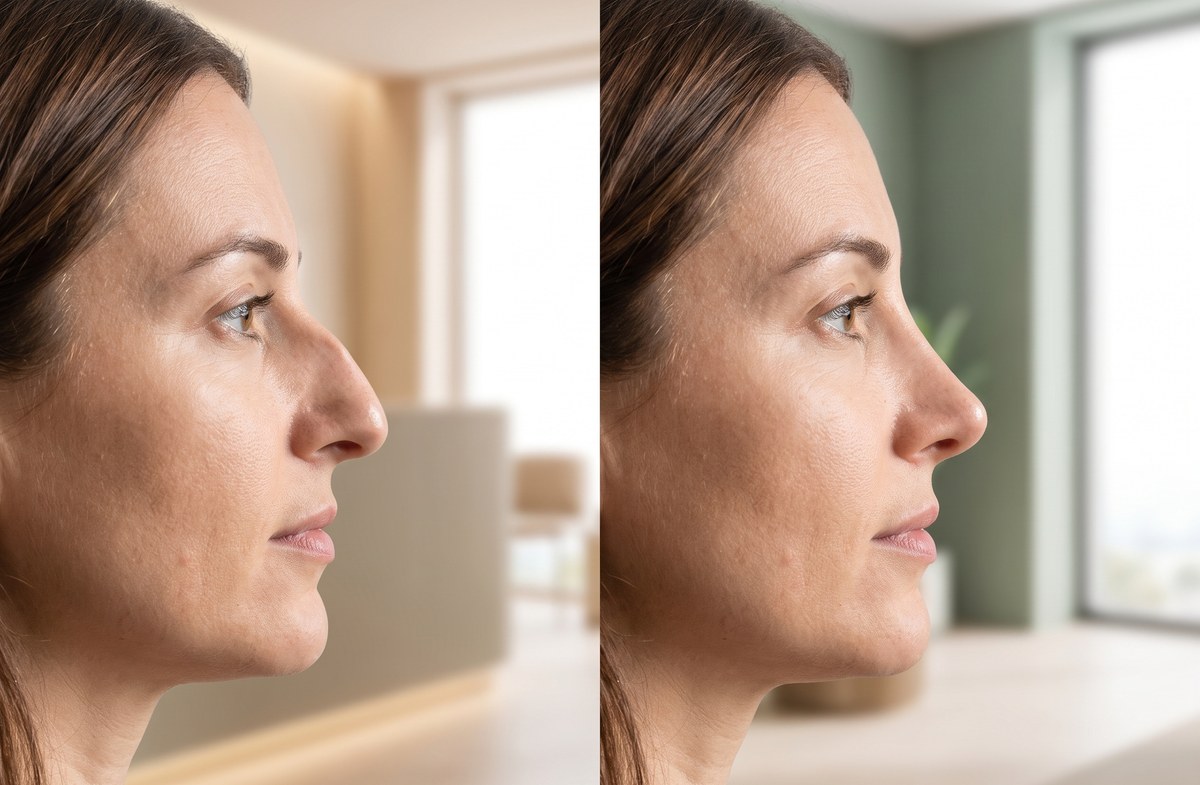
Revision rhinoplasty
A large proportion of saddle noses have been operated on before — four in ten nose operations with us are revision rhinoplasties.
Learn more → -
Reconstructive
Reconstruction after an accident, a tumour or a congenital malformation.
Learn more → -

Functional correction
With the strut, the width of the airways returns as well.
Learn more →
Your nasal augmentation from beginning to end
Before the operation
- Initial consultation of around an hour, without obligation
- Examination from the outside, from the inside and by palpation
- Grading the severity and determining the source of cartilage
- Vectra 3D simulation with several augmentation options
- Written cost estimate
- Informed-consent consultation and pre-anaesthetic assessment
On the day of the operation
- Our own operating theatre at the Kuzbari Centre
- One to four hours — according to the findings, not to a plan
- Rebuilding the load-bearing structure with the body's own cartilage
- Cartilage-supported stabilisation of the nasal tip
- Securing the internal nasal valve
- One night as an inpatient with round-the-clock care
After the operation
- A follow-up talk on the morning after the operation
- The mobile number of your surgeon
- Removal of splints and sutures after about a week
- Care of the donor site until it has healed completely
- All follow-up appointments up to the final result included
Three surgeons for your nasal reconstruction
-
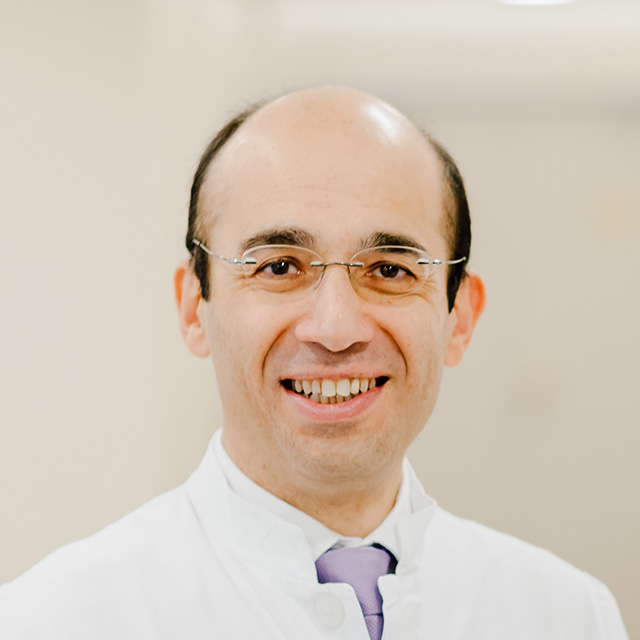
Univ. Doz. Dr Rafic Kuzbari
Specialist in Plastic, Aesthetic and Reconstructive Surgery
Over 30 years of experience; internationally regarded as an expert in revision procedures and complex rhinoplasty.
-
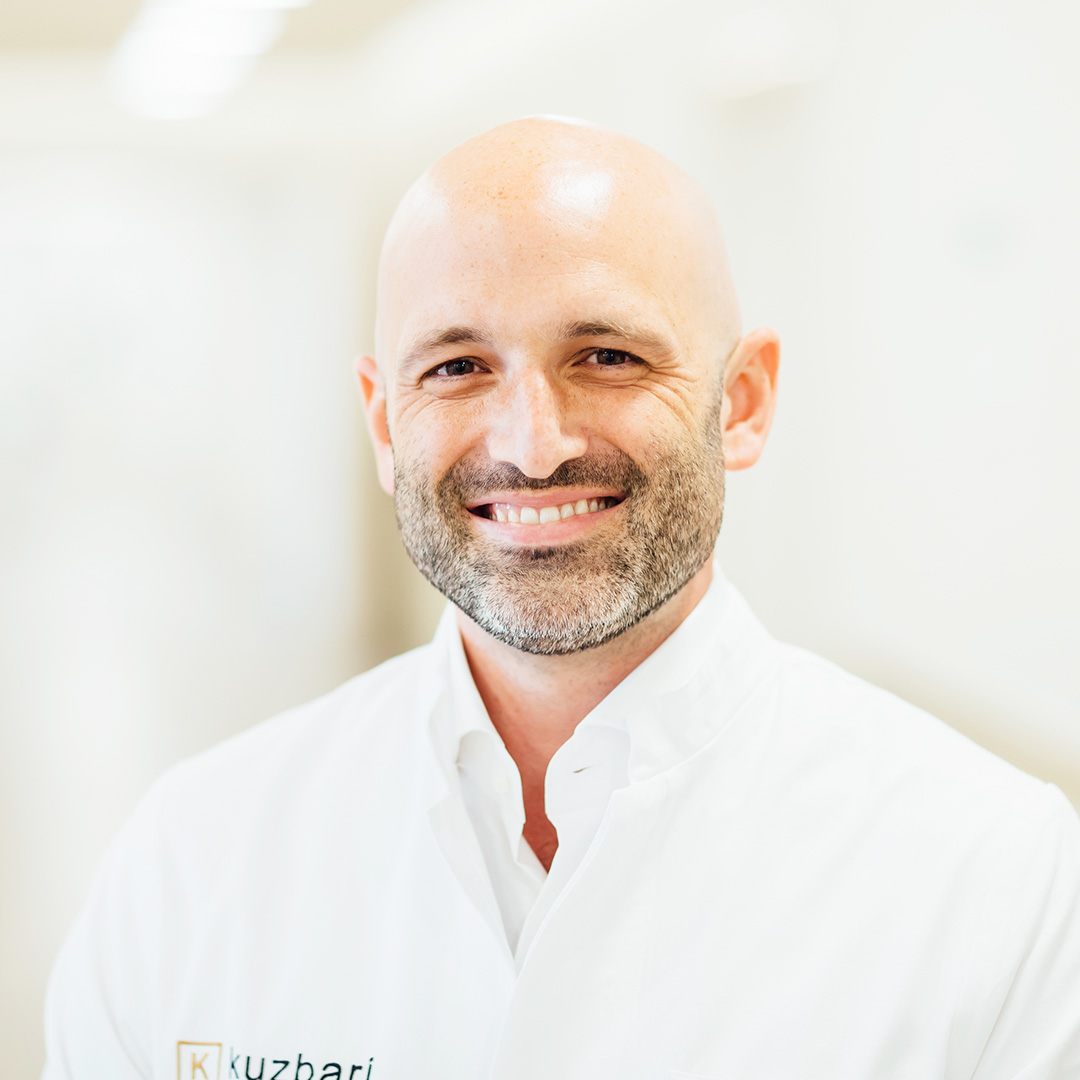
Dr Christoph Grill
Specialist in Plastic, Aesthetic and Reconstructive Surgery
A specialist in aesthetic and functional rhinoplasty with a focus on natural results.
-

DDr. Jessica Wittmann
Specialist in Oral and Maxillofacial Surgery
Combines the surgical and the aesthetic eye: precise nasal surgery with a sense for harmonious proportions.
Answers about saddle nose & nasal reconstruction
What is the bridge of the nose built up with?
We prefer to use the body's own cartilage — from the nasal septum, the ear or the rib area. The body's own tissue is accepted by the body and provides a natural, stable foundation.
Why the body's own cartilage and not an implant?
The body's own material grows in and is considered particularly well tolerated and stable in the long term. Which option is best suited in your case we discuss individually in the consultation.
Is the breathing improved too?
Because the support of the nose also carries its function, a saddle nose is often associated with obstructed breathing. We take the function of the nose into account and restore it as well where necessary.
Is nasal reconstruction painful?
During the operation you feel nothing thanks to the anaesthesia. After the procedure our patients usually report only mild pain — easily treated with painkillers.
How long does healing take?
You are fit for work after 3 – 7 days and presentable in company after 1 – 3 weeks; after 4 – 6 weeks you can take up sport again. The final result is visible after 6 – 12 months, in rare cases only after 18 months.
What does nasal reconstruction cost?
The cost depends on the extent of the procedure — an augmentation using the body's own cartilage involves more work than a purely shape-correcting procedure. At the initial consultation you will receive a transparent cost estimate. On request, payment in instalments over up to five years is possible; the annual percentage rate is 9.99%.
Why is it not enough to fill the hollow on the nose bridge?
Because a saddle nose is a problem of structural support, not of the surface. An onlay alone evens out the hollow visually, but it does not change the fact that the nose no longer has any support on the inside: it continues to sink over the years, the tip rotates further upwards, and the onlay can become visible beneath thin skin. We therefore rebuild the load-bearing structure.
When is rib cartilage needed?
With moderate and pronounced saddle noses, when the nasal septum and the ear do not provide enough material or do not have the necessary firmness — and very often with previously operated noses whose nasal septum is no longer available as a source. Rib cartilage is the only material from the body itself that can carry a nose and is available in sufficient quantity.
How noticeable is the harvesting from the chest?
Harvesting is carried out under the same anaesthetic through a short access incision in the inframammary fold, where the scar is concealed. The chest remains stable and breathing is not impaired. In the first few days this area is noticeable on deep inhalation, coughing and standing up — often more so than the nose itself. After one to two weeks this subsides markedly.
Can transplanted rib cartilage warp?
Rib cartilage has a tendency to warp slightly after it has been cut to shape. We counter this through the manner of the cutting, through a resting period during the operation in which the material can show what it will do, and where needed through internal reinforcement. A minimal deformation over the years cannot be ruled out entirely — we say so beforehand rather than keeping quiet about it.
Why not a synthetic implant?
The body's own cartilage is accepted as its own tissue and becomes incorporated. Foreign material remains a foreign body permanently and carries, over the years, the risk of rejection or of breaking through the skin — particularly on the nose bridge, where the skin is thinnest. For a load-bearing reconstruction, the body's own cartilage is therefore our first choice. Custom-made implants are used only in selected reconstructive situations, and we discuss that explicitly with you.
My nose only sank weeks after an accident. How does that happen?
A common course of events: if blood collects between the cartilage and the mucosa of the nasal septum after an injury, the cartilage is cut off from its nutrient supply and can perish within days. The nose bridge then loses its support, without anything having been immediately visible from the outside. What is decisive for the reconstruction is how much of the load-bearing cartilage has been preserved.
Can a saddle nose develop after previous surgery?
Yes. If a great deal of cartilage was removed during an earlier procedure, or if the supporting marginal strip was weakened, the nose bridge can give way over the course of months. Four in ten nose operations at the Kuzbari Centre are revision rhinoplasties on a nose that has already been operated on; procedures of this kind call for particular experience, and we take them on deliberately.
Will my nose look larger after the augmentation?
It regains the height it is missing — it will not become larger than it was before it collapsed. After the augmentation the nose often looks narrower, in fact, because a collapsed bridge makes it appear broader from the front. The 3D simulation shows you precisely this: the frontal impression before and after the planned augmentation.
How long does it take for the result to settle?
Longer than with a purely aesthetic reshaping. After two to four weeks you will see the new profile, still with swelling over the augmentation. Between the fourth and ninth month it becomes apparent how stable the augmentation is against the pull of the scar tissue. With a first operation the final result is often reached at around twelve months; after previous surgery, closer to eighteen.
What if an underlying illness is the cause?
Certain inflammatory and rheumatological conditions can attack the cartilage of the nasal septum. In these cases, investigating and treating the underlying condition is the first step — reconstruction follows only once the condition is stably controlled. For this we liaise with the specialists treating you.
A profile that carries itself again.
An initial consultation with three-dimensional simulation, a technique that suits your nose, and an operating time that follows the findings — this effort is the reason why rhinoplasty with us has its price. It is also the reason why the result is meant to hold: for a lifetime, not for a few years.
Book your rhinoplasty consultation now
Our rhinoplasty specialists
Univ. Doz. Dr Rafic Kuzbari
Specialist in Plastic, Aesthetic and Reconstructive Surgery
Dr Christoph Grill
Specialist in Plastic, Aesthetic and Reconstructive Surgery
DDr. Jessica Wittmann
Specialist in Oral and Maxillofacial Surgery