Previously operated noses

Revision and multiple rhino­plasties.

Four in ten nose operations at the Kuzbari Centre are revision procedures on a nose that has already been operated on. Some patients want at last to be able to look at themselves in the mirror again, others above all want to breathe freely again. We listen, take time over the findings and develop a way forward from them.

Revision nose surgery at the Kuzbari Centre Vienna
A speciality: shaping the nose

A main focus at the Kuzbari Centre.

Within nasal surgery, the correction of noses that have sometimes undergone several previous operations is a main focus at the Kuzbari Centre. For many years our surgical work has centred on aesthetic and functional rhinoplasty, nasal reconstruction and demanding revision surgery.

This specialisation is essential precisely for the correction of previously operated noses: the nose is important for breathing, it makes smelling possible and it protects us from infection. At the same time it gives our face character. Any procedure must therefore take account of form and function in equal measure — with the highest degree of precision and many years of experience.

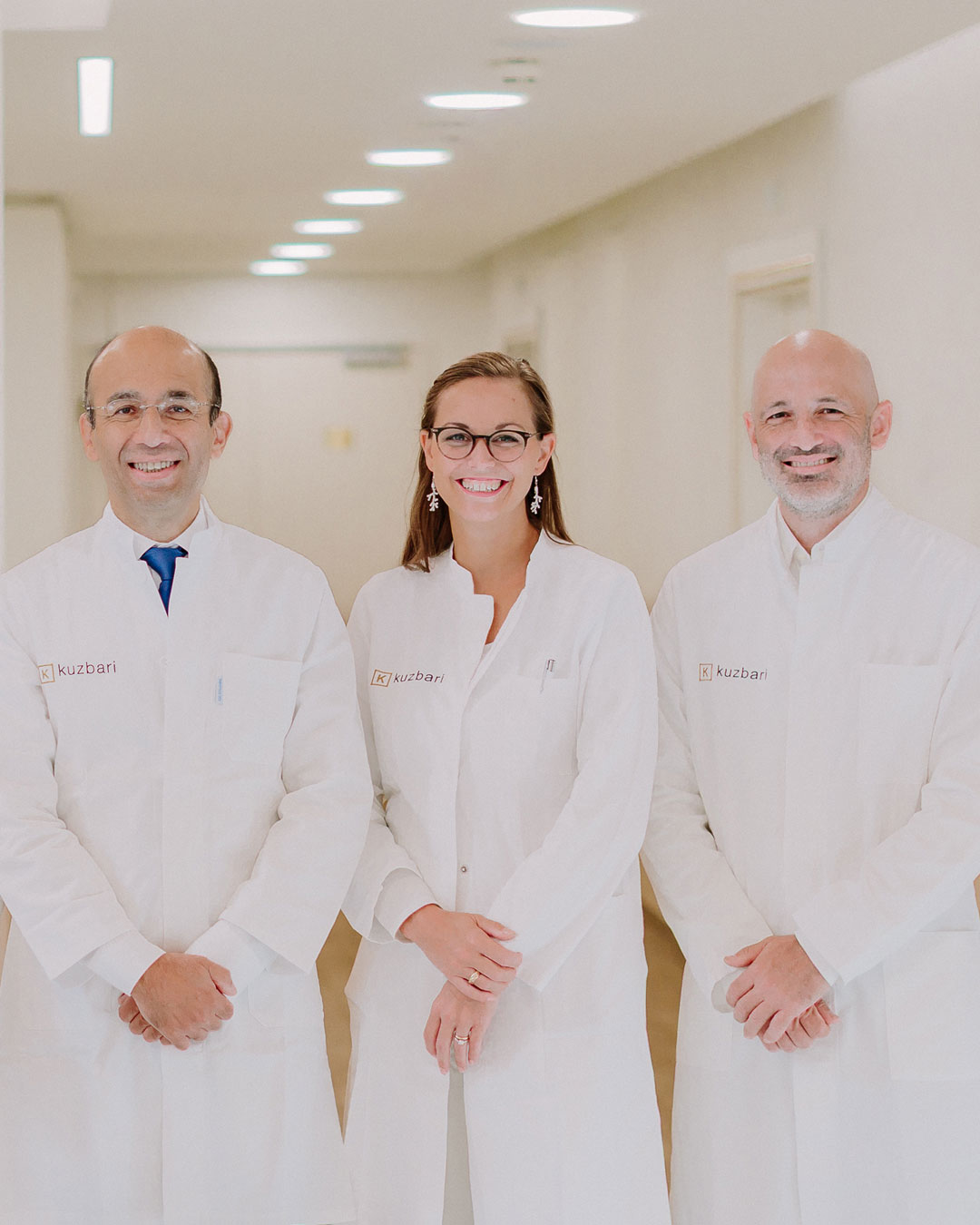
Second and multiple operations on the nose are carried out at the Kuzbari Centre by Univ.-Doz. Dr. Rafic Kuzbari and Dr. Christoph Grill — two surgeons who have worked particularly intensively with the previously operated nose for years.

Why we take on these cases

Four in ten nose operations here are revision procedures.

Four in ten nose operations at the Kuzbari Centre are revision procedures on a nose that has already been operated on. These procedures call for particular experience: the tissue is scarred, cartilage is sometimes missing, and the starting situation is different for every patient. We deliberately take on such cases.

This figure is the most important sentence on this page, and it says two things. First: you are not alone. Revision surgery is not an exception but a constant part of our work. Second: experience with previously operated noses only arises where they are operated on regularly — every one of these noses is different, and the eye for it comes from repetition.

In doing so we do not assess where and by whom the first operation was carried out. That is not our task and it would not help you. What we do: establish today's findings, say what can be achieved from them, and plan the way there.

The difference

Why revision surgery is a different procedure.

To an outsider, revision surgery looks like a rhinoplasty with a slightly different starting point. Surgically it is a different procedure. Four things change fundamentally.

The tissue layers are fused. In a nose that has not been operated on, skin, soft tissue and framework can be separated from one another as clearly distinct layers. After a previous operation, scar tissue binds these layers together. Exposing them takes longer, demands more care and carries a higher risk of compromising the blood supply to the overlying skin — particularly if the skin is thin to begin with.

Cartilage is in short supply. The nasal septum is the obvious source of cartilage — and in previously operated noses it has frequently already been used. Ear (conchal) cartilage then comes into consideration, which is naturally curved and well suited to the alar rims and the nasal tip, or cartilage from the rib area when quantity and firmness are required. We make this decision before the operation and discuss it with you in detail.

Scar tissue pulls. It contracts over months, and it rarely does so evenly. A result that is right on the day of surgery has to hold against this pull. Revision surgery is therefore built more robustly than a first operation — with more supporting elements, stronger grafts and a consistent cartilage-supported stabilisation of the nasal tip.

It is usually about reconstruction, not reduction. This is the sentence that surprises most patients. A nose that looks over-operated is often one that lacks substance: a collapsed nose bridge, a retracted tip, an alar rim drawn inwards. Taking more away would accentuate this. The solution is to give structure back.

From all of this it also follows that revision surgery takes longer and heals more slowly. Here the final result is to be expected at twelve to eighteen months rather than at six.


Typical starting situations

What brings patients to revision surgery

Almost all of these findings have one thing in common: they call for reconstruction and stabilisation, not further reduction.

  • Collapsed nose bridge

    In profile a hollow appears, the nose looks shortened and the tip rotates upwards. The cause is missing supporting structure. The way forward is to rebuild the support with the patient's own cartilage — not to fill out the surface.

  • Drooping of the nasal tip

    The tip points downwards again and the profile looks curved once more, although it was straight after the operation. Usually the support from below is missing. We stabilise the tip with modern cartilage-supported techniques — this considerably reduces the risk of it dropping again.

  • Tip lifted too far

    The nose looks shortened and the nostrils are clearly visible from the front. The correction is made by lengthening and supporting, usually with a cartilage element at the front edge of the nasal septum — a procedure that requires a good deal of material and a good deal of patience.

  • Irregularities on the nose bridge

    Edges, steps or asymmetries that show through thin skin once the swelling has gone down. Treatment consists of smoothing, rounding and, where necessary, padding with fine tissue of your own.

  • Crooked again

    Over the months the nose has moved to one side again, often because tension has remained in the nasal septum or because scar contraction pulled to one side. The correction requires stabilisation that is stronger than this pull.

  • Breathing worse than before

    A narrowed internal or external nasal valve, scarring inside the nose or a weakened structure. Treatment consists of opening and supporting — with narrow strips of cartilage that at the same time secure the shape of the middle third of the nose.

Maria's story

From suffering to a new nose.

The path of a patient who has already been operated on is best described through a real person. Maria was very unhappy with her nose even as a child. She was teased and had no sense of self-worth. At the age of 20 she had her nose corrected — and was not satisfied with the result.

She did not feel pretty with her operated nose and could not look at herself in the mirror. She came to us with this suffering.

Maria's path is typical of many revision operations — not because of the nose, but because of the time before it. For most patients, years lie between the first operation and the first consultation with us. Years in which one comes to terms with it, avoids photographs, automatically turns one's head when being photographed and at some point stops talking about it.

What helps first in such conversations is putting things in context: that a nose which does not fit after an operation is, in the vast majority of cases, not a final state. That there are findings which can be described, and a way forward which can be planned. And that four in ten nose operations with us are revision procedures — so this is a path that many people take.

Video · DDr. Jessica Wittmann

Too crooked, too broad, too pointed?

DDr. Jessica Wittmann explains the most common irregularities in the shape of the nose and how they can be corrected.

Maria's journey

How we correct previously operated noses

  • A thorough first consultation

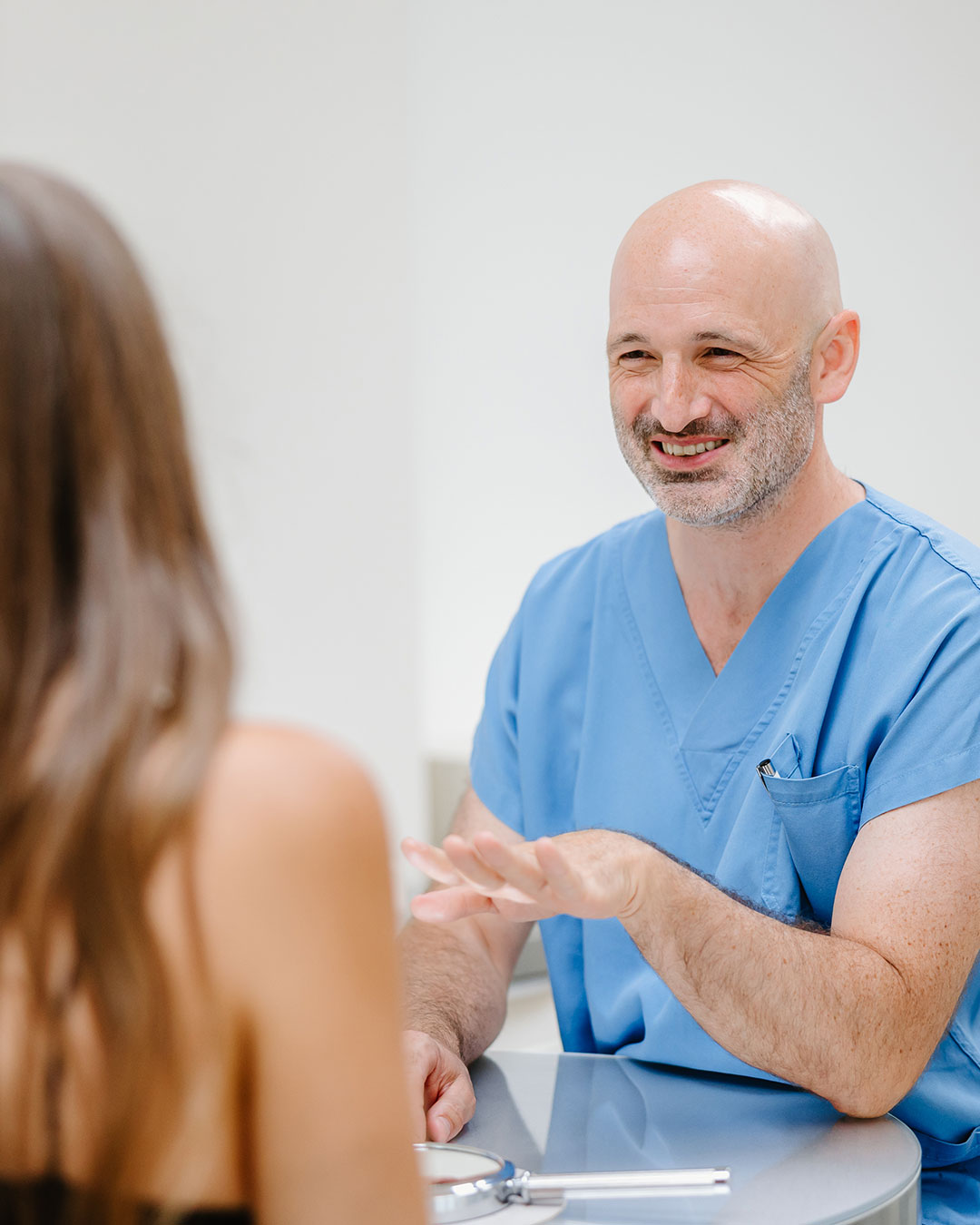
    Every journey to a new nose begins with a thorough first consultation. With Maria the conversation lasted more than a full hour — we get to know each other and discuss your personal wishes and concerns.

  • 3D simulation

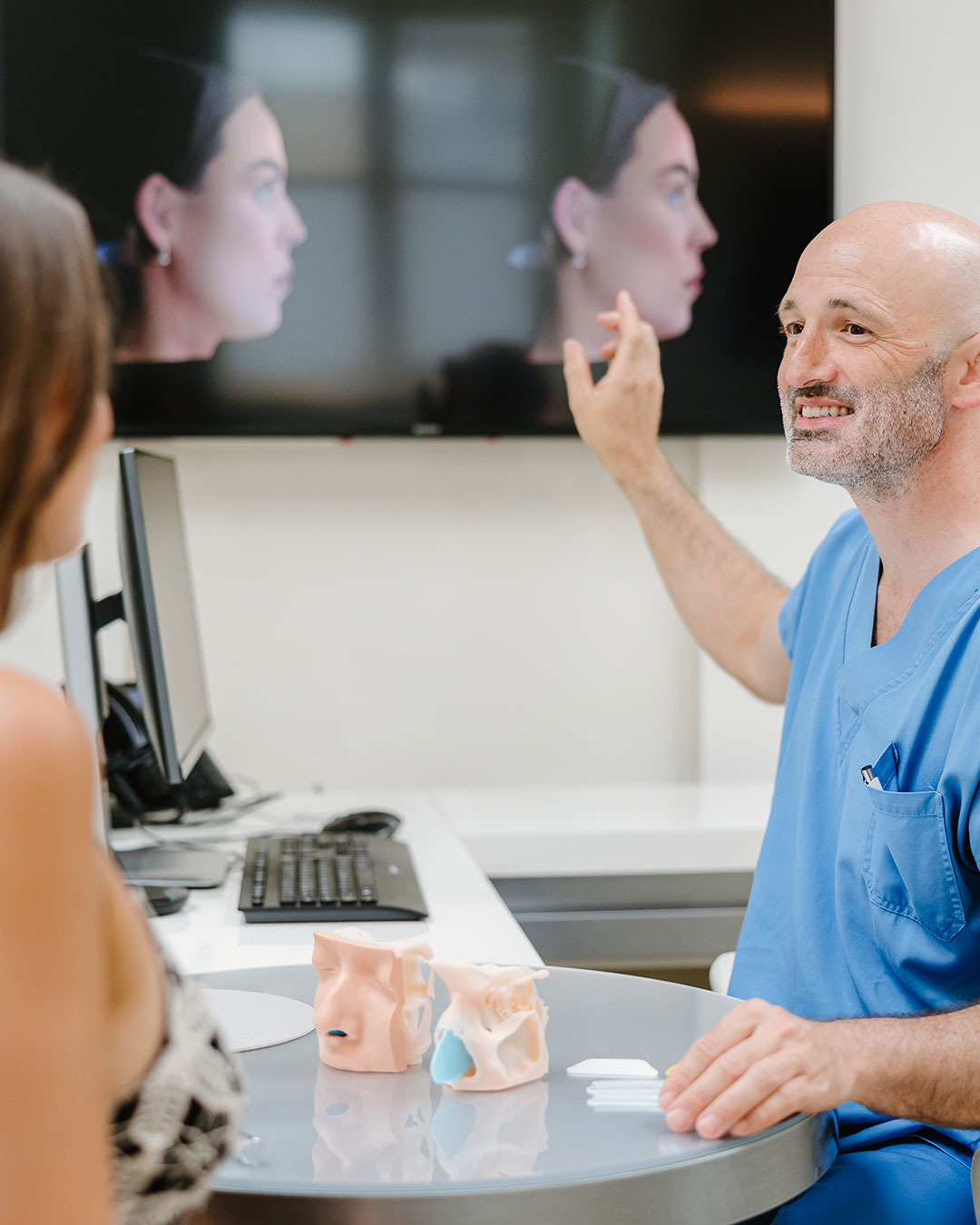
    Communication in particular matters to us: what exactly does someone mean by a nose that is “too big”? Our Vectra 3D simulation provides answers to that — a three-dimensional model of your face that you can shape together with us according to your wishes.

  • The procedure

    A frequent question: how long does the operation take? The answer: as long as a good result needs. It is not about the shortest operating time, but about the best result.

  • After the operation

    You leave the clinic before 10 o'clock the very next day. You have the mobile number of your treating doctor with you — reachable outside consulting hours as well.

Video · Univ. Doz. Dr Rafic Kuzbari

Why is cartilage grafted?

Univ. Doz. Dr Rafic Kuzbari explains why cartilage is grafted in rhinoplasty and how it stabilises the shape in the long term.

Video · Dr Christoph Grill

When the nose is operated on a second time

Is a nose that has already been operated on harder to correct? Dr. Christoph Grill on revision surgery — scars, missing cartilage and the transplantation of rib cartilage — and on what often weighs even heavier: lost trust and realistic expectations.

At a glance

The correction of a previously operated nose

Operation A state-of-the-art operating theatre at the Kuzbari Centre
Stay 1 night as an inpatient
Pain Mild to moderate
Duration of surgery 1 – 4 hours
Fit for work After 3 – 7 days
Presentable again After 1 – 3 weeks
Costs ab € 9.950 depending on complexity · payment in instalments over up to 5 years
Specialists Univ.-Doz. Dr. Kuzbari, Dr. Grill
Costs

The supreme dis­cipline of plastic surgery.

Correcting a nose that has already been operated on is regarded as the supreme discipline, among the most complex operations in plastic surgery. We recommend having this operation carried out only by proven experts.

Correcting a previously operated nose starts — depending on complexity — at €9,950. A detailed overview of all complexity levels can be found on the costs page. On request, payment in instalments over up to five years is possible.

Please note: these prices apply to operations performed by Dr. Grill and DDr. Wittmann. Fees for procedures with Univ.-Doz. Dr. Kuzbari can be found at kuzbari.at/rk/.

The consultation

With revision surgery, trust is the hardest part.

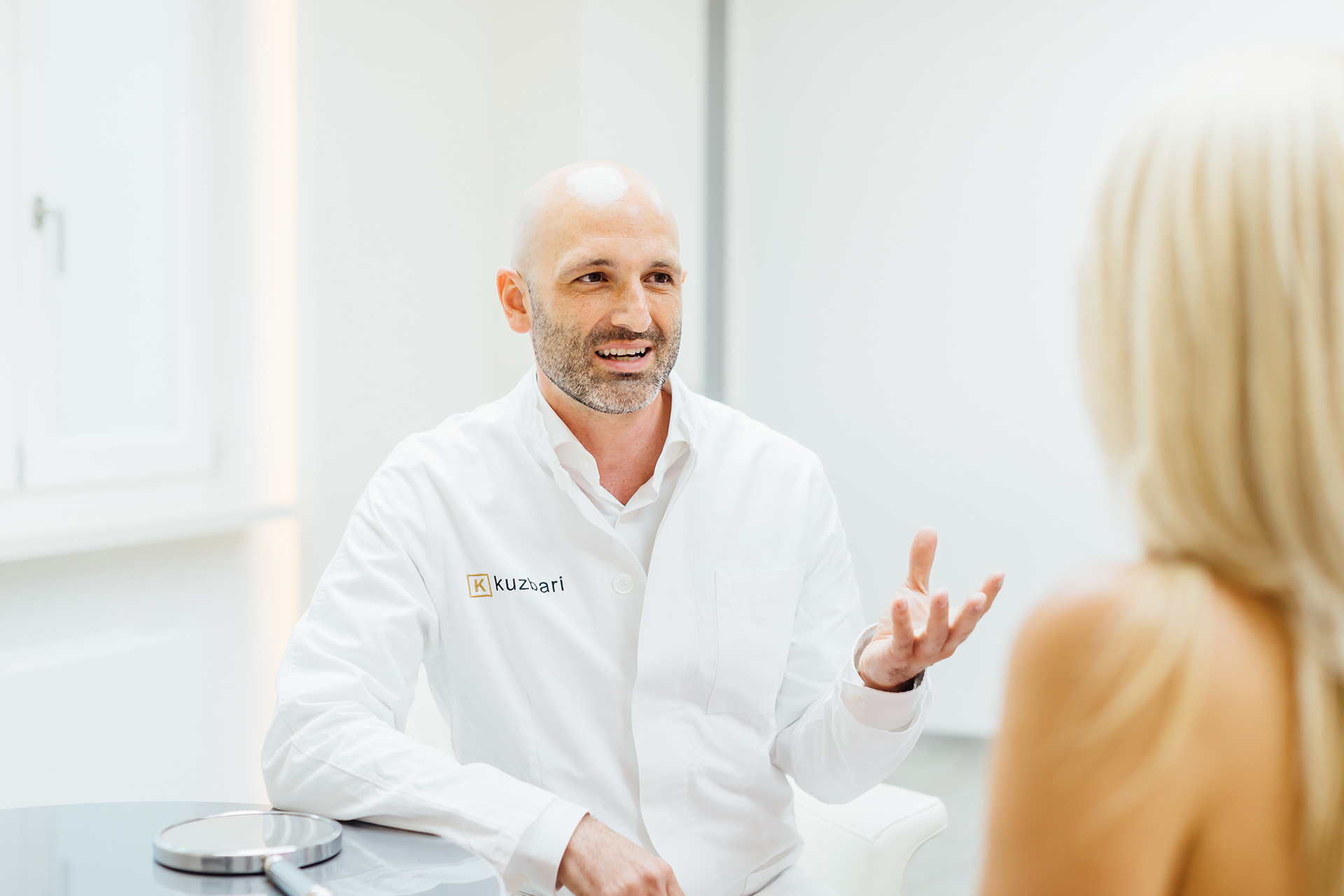
Anyone considering a revision rhinoplasty has already made a decision whose outcome did not match what they had expected. That changes the conversation. Many patients come more cautiously, better informed and with more questions — and with the feeling of not having been fully understood the first time.

We therefore take particular care with these first consultations. They do not begin with a proposal, but with listening: what bothers you today, specifically? What had you pictured back then? What has happened since — to your nose and to you? Only afterwards do we examine, and only afterwards do we talk about options.

That also means saying uncomfortable things. If an expectation does not match the starting point, we say so — preferably in the first consultation rather than after surgery. If we advise restraint or a later date, we explain why. And if we cannot take responsibility for a procedure, we do not recommend it.

What we do not do is pass judgement on the previous operation. That is not our task and it does not help you. There is only one set of findings that counts, and that is today’s.

Many patients take a second consultation before deciding. That is expressly welcome — and you leave none of these conversations under any obligation.

The timing

Why we wait at least twelve months.

The most frequent question at the initial consultation is: when can I? And the answer is almost always the same — not straight away.

After an operation a nose remains in motion for months. Swelling recedes, scar tissue contracts, contours sharpen and the skin settles. What appears in the third month as an irregularity may have disappeared by the tenth. As a matter of principle we therefore wait at least twelve months after the last procedure, and with thick skin or after several previous operations rather eighteen.

This waiting time is not a lost year but the precondition for planning rather than guessing. Only on healed tissue is it possible to say what is actually missing — and only on well-perfused, settled tissue is it safe to operate.

Come to us earlier nonetheless. A first consultation before the waiting time has elapsed is worthwhile: we establish the findings, document them photographically, tell you what is likely still to improve of its own accord, and agree a date together. For many patients that alone is a great relief.

There is one exception: if there is a marked obstruction of breathing or a wound-healing problem, we act sooner. We decide that on the findings.

Arrange a first consultation
First consultation about revision rhinoplasty — Kuzbari Centre Vienna
Our technique

Rebuild, support, keep stable.

Obtaining cartilage. The first question in any revision surgery is the question of material. If the nasal septum can still be used, we use it. If it cannot, ear (conchal) cartilage comes into consideration — naturally curved and therefore ideal for the alar rims and the nasal tip — or cartilage from the rib area, when quantity and firmness are needed for load-bearing parts. In every case the patient's own cartilage remains our first choice: it is accepted as the body's own tissue, becomes integrated and does not remain a foreign body under the skin.

Restoring the support. If the load-bearing part of the nasal septum is missing, it is replaced — a strong strip of cartilage along the front edge, a second along the nose bridge, the two firmly joined together. The shape is then built on this foundation.

Stabilising the nasal tip with cartilage support. We stabilise the nasal tip with modern cartilage-supported techniques. This considerably reduces the risk of the tip dropping again over the years. In revision surgery this is particularly important: the tip has already lost its natural support once, and scar contraction works against it permanently.

Smoothing and securing the nose bridge. Edges are rounded off, steps smoothed and transitions padded where necessary with fine tissue of your own — especially with thin skin, beneath which every irregularity shows through. Where work is done on bone, the piezotome is used, an ultrasound instrument that cuts and smooths bone while leaving soft tissue, mucous membrane and vessels untouched.

Opening the airways. Narrowed internal and external nasal valves are supported with narrow strips of cartilage — a measure that improves breathing and shape at the same time.

What all these steps have in common: they give back instead of taking away. That is the essence of revision surgery.

3D simulation

Expectations that hold this time.

Our 3D simulation shows your future nose not only in profile but also from the front and from below. You therefore see your possible result from exactly the angles from which others see you every day — and before the operation we are talking about the same image.

With revision surgery this has a particular significance. Many patients come with the feeling of not having been understood the first time — that something other than what finally emerged was discussed. A shared image is the best answer to that.

Just as important is what the simulation does not show. We tell you openly where the limits lie: what scarred tissue allows, how much reconstruction the skin will carry and which asymmetry will remain. Revision surgery rarely produces a nose that looks as if it had never been operated on — it produces a nose that no longer stands out in the face. That is a realistic aim, and for the great majority of patients a very good one.

More about the 3D simulation
Vectra 3D simulation before revision rhinoplasty — Kuzbari Centre Vienna
operating time

Why revision operations take longer.

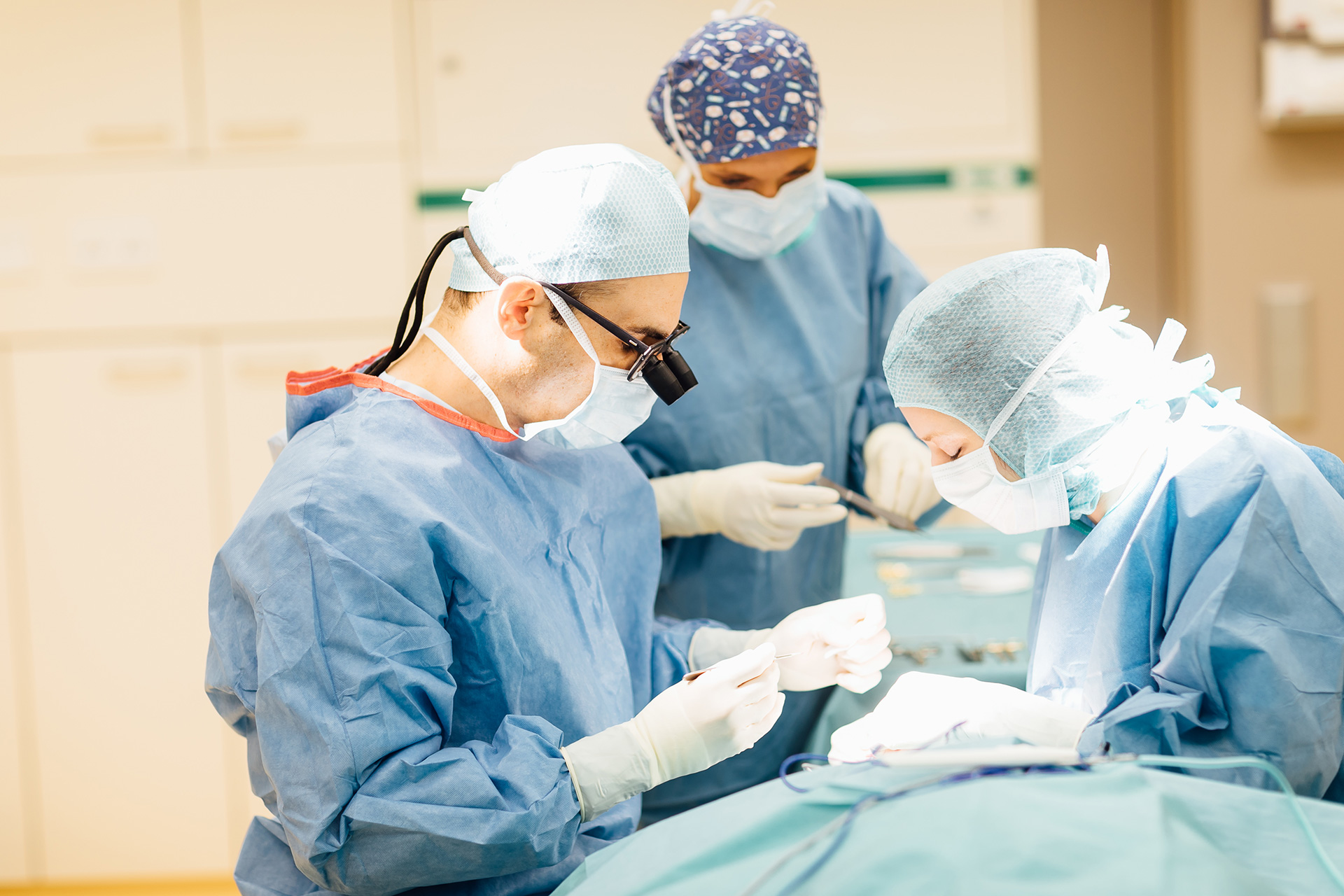
With us a rhinoplasty takes one to four hours. This range is intentional: we operate in our own operating theatres and therefore without time pressure — for as long as it takes for every detail to be right. How long a procedure takes is determined by the findings, not by the appointment schedule.

Revision operations regularly lie at the upper end of this range. Exposing scarred tissue demands care and time. Harvesting cartilage is an additional step when the nasal septum is no longer available. And the reconstruction itself consists of many individual elements which are trimmed, fitted, secured, assessed and often released again and set anew.

A frequent question is: how long does the operation take? The answer is: as long as a good result requires. You will spend the rest of your life with your new nose — and in the case of revision surgery it should have been the last time.

Case example · revision surgery

Rhinoplasty, 26

The patient is affected by both the shape and the function of her nose. She had already had an operation on her nose. Shape and function are of equal importance to her. 1. The septum extends too far downwards. 2. The nasal hump: she still perceives some irregularities on the bridge of the nose, and it should also look somewhat “ski-jump-like”. 3. The nasal tip should be more beautiful too, and look like a small snub nose. 4. A straight septum, by which the patient means the breathing difficulties.

Operation performed: Secondary open septorhinoplasty

Rhinoplasty Before
Before
Rhinoplasty After
After
Rhinoplasty Before
Before
Rhinoplasty After
After
Rhinoplasty Before
Before
Rhinoplasty After
After
Healing

Why more patience is needed after revision surgery

Scarred tissue swells more and for longer. Knowing this beforehand makes the first months easier to judge calmly.

  1. First week

    An external splint, and internal splints if needed. If rib cartilage was used, the chest area is noticeable in the first few days — often more so than the nose. After about a week we remove the splint and the sutures. You have the mobile number of your surgeon.

  2. Weeks 2 to 4

    The bruising disappears and you are presentable in public. The nose, however, is considerably more swollen than after a first operation and looks wider and higher than planned. This is to be expected and says nothing about the result.

  3. Months 2 to 4

    The swelling begins to subside and the contours emerge. In this phase individual areas can decongest at different rates, which leads to temporary asymmetries. We see you regularly and put into context what you are seeing.

  4. Months 4 to 9

    The decisive phase: scar tissue contracts, and it becomes apparent how stable the reconstruction is against it. That is precisely why we built more robustly than in a first operation.

  5. Months 9 to 18

    The final result. After revision surgery it is reached at twelve to eighteen months rather than at six. After that the nose is stable and changes only as the rest of the face changes.
An honest assessment

What revision surgery can achieve — and what it cannot.

Quite possible is: a nose that no longer stands out in the face. A profile that regains its height and its line. A tip that stands in position again and is held there. Breathing that improves with the restored structure. And for many patients the most important thing of all: no longer perceiving the nose as the first thing that meets them in the mirror.

There are limits too, and we name them clearly. Revision surgery rarely produces a nose that looks as if it had never been operated on — scar tissue remains, and it behaves differently from untouched tissue. Thin skin that has contracted over years cannot be stretched at will, which limits the amount of reconstruction possible. Complete symmetry is not achievable. And healing takes longer, with more temporary intermediate states.

What we advise against: a procedure before the waiting time has elapsed, where there is no functional urgency. Further reduction on a nose that already lacks substance. And a procedure where the expectation does not match the starting situation — in which case we prefer to say so beforehand, even if it is not the answer that was hoped for.

And one point we do not leave out: even after revision surgery, a small refinement can in individual cases be advisable. With previously operated noses this proportion is naturally higher than with first operations. We say so beforehand and will assess such a question at the earliest after twelve months.

For your first consultation

Questions that matter with revision surgery

Bring whatever you have: the operation report, photographs from before, findings. The more we know about the history, the better the planning can be.

  • What exactly is missing from my nose — and what is too much?
  • Is my nasal septum still available as a source of cartilage?
  • Where will the cartilage come from if not from there?
  • In my case, is this about reconstruction or about reduction?
  • How will the nasal tip be supported this time?
  • How will you prevent scar contraction from changing the result again?
  • How much reconstruction will my skin carry?
  • Has my breathing become worse — and what is the reason for that?
  • What is the earliest possible date for the procedure?
  • How long will it take to reach the final result this time?
  • What will probably remain, even after revision surgery?
  • Who can I reach if I am unsure after the operation?
What is included

Your revision surgery from beginning to end

Before the operation

  • First consultation of about an hour, without obligation
  • Examination from the outside and from within
  • Review of your previous findings and photographs, if available
  • The source of cartilage determined before the operation
  • Vectra 3D simulation from three perspectives
  • Written cost estimate

On the day of the operation

  • Our own operating theatre at the Kuzbari Centre
  • At the upper end of the range of one to four hours
  • Careful exposure of scarred tissue
  • Reconstruction and stabilisation with the patient's own cartilage
  • Cartilage-supported stabilisation of the nasal tip
  • One night as an inpatient with round-the-clock care

After the operation

  • A follow-up talk on the morning after the operation
  • The mobile number of your surgeon
  • Removal of splint and sutures after about a week
  • Close follow-up checks over 12 to 18 months
  • Photographic documentation of the entire course
  • All follow-up appointments up to the final result included

Costs and financing →

Frequently asked questions

Answers about revision rhinoplasty

How often do you carry out revision surgery?

Four in ten nose operations at the Kuzbari Centre are revision procedures on a nose that has already been operated on. These procedures call for particular experience: the tissue is scarred, cartilage is sometimes missing, and the starting situation is different for every patient. We deliberately take on such cases.

Who carries out the revision surgery?

Revision and multiple nose operations at the Kuzbari Centre are performed by Univ.-Doz. Dr. Rafic Kuzbari and Dr. Christoph Grill. Both have worked intensively with the previously operated nose for years. The surgeon who advises you also operates on you — and sees you again at every check-up.

How long do I have to wait after the first operation?

As a rule at least twelve months, and with thick skin or after several previous operations rather eighteen. A nose remains in motion for months after a procedure — what appears in the third month as an irregularity may have disappeared by the tenth. Only on healed tissue is it possible to plan instead of guess. A first consultation beforehand is nevertheless worthwhile.

Are there exceptions to the waiting time?

Yes. If there is a marked obstruction of breathing or a wound-healing problem, we act sooner. We decide that on the findings and not on the calendar.

Is revision surgery more difficult than a first operation?

Surgically, yes. Scar tissue binds together layers that ought to be separable, cartilage is often in short supply, and the result has to hold against the pull of the scar tissue. The procedure therefore takes longer, is built more robustly and heals more slowly.

Is revision surgery about reconstruction or about reduction?

Almost always about reconstruction. A nose that looks over-operated is often one that lacks substance — a collapsed nose bridge, a retracted tip, an alar rim drawn inwards. Taking more away would accentuate this. The solution is to give structure back.

Where does the cartilage come from if my nasal septum has already been used?

From the ear or from the rib area. Ear (conchal) cartilage is naturally curved and is particularly suited to the alar rims and the nasal tip; rib cartilage provides quantity and firmness for load-bearing parts. We make this decision before the operation and discuss it with you in detail.

How noticeable is the harvesting of cartilage from the ear or from the rib?

At the ear the access lies in the natural fold; the shape and stability of the ear remain unchanged and the scar is practically invisible once healed. In the rib area a small scar is left in the crease beneath the breast; the area is noticeable in the first few days when breathing deeply and standing up, often more so than the nose. After one to two weeks this eases considerably.

Will my nose afterwards look as if it had never been operated on?

That is not something we promise. Scar tissue remains and behaves differently from untouched tissue, and complete symmetry is not achievable. What is achievable: a nose that no longer stands out in the face. For the great majority of patients that is precisely the real aim.

Can my breathing be improved again as well?

Often, yes. Breathing that has become worse after a previous operation is usually due to a narrowed internal or external nasal valve, scarring inside the nose or a weakened structure. Treatment consists of opening and supporting — with narrow strips of cartilage that at the same time secure the shape of the middle third of the nose.

What should I bring to the first consultation?

Everything you have: the operation report, findings and photographs from before the first operation. The more we know about the history — which technique was used, whether and how much cartilage was taken — the better the planning can be. If none of it is available, that is no obstacle; what counts is today's findings.

Do you pass judgement on the first operation?

No. That is not our task and it would not help you. We establish today's findings, tell you what can be achieved from them, and plan the way there.

How long does it take to reach the final result?

Longer than after a first operation. After two to four weeks you are presentable in public, but the nose is considerably more swollen than after a first operation. Between the fourth and the ninth month it becomes apparent how stable the reconstruction is against the pull of the scar tissue. The final result is reached at twelve to eighteen months.

Can a nose that has been operated on several times still be corrected?

In many cases yes, and these procedures are part of our main focus. What is decisive is the condition of the skin, the structure that remains and the available sources of cartilage. After the examination we will tell you honestly what is possible — and also when we advise restraint.

Why the effort

So that it was the last time.

An initial consultation with three-dimensional simulation, a technique that suits your nose, and an operating time that follows the findings — this effort is the reason why rhinoplasty with us has its price. It is also the reason why the result is meant to hold: for a lifetime, not for a few years.

Satisfied patients

One of the most trust­worthy voices.

On DocFinder, Dr Christoph Grill and DDr. Jessica Wittmann are among the best-rated plastic surgeons — over 1,390 positive reviews on DocFinder speak for themselves.

At numerous congresses our surgeons have given lectures on facial and nasal surgery before an international specialist audience. They appear regularly, along with the other doctors of the Kuzbari Centre, in Austria's leading newspapers, magazines, TV and radio stations.

The Kuzbari Centre
  • Reception
  • Waiting area
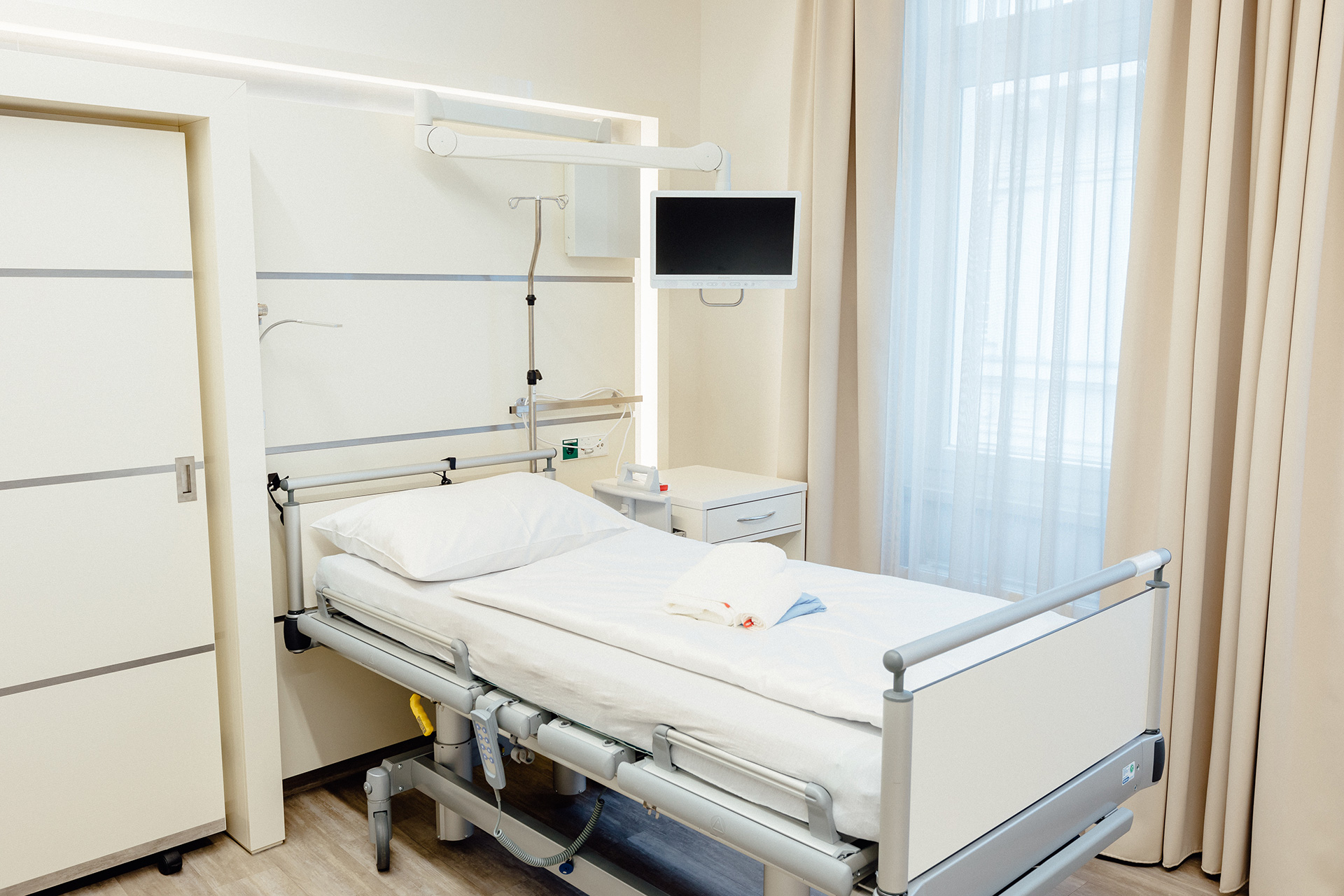
  • Patient room
Your doctors

Your surgeons for revision rhinoplasty

Second operations on a previously operated nose are carried out at the Kuzbari Centre by specialists with many years of experience — rated a consistent 5.0 on DocFinder.

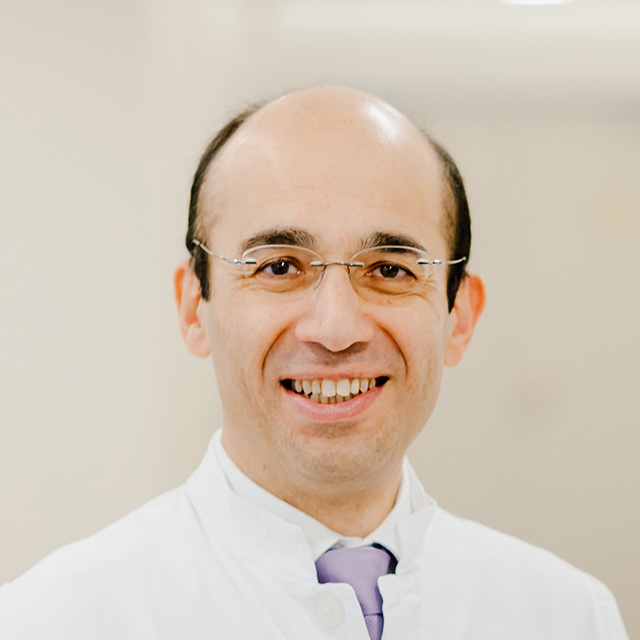
Univ. Doz. Dr Rafic Kuzbari

Univ. Doz. Dr Rafic Kuzbari

Specialist in Plastic, Aesthetic and Reconstructive Surgery

Over 30 years of experience; internationally regarded as an expert in revision procedures and complex rhinoplasty.

5.0 · 621 reviews on DocFinder
DDr. Jessica Wittmann

DDr. Jessica Wittmann

Specialist in Oral and Maxillofacial Surgery

Combines the surgical and the aesthetic eye: precise nasal surgery with a sense for harmonious proportions.

5.0 · 188 reviews on DocFinder
Your specialists

A consultation appointment at the Kuzbari Centre

  • Univ. Doz. Dr Rafic Kuzbari

    Univ. Doz. Dr Rafic Kuzbari

    Specialist in Plastic, Aesthetic and Reconstructive Surgery

    Over 30 years of experience; internationally regarded as an expert in revision procedures and complex rhinoplasty.

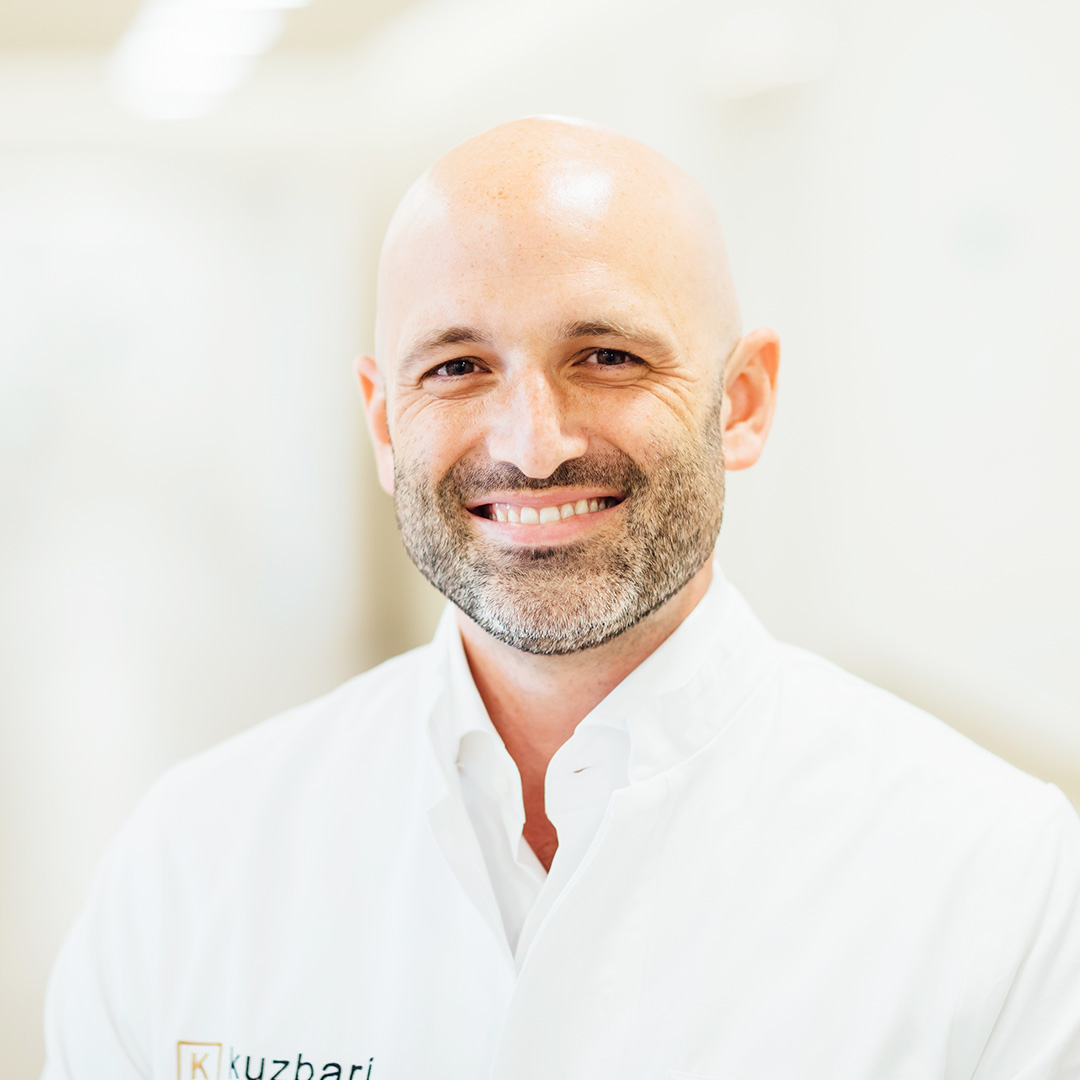
  • Dr Christoph Grill

    Dr Christoph Grill

    Specialist in Plastic, Aesthetic and Reconstructive Surgery

    A specialist in aesthetic and functional rhinoplasty with a focus on natural results.

  • DDr. Jessica Wittmann

    DDr. Jessica Wittmann

    Specialist in Oral and Maxillofacial Surgery

    Combines the surgical and the aesthetic eye: precise nasal surgery with a sense for harmonious proportions.

Book your rhinoplasty consultation now

Simply arrange your no-obligation consultation by phone on +43 1 358 28 85 or via the online booking below:

Our rhinoplasty specialists

Univ. Doz. Dr Rafic Kuzbari

Univ. Doz. Dr Rafic Kuzbari

Specialist in Plastic, Aesthetic and Reconstructive Surgery

Dr Christoph Grill

Dr Christoph Grill

Specialist in Plastic, Aesthetic and Reconstructive Surgery

DDr. Jessica Wittmann

DDr. Jessica Wittmann

Specialist in Oral and Maxillofacial Surgery

DocFinder Patients’ Choice 2015 DocFinder Patients’ Choice 2016 DocFinder Patients’ Choice 2017 DocFinder Patients’ Choice 2018 DocFinder Patients’ Choice 2019 DocFinder Patients’ Choice 2020 DocFinder Patients’ Choice 2021 DocFinder Patients’ Choice 2022 DocFinder Patients’ Choice 2023 DocFinder Patients’ Choice 2024 DocFinder Patients’ Choice 2025