Functional-aesthetic rhinoplasty.
Many people suffer from breathing problems that weigh on their daily life — and at the same time would like a more harmonious nasal shape. At the Kuzbari Centre we often combine the two in a single procedure: functional improvements to nasal breathing and aesthetic corrections to the external shape.
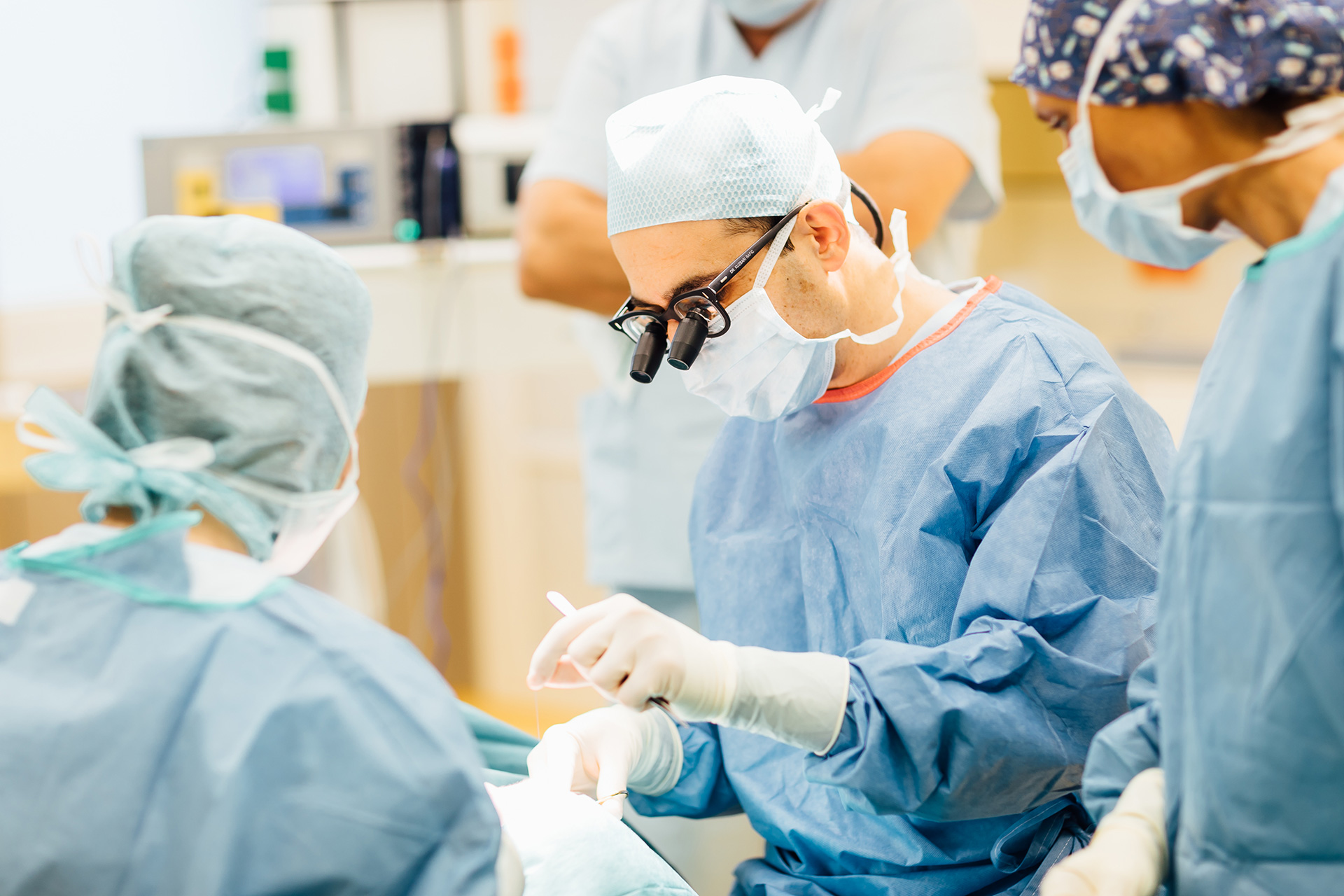
Septorhinoplasty — medicine and aesthetics in a single procedure.
A functional-aesthetic rhinoplasty, also known as a septorhinoplasty, is an operation that addresses both medical and aesthetic aspects of the nose. Functionally it is about improving nasal breathing, which may be impaired by anatomical disturbances. Aesthetically the external shape of the nose is adjusted — whether by reducing a hump, refining the nasal tip or adjusting the width of the nose.
At the Kuzbari Centre these procedures are carried out by experienced specialists — Univ.-Doz. Dr. Rafic Kuzbari, Dr. Christoph Grill and DDr. Jessica Wittmann. Thanks to our Vectra 3D simulation you can see before the operation how your new nose will look and function.
The name already says what it is about: septum stands for the nasal septum, rhinoplasty for the shaping of the external nose. Both in one word — and in one operation, because in the same nose both depend on the same material. Choosing a septorhinoplasty therefore does not mean choosing two operations at once, but one that treats the nose as a whole — from the inside as well as the outside.
Is there such a thing as the perfect nose?
Dr Christoph Grill explains what makes your personal perfect nose.

Which causes we treat surgically
-
A deviated septum (septal deviation)
If the septum bends, it often blocks one side — which can lead to one-sided congestion, frequent infections or disturbed sleep. With a septoplasty we straighten the septum and stabilise it, often with cartilage grafts from the patient's own nose.
-
Enlarged turbinates (turbinate hypertrophy)
A turbinoplasty reduces swollen turbinates gently, without impairing their function — and eases symptoms such as chronic congestion.
-
Collapse of the nasal valves
With weak nasal walls these collapse when breathing in. By stabilising them with cartilage implants or spreader grafts the valve is supported — and breathing becomes considerably easier.
-
Polyps, sinuses, previous surgery
Polyps or diseases of the paranasal sinuses can also cause obstructed breathing. Such findings are clarified in cooperation with ENT specialists — the sinus aspects belong in their field, and we take on the nasal surgery.
The four narrow points — and the four shape-defining areas that lie above them.
Anyone who understands where the air is held up inside the nose also understands why shape and function are so closely connected. The airway has four critical points, and above each of them lies an area that determines the appearance of the nose.
The nasal septum stands vertically in the middle, separates the airways and at the same time supports the nose bridge and the nasal tip. It is the point at which shape and function are literally the same component.
The internal nasal valve, a gap a few millimetres wide between the nasal septum and the upper lateral cartilages, is the narrowest point of the entire airway. Above it lies the middle third of the nose — the part whose width, seen from the front, shapes the overall impression.
The turbinates on the side wall warm, moisten and clean the air. They are not visible from outside and, alone among the four points, have no direct effect on shape — they are the area where the work is purely functional.
The external nasal valve is the region of the nasal openings, held open by the outer limb of the alar cartilage. That very cartilage also gives the nasal tip its shape. Narrowing the tip means intervening in breathing — and supporting the valve alters the tip.
From this overlap follows the principle by which we operate: the airways are secured first, then the shape is built — and at the end we check whether the shaping work has left the airways unchanged.
Patients who come to us with both concerns
In these constellations the combined operation is almost always a more sensible route than two separate procedures.
-
A hump and a narrow nose
The hump is bothersome in profile, and at the same time one side takes in too little air. Because the nose bridge lies exactly above the internal nasal valve, work is being done in this area in any case — securing the width at the same time costs hardly any additional time and prevents breathing from suffering.
-
A crooked nose since the broken nose
The crookedness you can see and the narrow point you can feel have the same cause: a deviated nasal septum. A correction that addresses only one of the two leaves the cause in place.
-
A nose too large for years, breathing never good
Many patients report having known both since adolescence without ever suspecting a connection. The examination then frequently reveals a nasal septum that gave way during growth and took the nose bridge with it.
-
Nostrils collapsing during exercise
If your nasal opening is drawn inwards as you breathe in, you have a weak external nasal valve. It is treated not by narrowing but by supporting — the same measure improves shape and breathing in one step.
-
After previous surgery
It is not unusual for the shape not to be as desired after an earlier procedure and for breathing to be worse than before. Four in ten nose operations at the Kuzbari Centre are revision rhinoplasties on a nose that has already been operated on; we take such cases on deliberately.
-
An allergy plus a narrow point
If an allergy exists in addition to the anatomical narrowing, the operation does not treat the allergy — but it can ease the situation considerably, because the allergy-related swelling then meets a wider airway. Allergy testing comes first here.
In the nose, shape and function are the same component.
Treating shape and breathing in a single procedure is not a question of convenience. It is a question of anatomy: the structures that hold a nose in shape are the same ones that hold the airway open. Four examples make this tangible.
The nasal septum supports the nose. It is the central support for the nose bridge and the nasal tip — and at the same time the dividing wall between the airways. If it is straightened in order to improve breathing, the support of the nasal tip inevitably changes. Without a countermeasure, drooping of the nasal tip can follow; after a purely functional operation the nose looks different from before.
A hump lies above the narrowest point. When the nose bridge is lowered, the very area in which the internal nasal valve lies is altered — the narrow gap between the nasal septum and the upper lateral cartilages, the narrowest point of the entire airway. A purely aesthetic hump correction can worsen breathing if this area is not secured.
The nasal tip holds the nasal opening open. The outer limb of the alar cartilage gives the tip its shape and at the same time prevents the nasal opening from collapsing as you breathe in. Removing substance at the tip in order to narrow it means intervening in breathing.
A crooked nose is almost always both. The crookedness visible from outside is usually caused by a deviated nasal septum that narrows one side at the same time. Here shape and breathing have the same cause — and the same solution.
That is why we plan every rhinoplasty from both sides, even if you come to us for only one of the two concerns. A nose that looks better after the operation and functions worse would not be a good result for us — and just as little the other way round.
How we combine the two in a single procedure.
Nose-bridge-preserving, where the findings allow it. We work extensively with the modern nose-bridge-preserving technique, known as dorsal preservation, and with hybrid techniques — not exclusively with the traditional structural septorhinoplasty. The natural nose bridge is preserved rather than being removed and rebuilt. The result looks particularly natural, it is stable in the long term, and the risk of later irregularities on the nose bridge is reduced — which counts above all with thin skin. Certain forms of crookedness also recur less often. For the functional-aesthetic correction the technique has an additional advantage: where the roof above the nasal septum is not opened, the internal nasal valve also retains the width it grew with.
Cartilage-supported at the nasal tip. We stabilise the nasal tip with modern cartilage-supported techniques. This considerably reduces the risk of drooping of the nasal tip over the years. With a combined operation this is doubly important, because straightening the nasal septum takes away support from the tip that has to be replaced.
Septoplasty with the supporting structure preserved. The nasal septum is released from its tension and realigned; a supporting marginal strip always remains in place. The cartilage obtained in the process is at the same time the material for all stabilisation work — a further reason why both goals can be achieved better in one procedure than separately.
Spreader grafts. Narrow strips of cartilage between the nasal septum and the upper lateral cartilages hold the internal nasal valve open and at the same time shape the line of the middle third of the nose. One measure, two effects — that is the essence of this operation.
Function-preserving treatment of the turbinates. Reducing rather than removing: the turbinates should continue to warm, moisten and clean the air you breathe.
Piezotome for the bone work. An ultrasound instrument that cuts and smooths bone while leaving soft tissue, mucous membrane and blood vessels untouched. This means more precise bone work and, as a rule, less bruising and swelling. It is not a method in its own right — it is a tool for one step, which we use as standard in every nose surgery.
Only one anaesthetic, one operation, one healing phase.
The nose is a complex organ in which the inner structures (such as the septum) are directly connected to the outer shape. A purely functional operation could impair the aesthetics, and conversely a purely aesthetic rhinoplasty could unintentionally worsen breathing.
Combining the two reduces recovery time and risks — social downtime is 1 to 3 weeks, and most people are fit for work after just 3 to 7 days. You achieve harmonious results and, with our Vectra 3D simulation, can see in advance how functional changes affect the aesthetics.
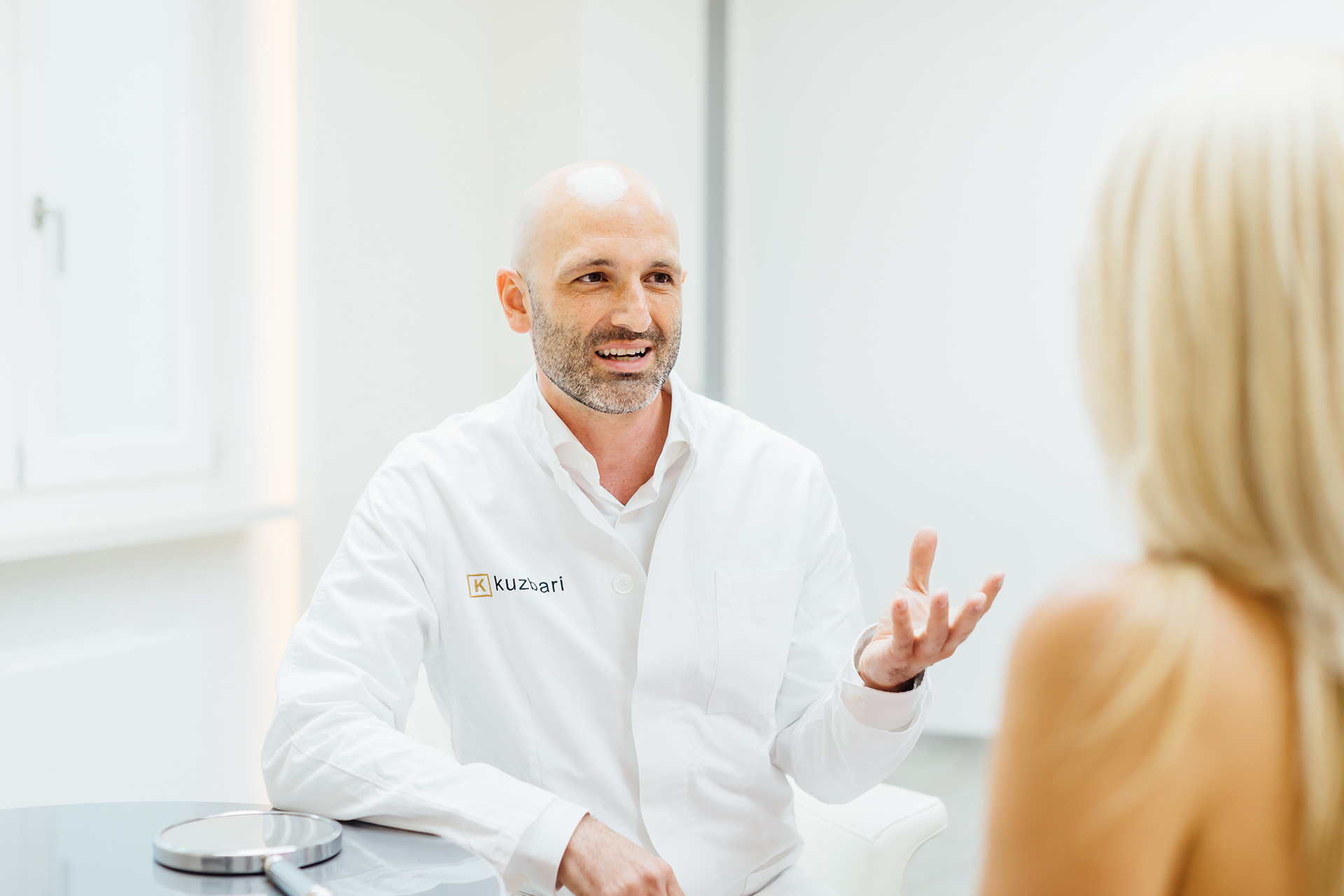
When will the result be visible?
Dr Christoph Grill explains when the final result becomes visible after a rhinoplasty.

Functional-aesthetic rhinoplasty — key facts
| Operation | Our own surgical wing at the Kuzbari Centre |
|---|---|
| Stay | 1 night as an inpatient |
| Presentable again | After 1 – 3 weeks |
| Fit for work | After 3 – 7 days |
| The first consultation | incl. Vectra 3D simulation |
| Specialists | Kuzbari, Grill, Wittmann |
Looking good and breathing well — in a single procedure.
Aesthetics and breathing can be combined in a single, carefully planned operation. That spares you a second healing phase and leads to a coherent overall result.
In practical terms: one anaesthetic instead of two, one week with a splint instead of two, one series of check-up appointments instead of two separate paths. And in medical terms it means that the two goals do not work against each other but are planned together from the outset.
The goal: a nose that looks harmonious — and through which you breathe freely. Both should last, and both should still be as they were in the first year even after many years.

The order is no accident
With a combined operation the order determines the result: function comes before shape, because later shaping work must not narrow the airways again.
-
Access and findings under direct view
The skin is carefully released from the framework as a layer of its own. Only now is the actual anatomy visible — we check the plan from the 3D simulation against what lies in front of us and adjust it where necessary.
-
Nasal septum
Straightening, release of the tension, preservation of the supporting marginal strip. The cartilage obtained is trimmed and set aside for the steps that follow.
-
Turbinates and nasal valves
Careful reduction of the turbinates, opening of the internal nasal valve with spreader grafts, and where necessary stabilisation of the external nasal valve. From this point on the airways are secured.
-
Nose bridge
Lowered in a preserving manner or reassembled structurally, with the bony base narrowed or straightened using the piezotome. The profile line takes shape — on a foundation whose width has already been established.
-
Nasal tip
Cartilage-supported stabilisation: a strut in the columella, forward extension of the nasal septum, suture techniques and, where needed, an onlay graft. The most intricate and often longest stage of the operation.
-
Checking and fine-tuning
Assessment from several angles, a symmetry check, final corrections of a millimetre or two — and another check of whether the work on the shape has left the airways unchanged. Last of all comes the decision on whether the alar base still needs something.
-
Closure and splinting
Fine wound closure, internal splints to protect the nasal septum, an external splint to stabilise the new shape.
Two goals in one operation take time.
A rhinoplasty with us takes one to four hours. That range is deliberate: we operate in our own operating theatres and therefore without time pressure — for as long as it takes until every detail is right. How long an operation takes is decided by the findings, not by the schedule.
A functional and aesthetic correction tends towards the upper end of that range, and for an understandable reason: there are two goals, and they influence one another. After every step on the shape we check again whether the airways have remained just as wide; after every functional step we check what it has done to the shape. These loops of checking are the actual work.
For you, the combination still has a clear advantage: one anaesthetic, one operation, one healing phase — instead of going the same way twice. You will spend the rest of your life with your new nose; if the operation takes half an hour longer in order to improve the result, that is a very short time in relation.
Two examinations, one plan.
The preparation for a combined operation has two strands. One is the functional examination: we look at the nose from the inside and assess every narrow point individually — nasal septum, turbinates, internal and external nasal valve. The other is the aesthetic planning with the 3D simulation.
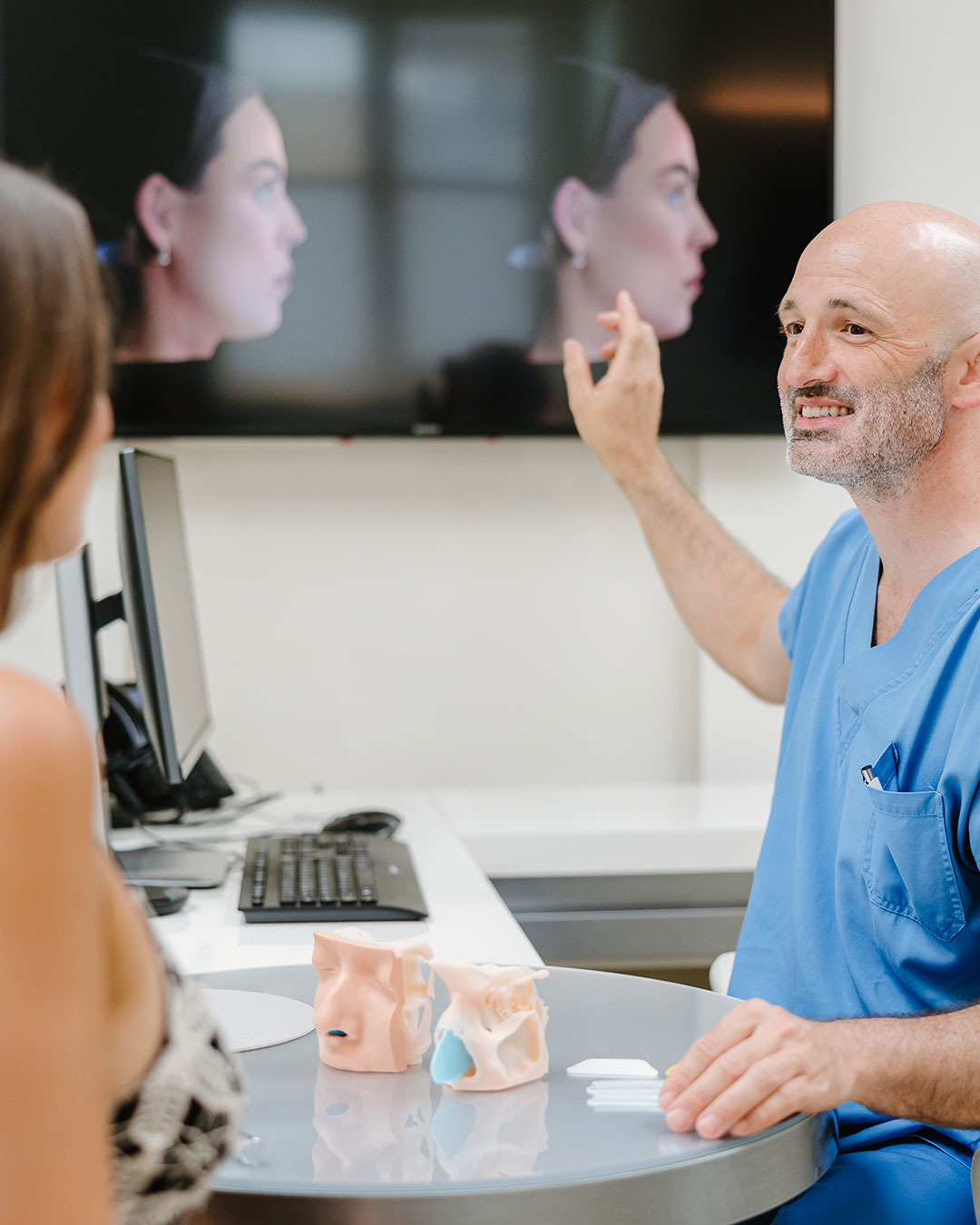
Our 3D simulation shows your future nose not only in profile, but also from the front and from below. So you see your possible result from exactly the angles from which others see you every day — and before the operation we are talking about the same image.
Both strands come together in one sentence that you should hear from us: what the operation will improve about your breathing, what it will improve about your shape — and what it will not. If part of your symptoms comes from an allergy or from the paranasal sinuses, we say so and clarify it together with an ENT specialist, rather than promising an improvement that surgery cannot deliver.
Two courses of healing that run at different speeds
Breathing improves before the shape is final. Knowing that makes the first few months easier to judge calmly.
-
First week
Neither strand can be judged at this stage: the nose is swollen and protected by splints, and breathing is worse than before the operation. That is due to the swelling of the mucous membrane, not to the result. After about a week the splints and sutures are removed.
-
Weeks 2 to 4
Breathing makes its biggest leap in this phase — many describe the days after the splints are removed as a turning point. The shape is only roughly apparent: the bruising has gone and you are presentable in public, but the contours are still soft.
-
Months 2 to 4
The mucous membrane has largely recovered and breathing is stable. As for the shape, the contour becomes sharper and the nasal tip begins to define itself. At the follow-up appointments we compare it with the 3D plan.
-
Month 4 to 8
Functionally, hardly anything changes any more. Aesthetically it is the decisive phase: scar tissue contracts, the residual swelling recedes and the tip becomes finer.
-
Month 8 to 12
The final result. With thick skin or after a revision rhinoplasty, the definitive shape can take up to about 18 months — by which time breathing has long been stable.
What changes in everyday life when both are right.
A great deal is said about the shape of a nose, and rarely about its function. Yet it is usually breathing that patients report on first once healing is complete — because the difference shows not in the mirror, but in the course of the day.
Sleep. Anyone who does not breathe through the nose at night switches to mouth breathing: restless sleep, a dry throat in the morning, frequent waking. Many do not consider themselves poor sleepers at all — they simply know nothing else.
Exercise. Here the effect is immediate. If nasal breathing is not sufficient, you switch to mouth breathing sooner and tire more quickly. After about four to six weeks light endurance exercise is possible again — for many the moment at which the difference is most noticeable.
The nose itself. Mouth breathing bypasses the air-conditioning system of the nose; the air arrives in the throat cold, dry and unfiltered. Sore throats and lingering colds become more frequent. When nasal breathing returns, this often settles.
And the shape. The second part of the result shows itself more slowly, but lastingly: a nose that is no longer the first thing you notice in the face. Many patients describe how they stop automatically turning their head in a particular direction when being photographed.
When the combined operation makes sense.
Age. Because the external shape is also changed, we operate once facial growth is complete — as a rule from about the age of 16 in women, and somewhat later in men. If a marked obstruction of breathing is the main concern, we discuss the timing on an individual basis. There is no upper age limit.
Clarified beforehand. A known allergy, a suspected disorder of the paranasal sinuses or a dependence on decongestant nasal sprays should be clarified before the operation. Otherwise expectations arise that a surgical procedure cannot meet — and that is precisely what we want to avoid.
Two weeks before. Avoid blood-thinning preparations, unless they are medically prescribed, and avoid nicotine: smoking measurably impairs the healing of the mucous membrane. Everything else about the preparation you will receive in writing.
Afterwards. Allow a week until the splints are removed, two to three weeks until you are presentable in public, and expect the shape to become final only after months. Breathing is stable considerably earlier — usually just a few weeks after the procedure.
„A nose that looks better and works worse would not be a good result for us — and neither would the reverse.“
Rhinoplasty, 37
The patient finds her nose prominent overall. What bothers her is the drooping nasal tip and its round, poorly defined shape. She hopes the operation will improve her nasal breathing.
Operation performed: Aesthetic and functional nose surgery.


What the combination can achieve — and what it cannot.
What is readily achievable: a nose that looks coherent in the face and through which you breathe freely. One healing phase instead of two. And a result that still holds after years, because the supporting structures were deliberately stabilised.
There are limits, too. An allergy and disorders of the paranasal sinuses are not treated by the operation — they should be clarified before expectations arise. Nasal breathing also remains subject to fluctuation: weather, colds and the normal alternation of the turbinates between the two sides are part of a healthy nose. And the thickness of the skin continues to determine how much definition can be achieved at the tip, and when.
A conflict of aims that we raise. Some wishes about shape and some functional requirements pull in different directions — a very narrow nose, for instance, where the airways are already tight. In such cases we tell you where the limit lies and propose the option that supports both. The result may then be more restrained than you had expected, but it is one you will still be happy with in ten years' time.
For your consultation
Questions about the combined operation
- Which of my symptoms will the operation improve — and which will it not?
- Which narrow point is responsible for the obstruction of my breathing?
- Do some of my symptoms come from an allergy or from the sinuses?
- Will my nasal septum be straightened — and what is the cartilage needed for?
- How is the internal nasal valve kept open?
- How is the nasal tip supported after the nasal septum has been worked on?
- In my case, is there a conflict of aims between the shape I want and my breathing?
- Will the nose bridge be lowered while being preserved, or taken down and reassembled?
- How long is the operation likely to take?
- When is breathing stable, and when is the shape final?
The two sides individually


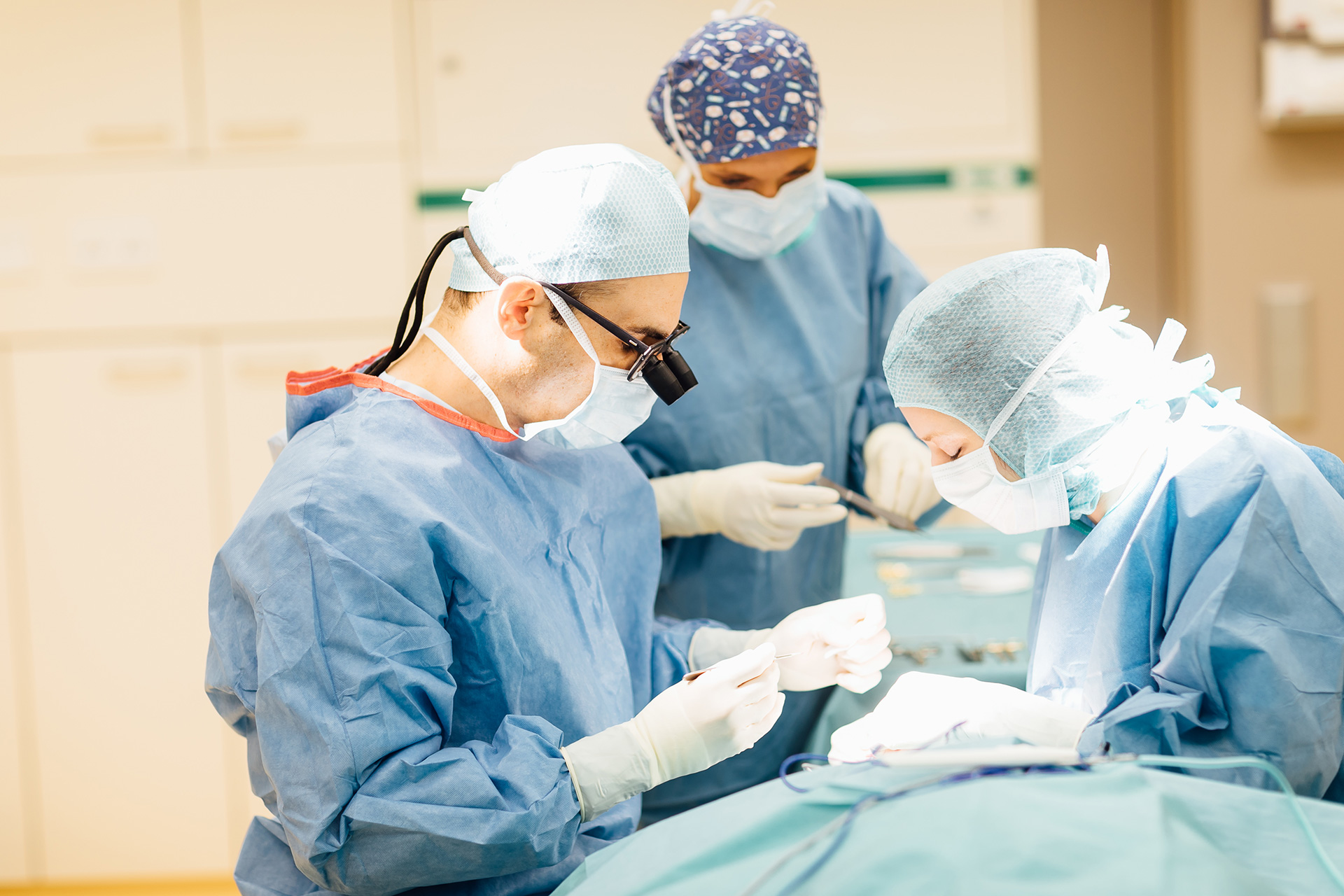
Your septorhinoplasty from beginning to end
Before the operation
- Initial consultation of around an hour, without obligation
- Functional examination of the nose from the inside
- Vectra 3D simulation from three perspectives
- Coordination with an ENT specialist where necessary
- Written cost estimate
- Informed-consent consultation and pre-anaesthetic assessment
On the day of the operation
- Our own operating theatre at the Kuzbari Centre
- One to four hours — according to the findings, not to a plan
- Function before shape: the airways are secured first
- Dorsal preservation (nose-bridge-preserving technique) where the findings allow it
- Cartilage-supported stabilisation of the nasal tip
- One night as an inpatient with round-the-clock care
After the operation
- A follow-up talk on the morning after the operation
- The mobile number of your surgeon
- Removal of splints and sutures after about a week
- Instruction in nasal care with rinses and ointments
- All follow-up appointments up to the final result included
Answers on functional and aesthetic rhinoplasty
What is a septorhinoplasty?
The combination of an operation on the nasal septum (septum) and a correction of the shape of the external nose (rhinoplasty) in a single procedure. The two belong together, because the structures that hold a nose in shape are the same ones that keep the airway open.
Why are both done at the same time?
Because the two can barely be separated anatomically, and because it means you have only one anaesthetic, one operation and one healing phase. A purely functional operation can change the shape — it can cause drooping of the nasal tip, for instance, if straightening the septum takes away its support. Conversely, a purely aesthetic operation can make breathing worse if the internal nasal valve is not secured.
Does that make the operation much longer?
It tends to lie at the upper end of the range of one to four hours, because after every step on the shape we check whether the airways have remained wide, and after every functional step we check what it has done to the shape. Because the operating theatres are our own, we operate without time pressure — the duration is governed by the findings.
Is the recovery longer than after a correction of the shape alone?
Hardly. Most are fit for work after three to seven days and presentable in public after one to three weeks. There is one difference in the first week: because of the internal splints and the swelling of the mucous membrane, nasal breathing is considerably worse at first than before the operation. That is to be expected, and it changes quickly once the splints are removed.
What is done first — shape or function?
Function. The nasal septum, the turbinates and the nasal valves are treated first, because later work on the shape must not narrow the airways again. Only once the width is settled is work done on the nose bridge and the nasal tip — and at the end we check again whether the airways have remained unchanged.
Will my nose also look better if I come only because of my breathing?
We plan the shape in every case — but with the aim of preserving it, not of changing it. If you do not want any aesthetic change, tell us at the consultation; we will then direct the whole plan towards that. If you do want one, we discuss it at the 3D simulation.
Can I also decide on just one part?
Yes. There are findings for which a purely functional or a purely aesthetic operation is exactly right. After the examination we tell you openly what we recommend and why — and we press no one towards a larger procedure.
What if the shape I want and my breathing pull in different directions?
That does happen, for example with a wish for a very narrow nose where the airways are already tight. We raise such conflicts of aims explicitly and propose the option that supports both. The result may then be more restrained than expected — but it is one you will still be happy with in ten years' time.
What is the internal nasal valve and why does it matter so much?
A narrow cleft between the nasal septum and the lower edge of the upper lateral cartilages — the narrowest point of the entire airway, and not visible from the outside. It lies exactly where a hump correction is carried out. It is opened and secured with narrow strips of cartilage, which at the same time shape the line of the middle third of the nose: one measure, two effects.
Will my turbinates be removed?
No, they are reduced gently. The turbinates are the climate organ of the nose — they warm, moisten and clean the air you breathe. Too radical an approach leads to a dry nose that paradoxically feels blocked.
What is the nose-bridge-preserving technique?
With dorsal preservation (nose-bridge-preserving technique) the natural nose bridge is retained instead of being taken down and rebuilt; it is lowered as the grown unit that it is. The result looks particularly natural, it is stable in the long term, and the risk of later irregularities on the nose bridge is reduced. For the combined operation it has an additional advantage: where the roof over the nasal septum is not opened, the internal nasal valve also keeps the width it grew with. The technique is not superior in general — but for many findings it is the gentler choice.
Can a previously operated nose be corrected both functionally and aesthetically?
Yes. Four in ten nose operations at the Kuzbari Centre are revision rhinoplasties on a nose that has already been operated on. Such procedures call for particular experience: the tissue is scarred, cartilage is sometimes missing, and the starting point is different for every patient. We deliberately take on such cases — functionally as well as aesthetically, they then usually involve rebuilding and stabilising.
Looking good and breathing well — both should last.
An initial consultation with three-dimensional simulation, a technique that suits your nose, and an operating time that follows the findings — this effort is the reason why rhinoplasty with us has its price. It is also the reason why the result is meant to hold: for a lifetime, not for a few years.
Three surgeons for your septorhinoplasty
-
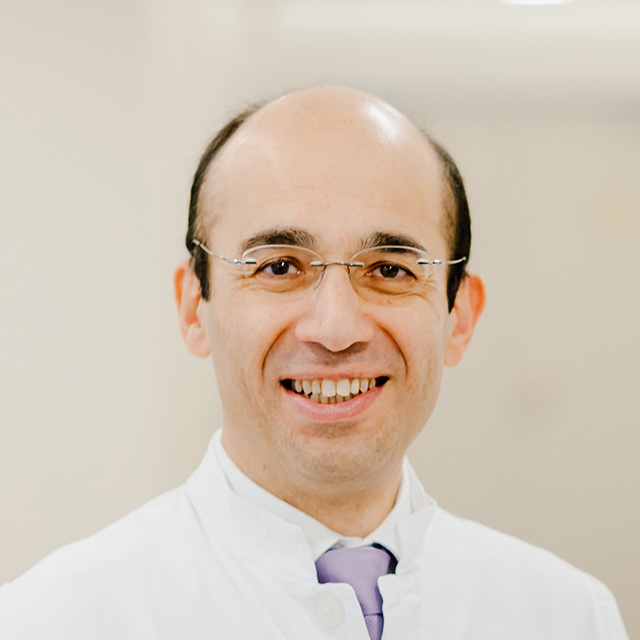
Univ. Doz. Dr Rafic Kuzbari
Specialist in Plastic, Aesthetic and Reconstructive Surgery
Over 30 years of experience; internationally regarded as an expert in revision procedures and complex rhinoplasty.
-
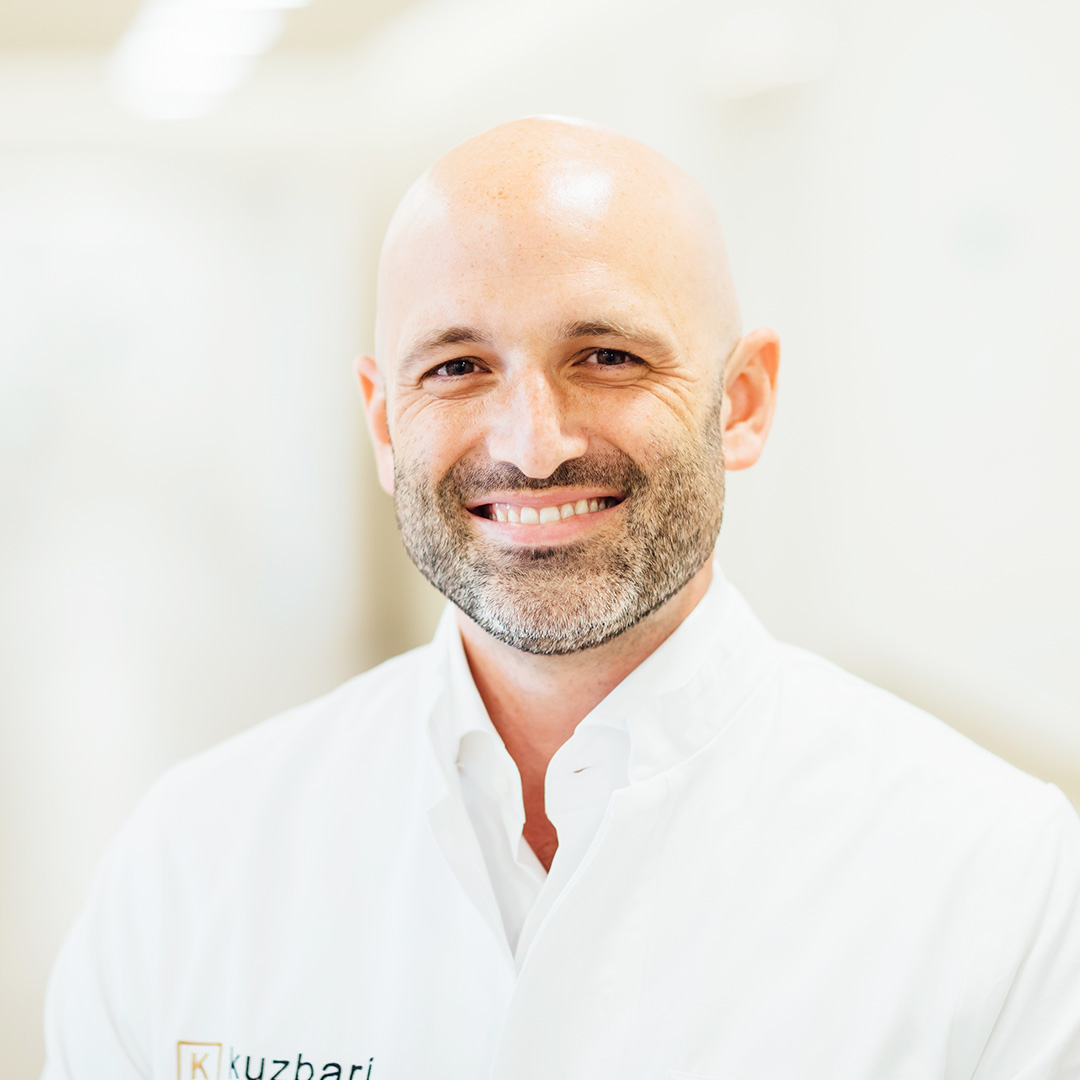
Dr Christoph Grill
Specialist in Plastic, Aesthetic and Reconstructive Surgery
A specialist in aesthetic and functional rhinoplasty with a focus on natural results.
-

DDr. Jessica Wittmann
Specialist in Oral and Maxillofacial Surgery
Combines the surgical and the aesthetic eye: precise nasal surgery with a sense for harmonious proportions.
Book your rhinoplasty consultation now
Our rhinoplasty specialists
Univ. Doz. Dr Rafic Kuzbari
Specialist in Plastic, Aesthetic and Reconstructive Surgery
Dr Christoph Grill
Specialist in Plastic, Aesthetic and Reconstructive Surgery
DDr. Jessica Wittmann
Specialist in Oral and Maxillofacial Surgery