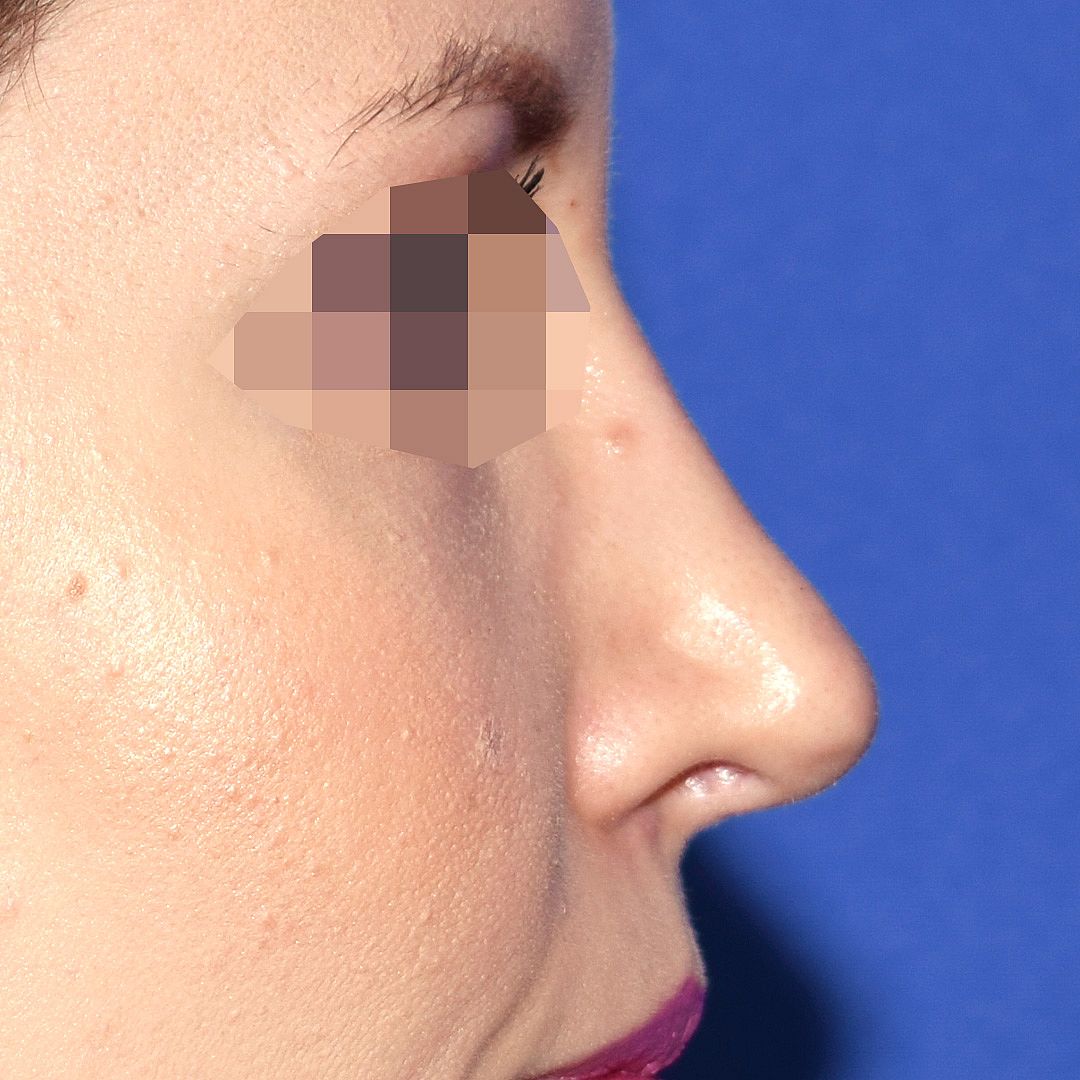
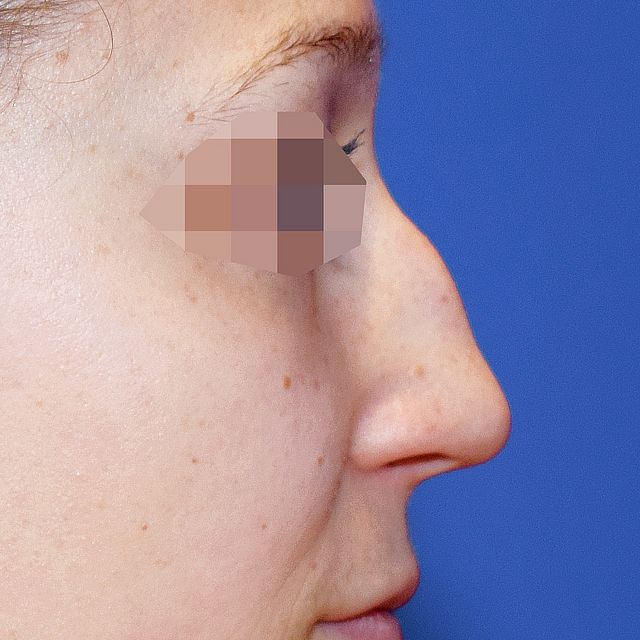
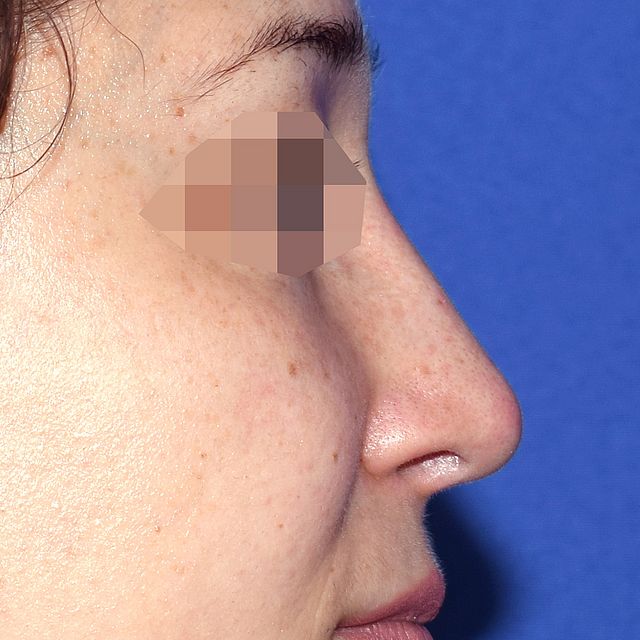
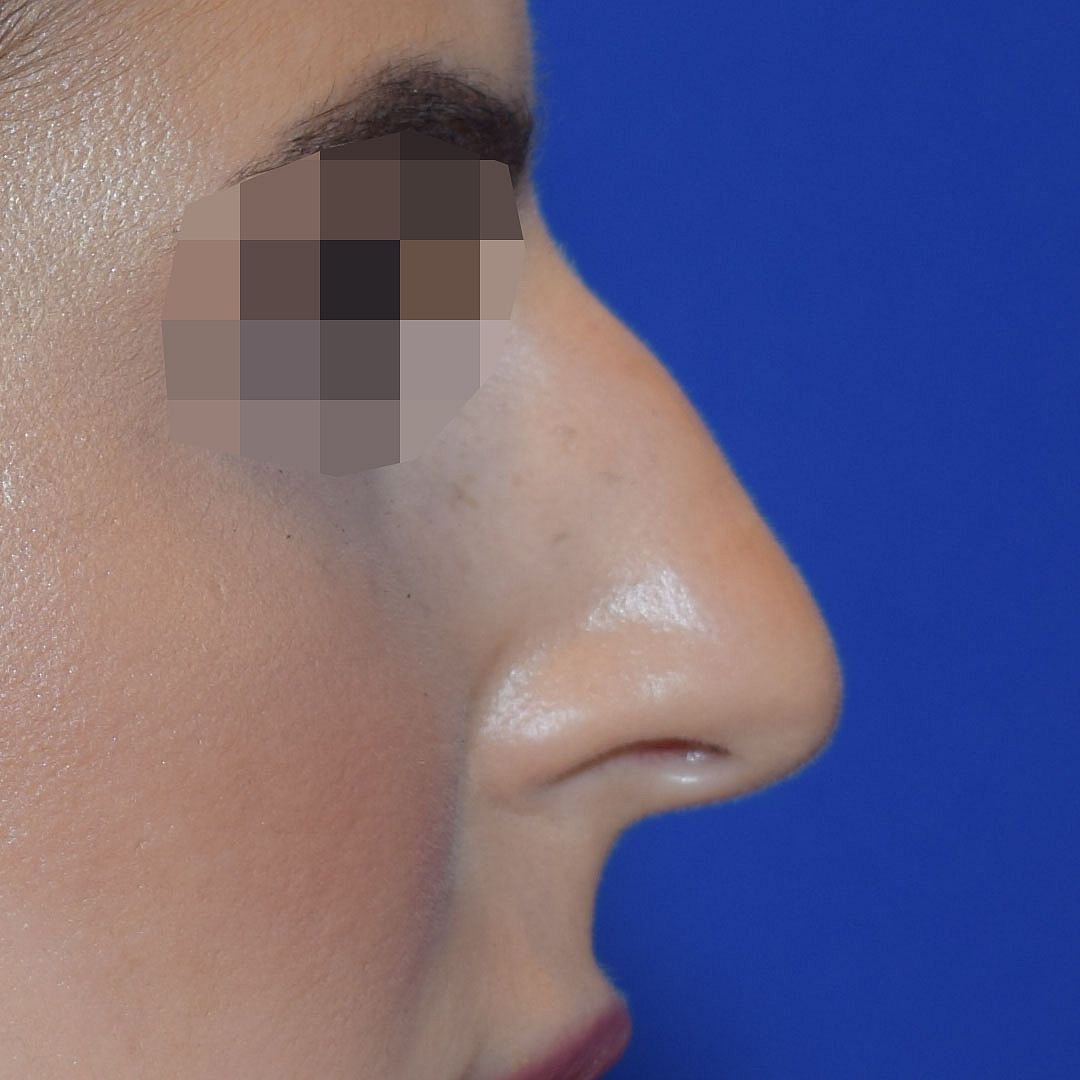
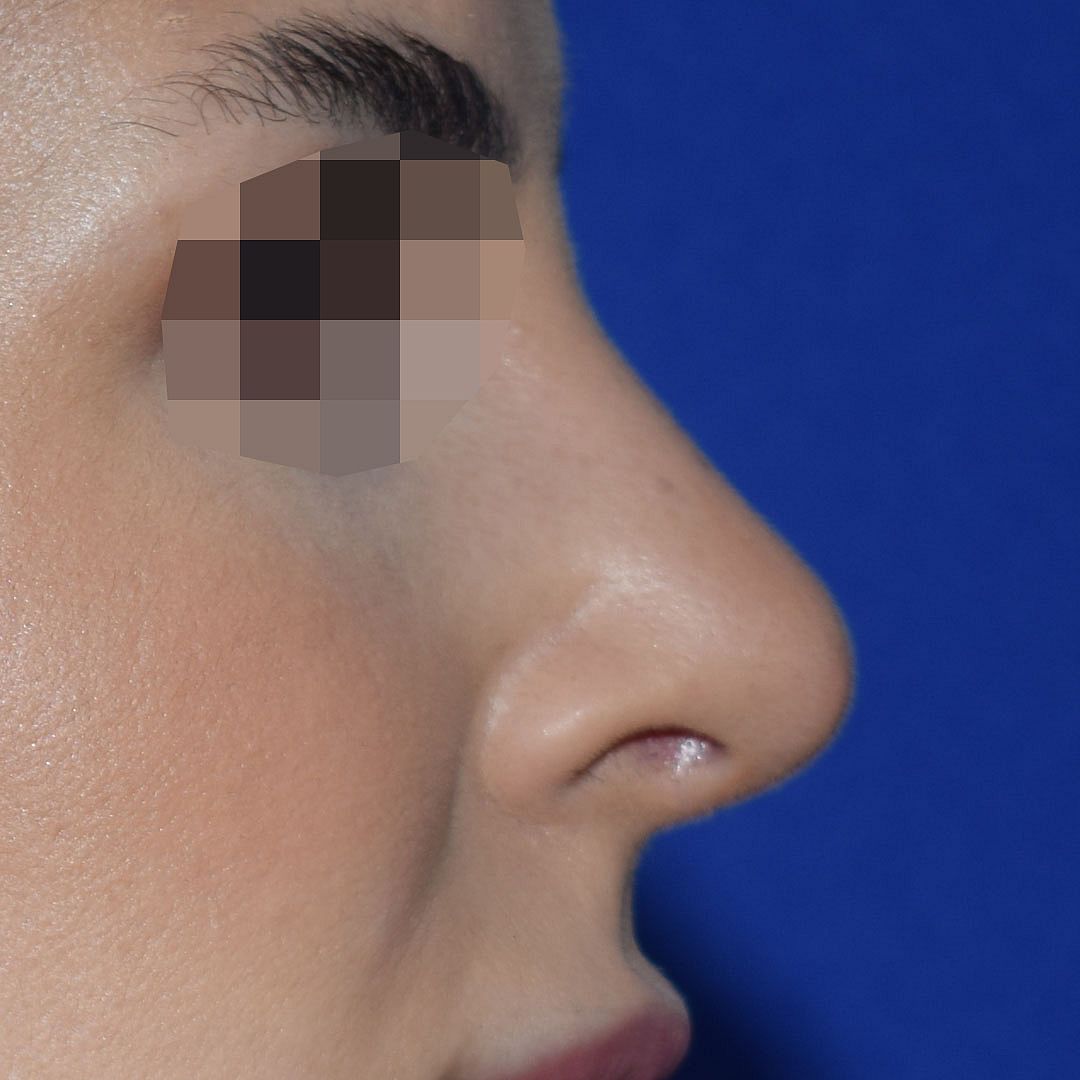
A new feeling for life

Rhinoplasty in Vienna: in safe hands at the Kuzbari Centre.

Would you like a nose that suits your face? To go through life with confidence and joy again? And at the same time to make sure that you can breathe freely once more? Then our rhinoplasty is exactly right for you.

  • 2.000+ Nose operations
  • 3 Specialists
  • Vectra 3D simulation
Nose surgery at the Kuzbari Centre Vienna
Appointment online

Book directly with the doctor of your choice.

The initial consultation lasts more than an hour, includes the Vectra 3D simulation of your future nose and is without obligation.

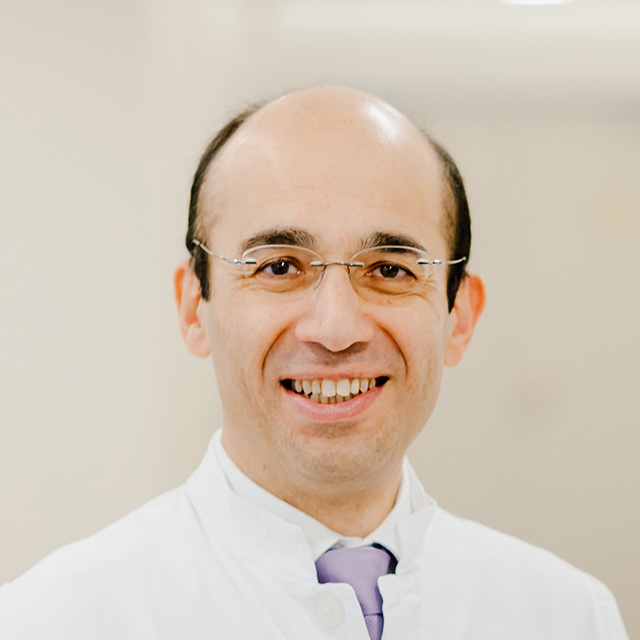
  • Univ. Doz. Dr Rafic Kuzbari

    Univ. Doz. Dr Rafic Kuzbari

    Specialist in Plastic, Aesthetic and Reconstructive Surgery

    Book appointment
  • Dr Christoph Grill

    Dr Christoph Grill

    Specialist in Plastic, Aesthetic and Reconstructive Surgery

    Book appointment
  • DDr. Jessica Wittmann

    DDr. Jessica Wittmann

    Specialist in Oral and Maxillofacial Surgery

    Book appointment
A speciality: shaping the nose

A speciality: nasal surgery.

Nasal surgery is the main focus of Univ.-Doz. Dr Rafic Kuzbari, Dr Christoph Grill and DDr. Jessica Wittmann. For many years, the intensive work on aesthetic-functional rhinoplasty, nasal reconstruction and difficult revision surgery has been at the centre of their surgical activity. They teach at the Medical University of Vienna and are sought-after international speakers in the field of nasal surgery.

This specialisation is essential precisely for rhinoplasty: the nose matters for breathing, enables the sense of smell and protects us from infection. At the same time it gives our face its character. That is why a procedure must take form and function equally into account — the greatest precision and years of experience are indispensable. You will find an overview of everything we offer for rhinoplasty in Vienna on our home page.

Our philosophy

A beautiful nose is unobtrusive.

The nose sits in the middle of the face — it could hardly be more prominent. And yet a beautiful nose should be precisely unobtrusive. For social encounters eye contact matters far more: we communicate with our eyes and express emotions with them. A successful nose fits harmoniously into the face and does not draw attention away from the eyes.

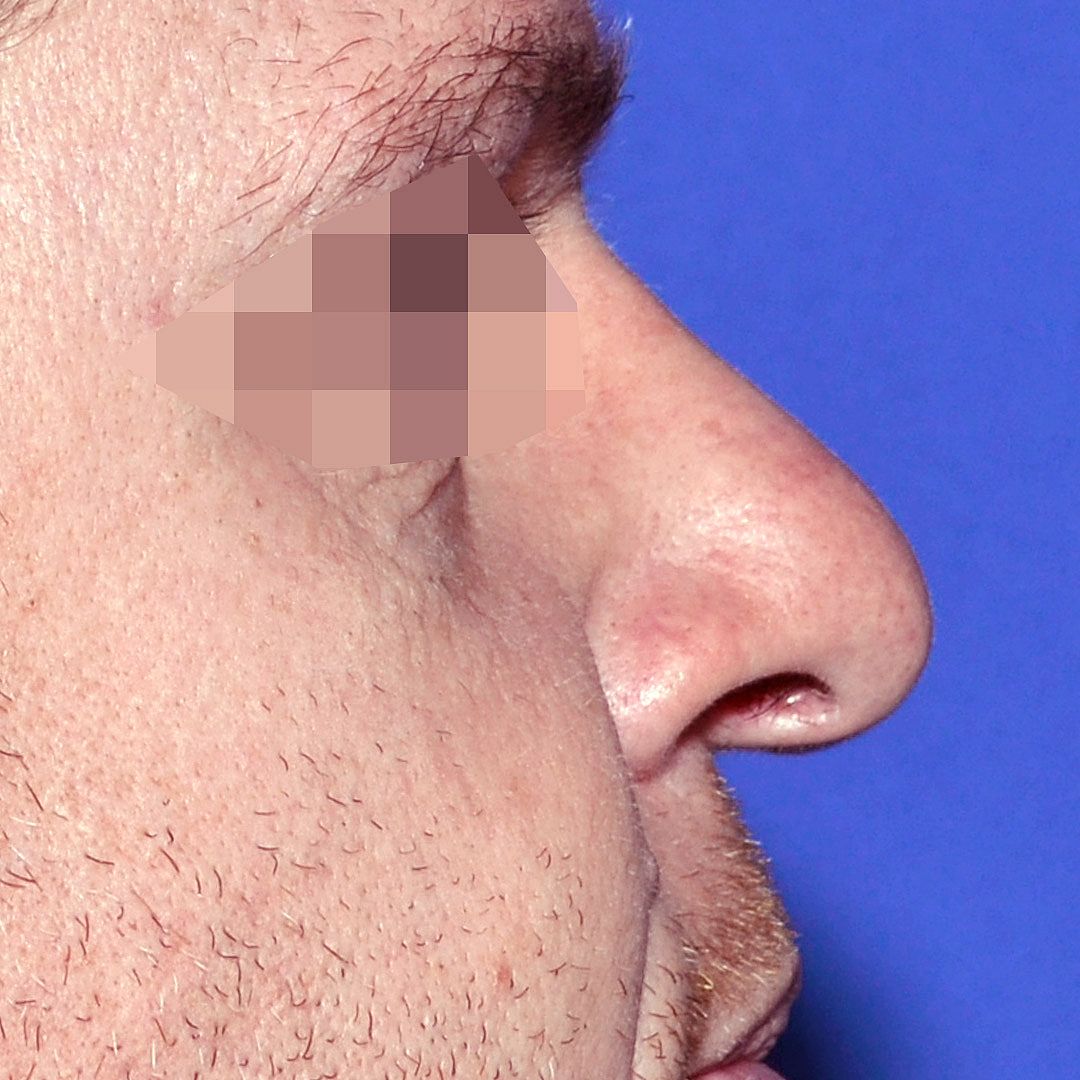
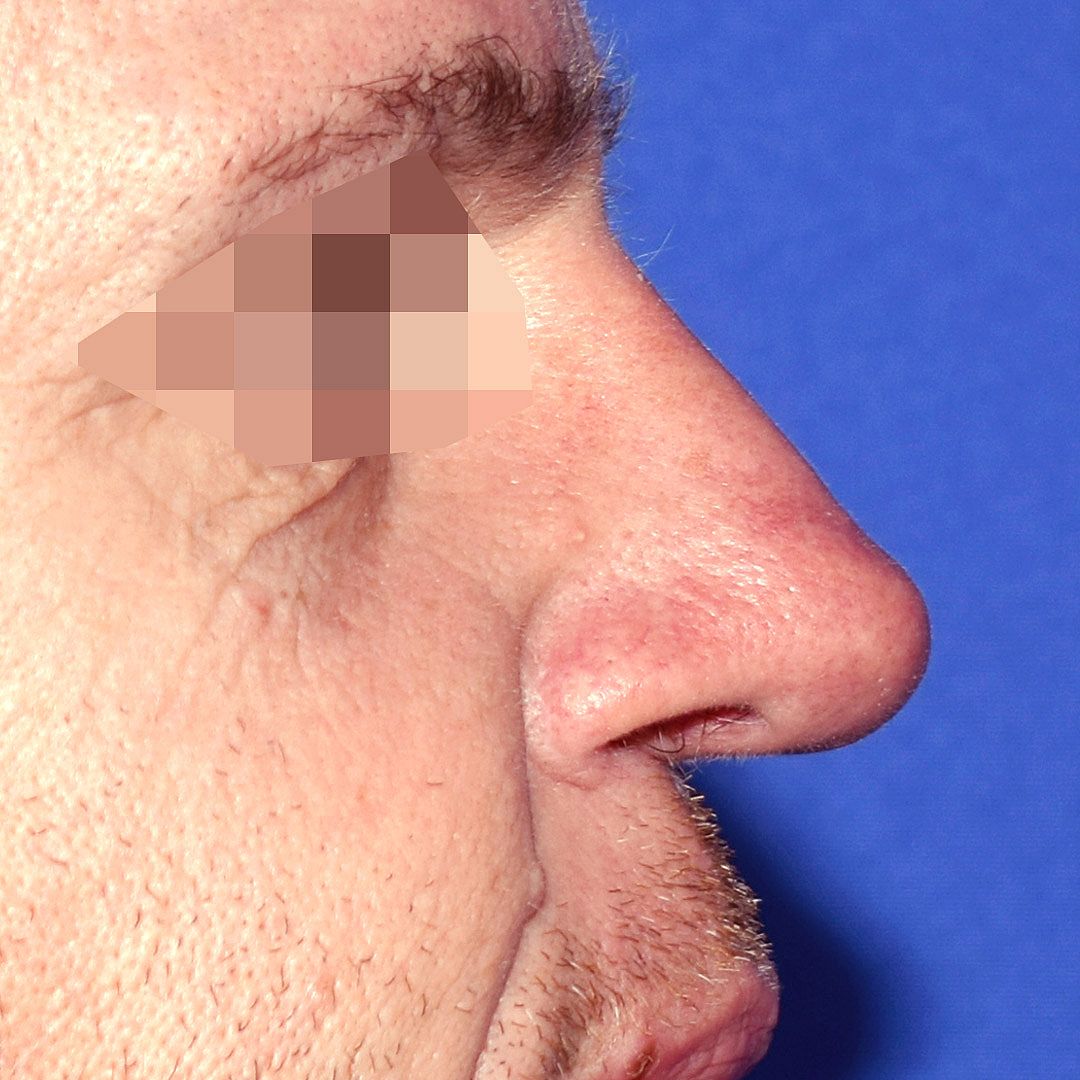
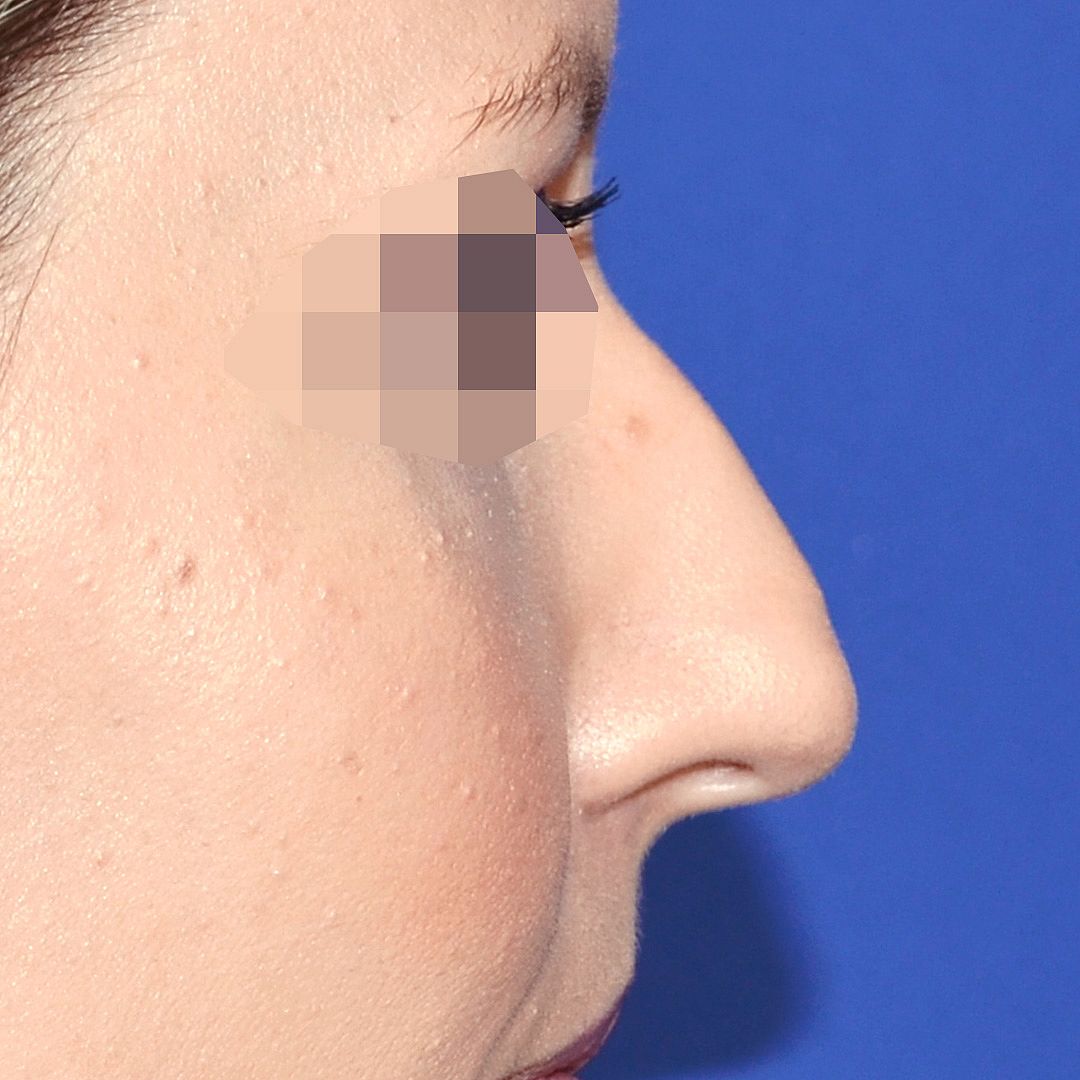
That is exactly what makes rhinoplasty one of the most demanding aesthetic operations. The three-dimensional structure of the nose is complex — every change in one plane can affect the appearance in another. At the same time the nose is a central organ of breathing, so every change of shape touches on breathing too. That is why we always think of form and function together — and why our team's long specialisation is not an optional extra but a prerequisite.

Anatomy

What is actually moved in a rhinoplasty.

The nose is not a single component but a finely balanced framework of bone, cartilage, connective tissue, mucous membrane and skin. Only the upper third — the nasal root and the upper nose bridge — consists of bone. The middle third is carried by the upper lateral cartilages, the lower third by the alar cartilages, which give the nasal tip its shape. In the middle stands the nasal septum: a plate of cartilage and bone that supports the nose from within and at the same time separates the two airways from one another.

This distribution explains why a rhinoplasty is so multi-layered. Removing a hump also changes the width of the middle third. Raising the nasal tip changes the angle to the upper lip and with it the entire impression of the profile. Straightening the nasal septum may take supporting tissue away from the nose that then has to be replaced elsewhere. Every change on one level has consequences on another — which is why we always plan a rhinoplasty as a whole and never as the sum of individual steps.

The skin also plays a part. Thin skin shows every edge and every irregularity of the framework beneath it; thick skin conceals fine detail, but takes longer to settle onto the new shape and lets the final result become apparent later. The elasticity, the age and the history of the skin also feed into the planning. With thick skin we deliberately define the structure beneath more clearly, with thin skin we work with particular restraint and cushion transitions — so that no edge shows through later.

And finally there is function. The nose warms, humidifies and cleans the air we breathe, it is the seat of the sense of smell and the first line of defence against pathogens. The narrowest point of the entire airway lies in the nose: the internal nasal valve, a narrow cleft between the nasal septum and the upper lateral cartilage. Here a change of only a few millimetres decides whether someone breathes freely after the operation or not. Form and function cannot be separated in the nose — and that is precisely why the specialisation of our team is not an optional extra.

Video · Dr Christoph Grill

Is there such a thing as the perfect nose?

Dr Christoph Grill explains what makes your personal perfect nose.

At a glance

The most important facts about rhinoplasty

Operation A state-of-the-art operating theatre at the Kuzbari Centre
Stay 1 night as an inpatient
Waiting time On request a few weeks after the consultation
Duration of surgery 1 – 4 hours
Fit for work After 3 – 7 days
Presentable again After 1 – 3 weeks
Pain Mild to moderate
Experience More than 2,000 nasal operations
Costs From approx. €9,350 in total Payment in instalments over up to 5 years
How rhinoplasty works

Rhinoplasty — from the first consultation to the aftercare

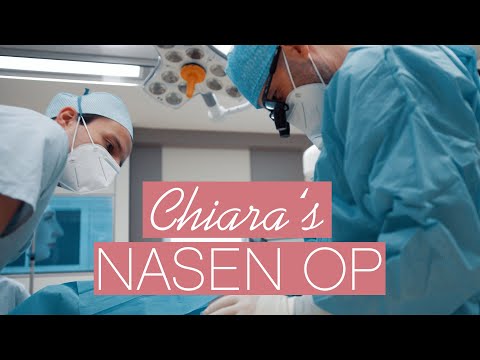
In this video Dr Grill shows the course of a rhinoplasty with his patient Chiara, from the consultation through the operation to the time afterwards.

Video · Dr Christoph Grill

Nobody can spot the best rhinoplasty

Does a nose have to look as though it has been operated on? No, says Dr Christoph Grill, dispelling one of the biggest myths: the real art is not making a nose smaller — it is making the procedure invisible.

Our range of nose surgery

Which procedure suits you?

At the Kuzbari Centre we set the standard in nasal surgery. Our team of surgeons has mastered every technique in modern rhinoplasty — whether the open or the closed method.

  • Nasal tip correction

    Refining the shape and position of the nasal tip precisely.

    Learn more →
  • Nostril correction

    Harmonising the width or asymmetry of the nostrils.

    Learn more →
  • Nasal hump correction

    Gently removing a hump for a straight, natural profile.

    Learn more →
  • Nose reduction

    Reducing size and volume proportionally.

    Learn more →
  • Functional rhinoplasty

    Correcting breathing problems and a deviated septum.

    Learn more →
  • Reconstructive nasal surgery

    Reconstruction after an accident or a tumour.

    Learn more →
Video · Univ. Doz. Dr Rafic Kuzbari

Open or closed nose surgery?

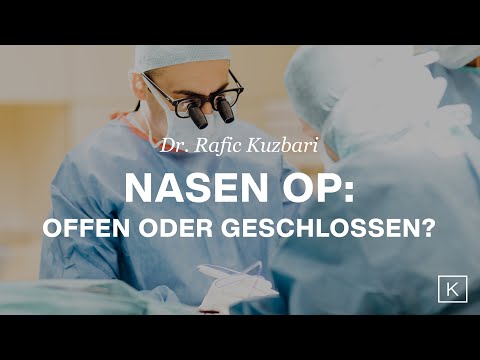
Univ. Doz. Dr Rafic Kuzbari explains the differences between the two surgical techniques and their advantages and disadvantages.

Our technique

Nose-bridge-pre­serving instead of removing and rebuilding.

We work extensively with the modern nose-bridge-preserving technique, known as dorsal preservation, as well as with hybrid techniques — not exclusively with the traditional structural septorhinoplasty. The difference can be put in a single sentence: the natural nose bridge is preserved rather than removed and rebuilt.

This has three advantages. The result looks particularly natural, because the line the nose bridge has grown with is preserved. It is stable in the long term. And the risk of later irregularities on the nose bridge is reduced — which matters above all with thin skin, because there even the smallest edge becomes visible. Certain deviations from the midline also recur less frequently.

Dorsal preservation is therefore not generally superior, but for many findings it is the gentler choice. Which technique suits your nose is decided by the findings and the goal — not by habit. That is exactly what we discuss in the initial consultation, where you will also learn why we have chosen a particular approach in your case.

All surgical methods
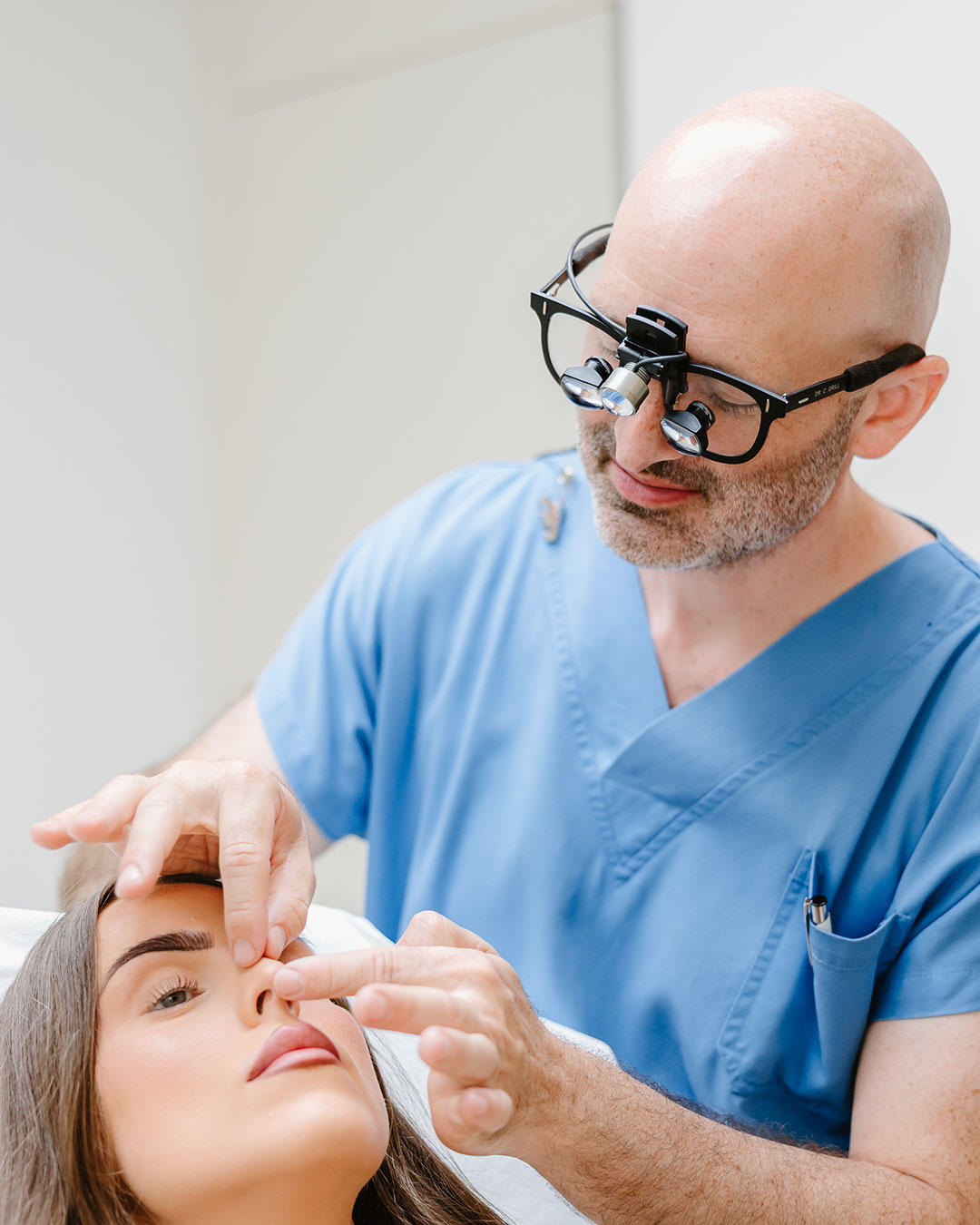
Examination of the nasal bridge and nasal tip before a rhinoplasty — Kuzbari Centre Vienna
Stability for years

Why we stabilise the nasal tip with cartilage support.

The nasal tip is the most mobile part of the nose — and the part that changes most over the years. It is not carried by bone but by two paired alar cartilages that brace against one another like two arches. If tissue is taken from this construction without replacing the support, the tip can sink downwards over time. A profile that was beautiful at first then becomes a drooping tip years later.

This is why we stabilise the nasal tip with modern cartilage-supported techniques. The tip is not merely shaped but actively supported — with the patient's own cartilage, which holds the position. This markedly reduces the risk of the tip dropping again over the years.

For you this makes hardly any difference in the first year. It is a difference that shows after five, ten and twenty years — and that is exactly what we operate for.

Working on bone with ultrasound

The piezotome: ultrasound instead of a chisel.

Whenever the bony part of the nose has to be altered during a rhinoplasty, we work with a piezotome. This is an ultrasound instrument that cuts and smooths bone while leaving the soft tissue, the mucous membrane and the blood vessels untouched — classically this step is carried out with a chisel and a saw. For patients it means more precise work on the bone and, as a rule, fewer bruises and less swelling in the days that follow.

An honest classification matters to us: the piezotome is not a method of rhinoplasty in its own right and it does not automatically make a nasal operation better. It is a tool for one step of the procedure. What remains decisive is the planning and the experience of the surgeon. We use the piezotome as standard in every nasal operation; Univ.-Doz. Dr Rafic Kuzbari has been doing so for years.

First consultation & analysis

We listen to you.

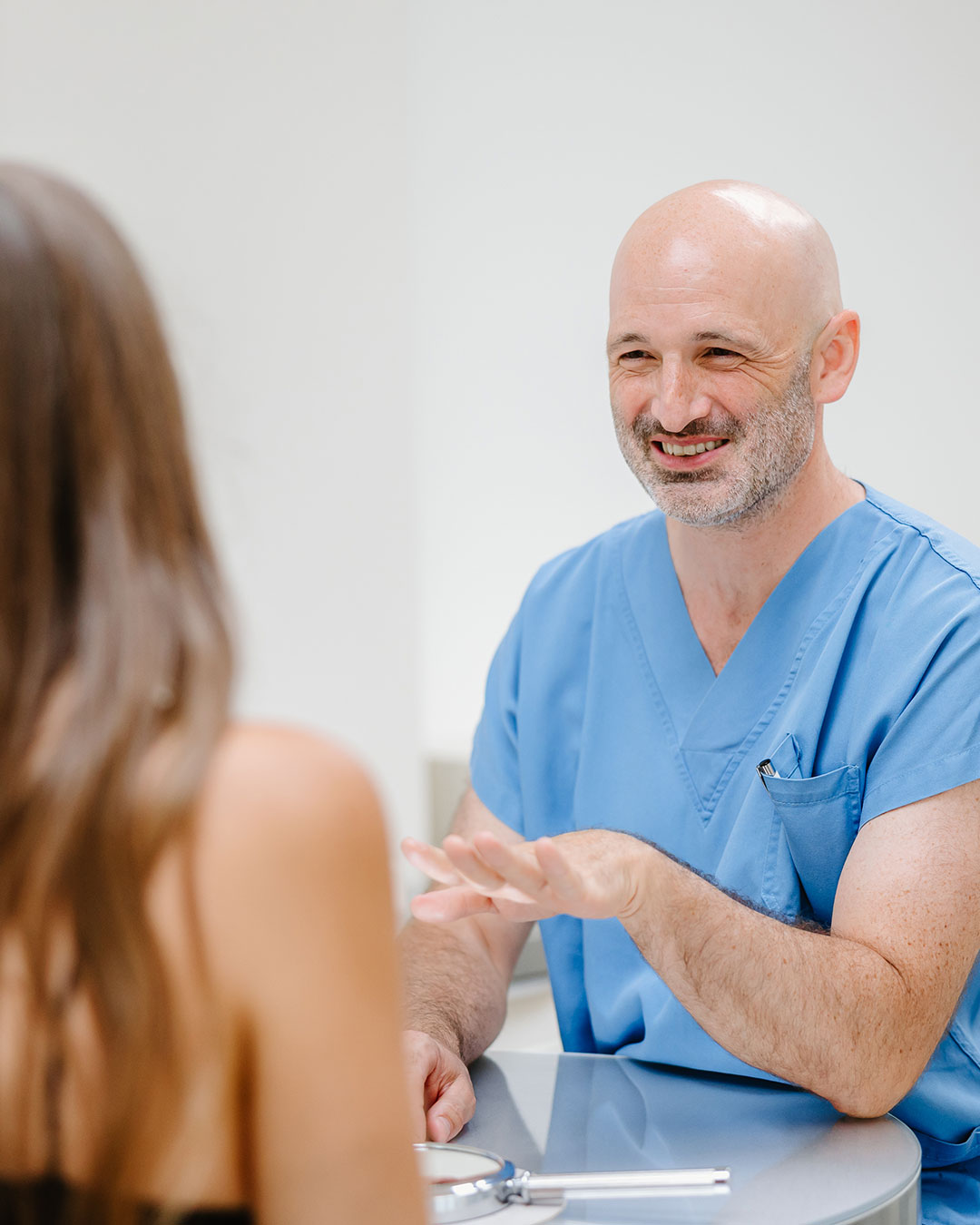
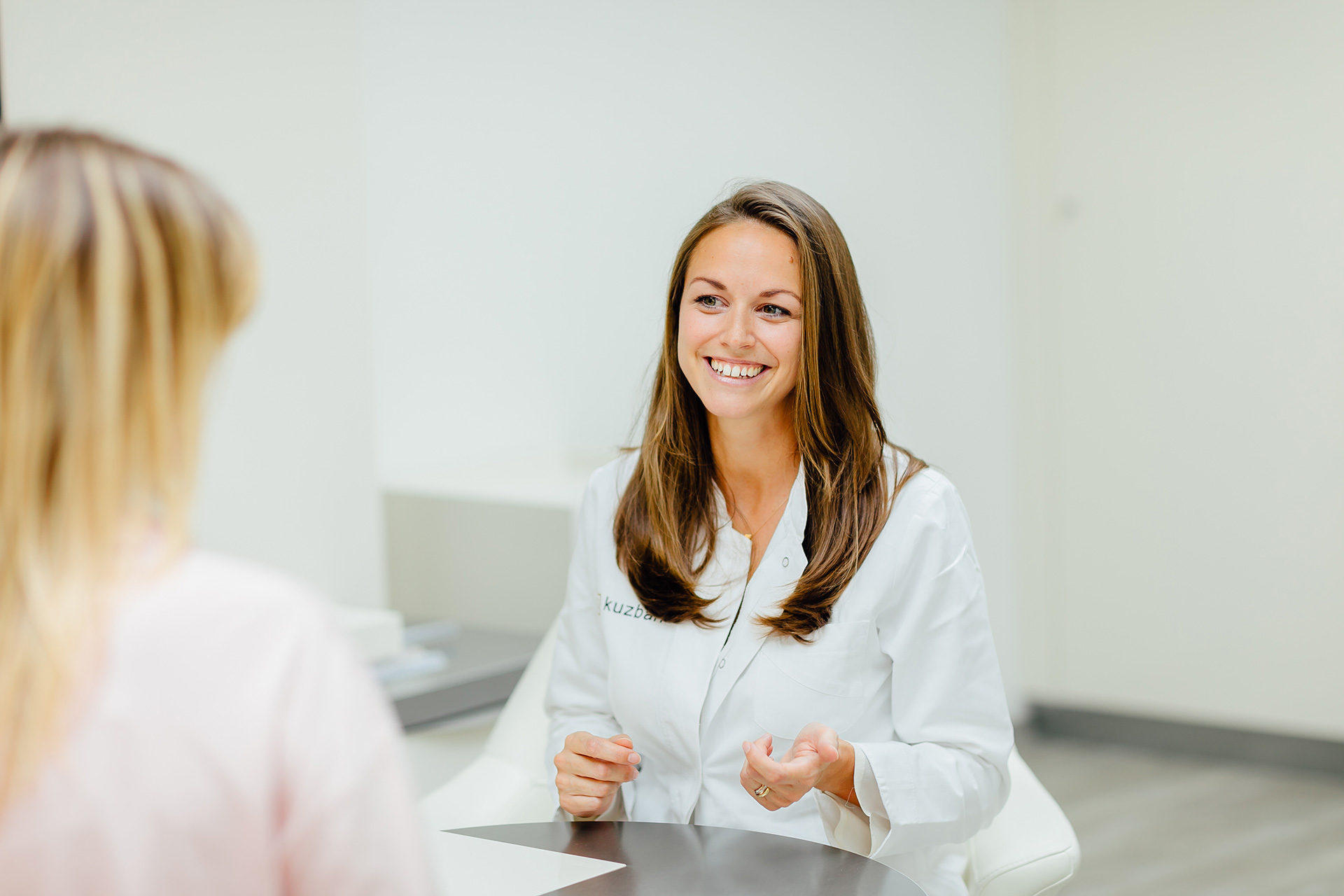
Every journey to a new nose begins with a thorough first consultation. The conversation often lasts a full hour, and we discuss a great deal in it. First we get to know each other and discuss the most important thing: your personal wishes and concerns.

Developing an understanding of the patient's concern is the foundation of a successful rhinoplasty. We are glad to take the time for that — from listening closely to the highly developed 3D simulation.

Book a first consultation
Dr Christoph Grill in an initial consultation with a patient — Kuzbari Centre Vienna
3D simulation

Three perspectives instead of the profile alone.

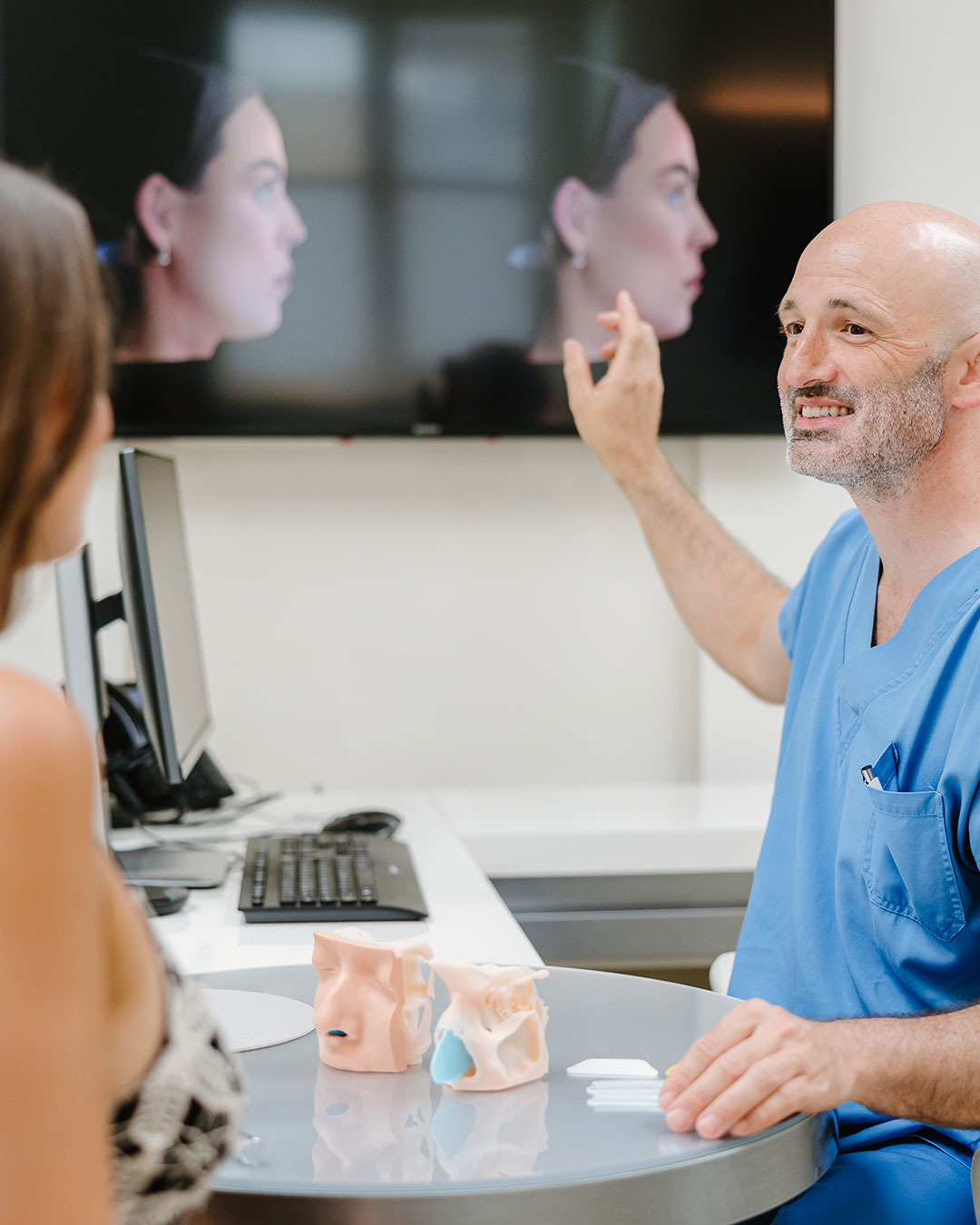
Our 3D simulation shows your future nose not only in profile, but also from the front and from below. You therefore see your possible result from exactly the angles from which others see you every day — and we discuss the same image before the operation.

That sounds technical, but it has a very human background. Words are imprecise in nose surgery: what is a “small nose” for one patient is already too much for the next. What someone means by “straight” can mean anything from a perfectly straight line to a gently curved bridge. The simulation translates these words into an image that both sides can hold on to.

We model this image together with you, and in both directions: we also show you what we would not recommend — and why. At the end there is no promise, but a sound idea of where the operation should lead. The simulation is expressly a planning aid, not a guarantee: the healing of the tissue always has its own share in the result.

More about the 3D simulation
Discussing the Vectra 3D simulation before the rhinoplasty — Kuzbari Centre Vienna
operating time

Why a rhinoplasty with us takes one to four hours.

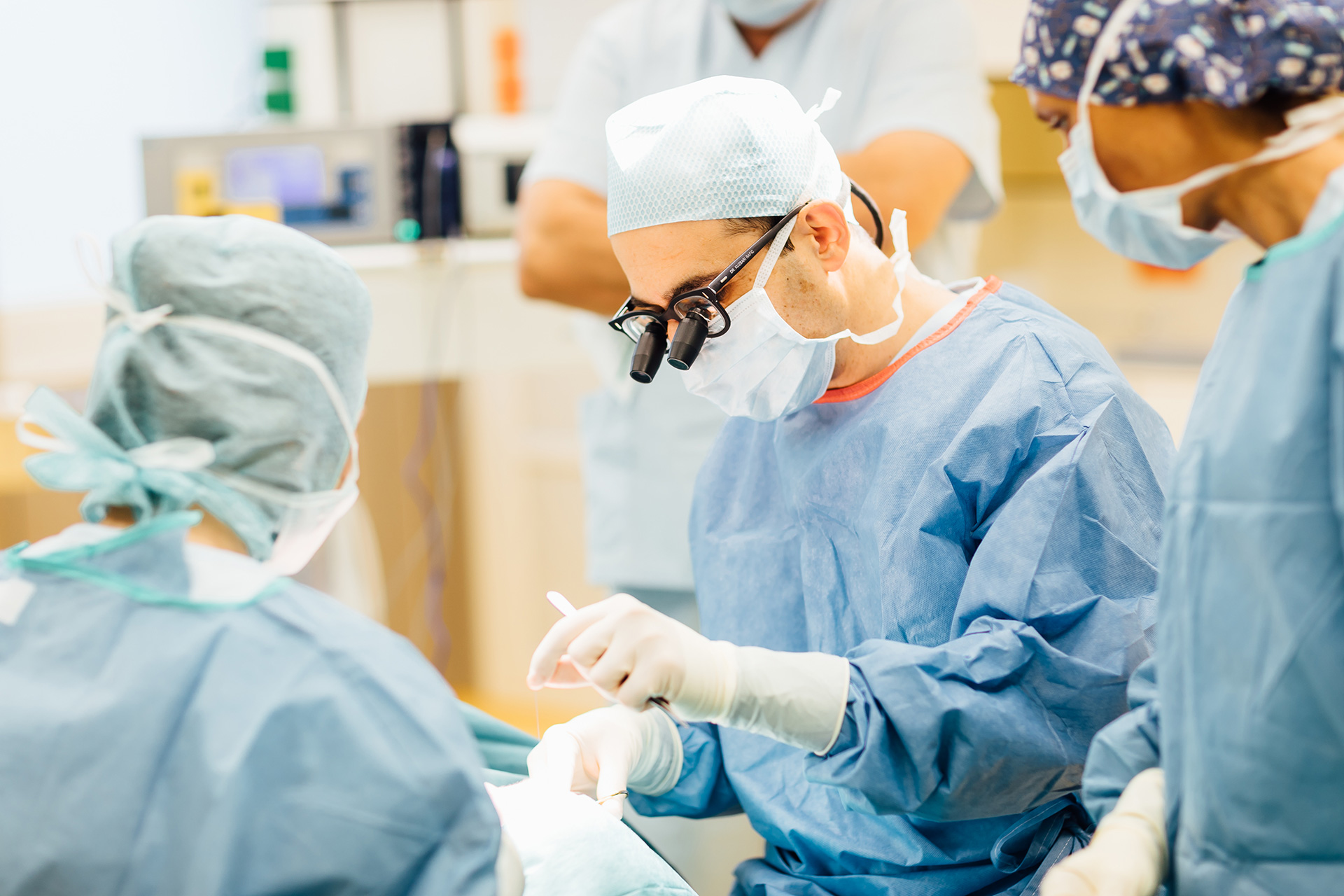
A rhinoplasty with us takes one to four hours. This range is deliberate: we operate in our own operating theatres and therefore without time pressure — for as long as it takes until every detail is right. How long a procedure takes is decided by the findings, not by the appointment schedule.

What happens during these hours is rarely spectacular and almost always small in scale: layers of tissue are carefully released, cartilage is taken, trimmed, placed, fixed with fine sutures, checked and corrected again. In between, the nose is assessed again and again from different angles, because a detail that looks right from the front may not yet be right in profile. The last half-hour of a nose operation often determines more about the result than the first.

That we are able to take this time has a simple reason: the operating theatres are ours. No one is waiting for the room, no outside schedule sets the pace. You will spend the rest of your life with your new nose — if an operation takes half an hour longer in order to improve the result, that is a very short time in proportion.

What does the perfect nose look like?

Individual. Harmonious. Not operated on.

Because no two noses and no two faces are alike, at the Kuzbari Centre we pay particular attention to individual facial proportions — so that the change fits harmoniously into the overall picture and looks entirely natural, precisely not operated on.

Thanks to refined surgical techniques and a differentiated approach, modern nose surgery can do far more than reshape to a formula. We use this scope: we plan every nose individually, choose the technique according to the findings and take the time that this requires.

A special case

Previously operated noses.

Four in ten nose operations at the Kuzbari Centre are revision rhinoplasties on a nose that has already been operated on. Such procedures call for particular experience: the tissue is scarred, cartilage is sometimes missing, and the starting point is different for every patient.

We deliberately take on such cases — because they are part of our focus and because they demand planning that begins from scratch. What is naturally present in a first operation — clear tissue layers, sufficient cartilage, predictable healing — first has to be restored in a revision rhinoplasty.

More about revision surgery
A portrait

DDr. Jessica Wittmann — the surgical and the aesthetic eye.

As a specialist in Oral and Maxillofacial Surgery, DDr. Jessica Wittmann combines a deep understanding of the bony and soft structures of the face with a fine feel for harmonious proportions. Her focus: aesthetic and functional rhinoplasty.

“What I set out to do is create results that do not look artificial — but that underline natural beauty and preserve the personality.”
— DDr. Jessica Wittmann

More about DDr. Wittmann

Book an appointment with DDr. Wittmann
In conversation with DDr. Wittmann

Too crooked, too broad, too pointed — the most common irregularities in the shape of the nose.

DDr. Wittmann explains the typical concerns patients come to us with — and what can actually be changed surgically.

Your doctors

Three of the highest-rated nasal surgeons in Austria

Only specialists dedicated to nasal surgery operate at the Kuzbari Centre — with decades of experience and 1,394 public reviews on DocFinder, all with the top score of 5.0.

Univ. Doz. Dr Rafic Kuzbari

Univ. Doz. Dr Rafic Kuzbari

Specialist in Plastic, Aesthetic and Reconstructive Surgery

Over 30 years of experience; internationally regarded as an expert in revision procedures and complex rhinoplasty.

5.0 · 621 reviews on DocFinder
Dr Christoph Grill

Dr Christoph Grill

Specialist in Plastic, Aesthetic and Reconstructive Surgery

A specialist in aesthetic and functional rhinoplasty with a focus on natural results.

5.0 · 585 reviews on DocFinder
DDr. Jessica Wittmann

DDr. Jessica Wittmann

Specialist in Oral and Maxillofacial Surgery

Combines the surgical and the aesthetic eye: precise nasal surgery with a sense for harmonious proportions.

5.0 · 188 reviews on DocFinder
Three specialists — one clinic

Book an appointment for your rhinoplasty now.

Nasal surgery is one of the focal points of the Kuzbari Centre — Univ. Doz. Dr Kuzbari, Dr Grill and DDr. Wittmann together cover the entire spectrum. Book directly online, or let us advise you by phone on the right specialisation.

  • Univ. Doz. Dr Rafic Kuzbari

    Univ. Doz. Dr Rafic Kuzbari

    Specialist in Plastic, Aesthetic and Reconstructive Surgery

    Over 30 years of experience; internationally regarded as an expert in revision procedures and complex rhinoplasty.

  • Dr Christoph Grill

    Dr Christoph Grill

    Specialist in Plastic, Aesthetic and Reconstructive Surgery

    A specialist in aesthetic and functional rhinoplasty with a focus on natural results.

  • DDr. Jessica Wittmann

    DDr. Jessica Wittmann

    Specialist in Oral and Maxillofacial Surgery

    Combines the surgical and the aesthetic eye: precise nasal surgery with a sense for harmonious proportions.

A look inside the centre

High-calibre medicine paired with the ambience of a luxury hotel

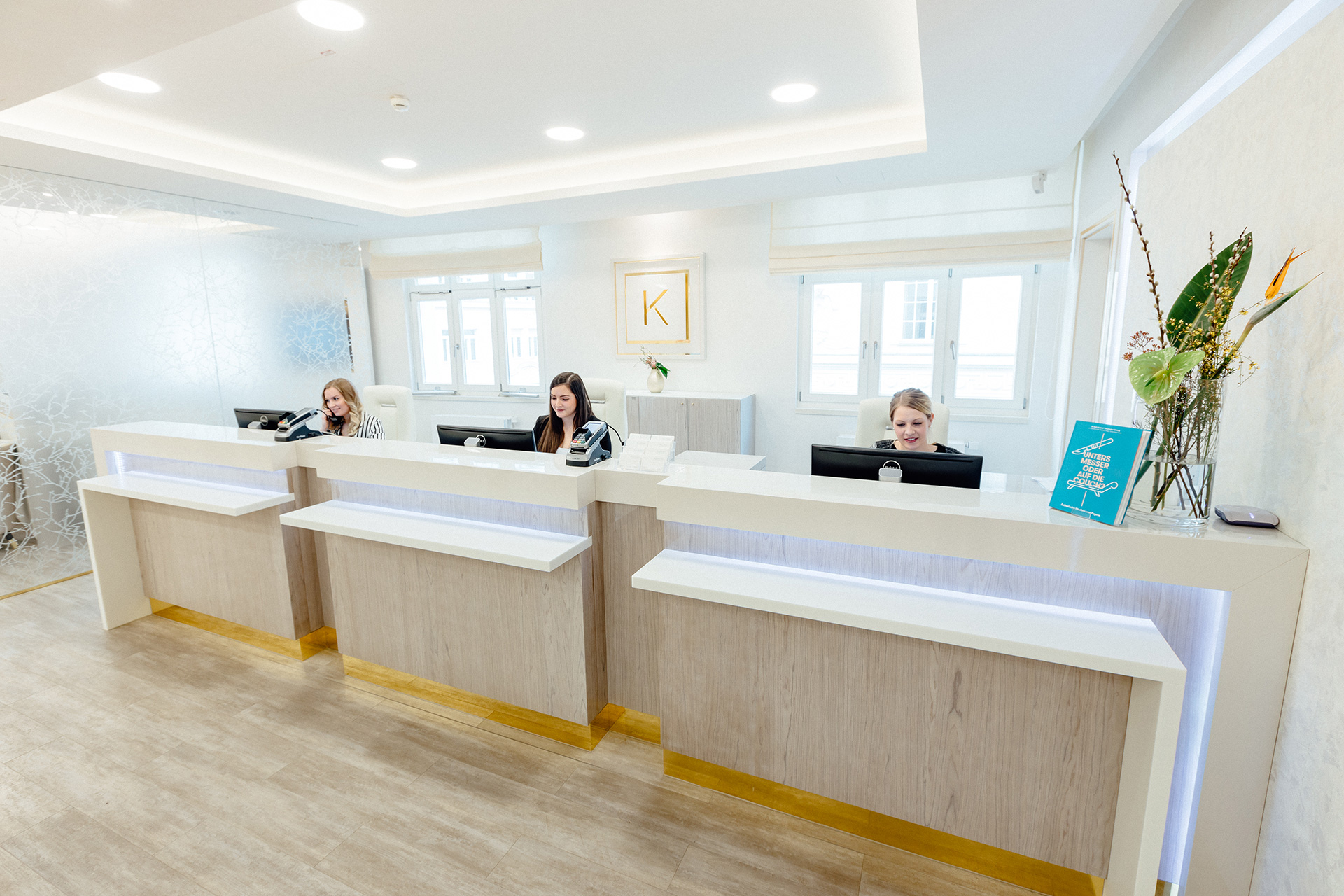
  • The reception area
    Reception
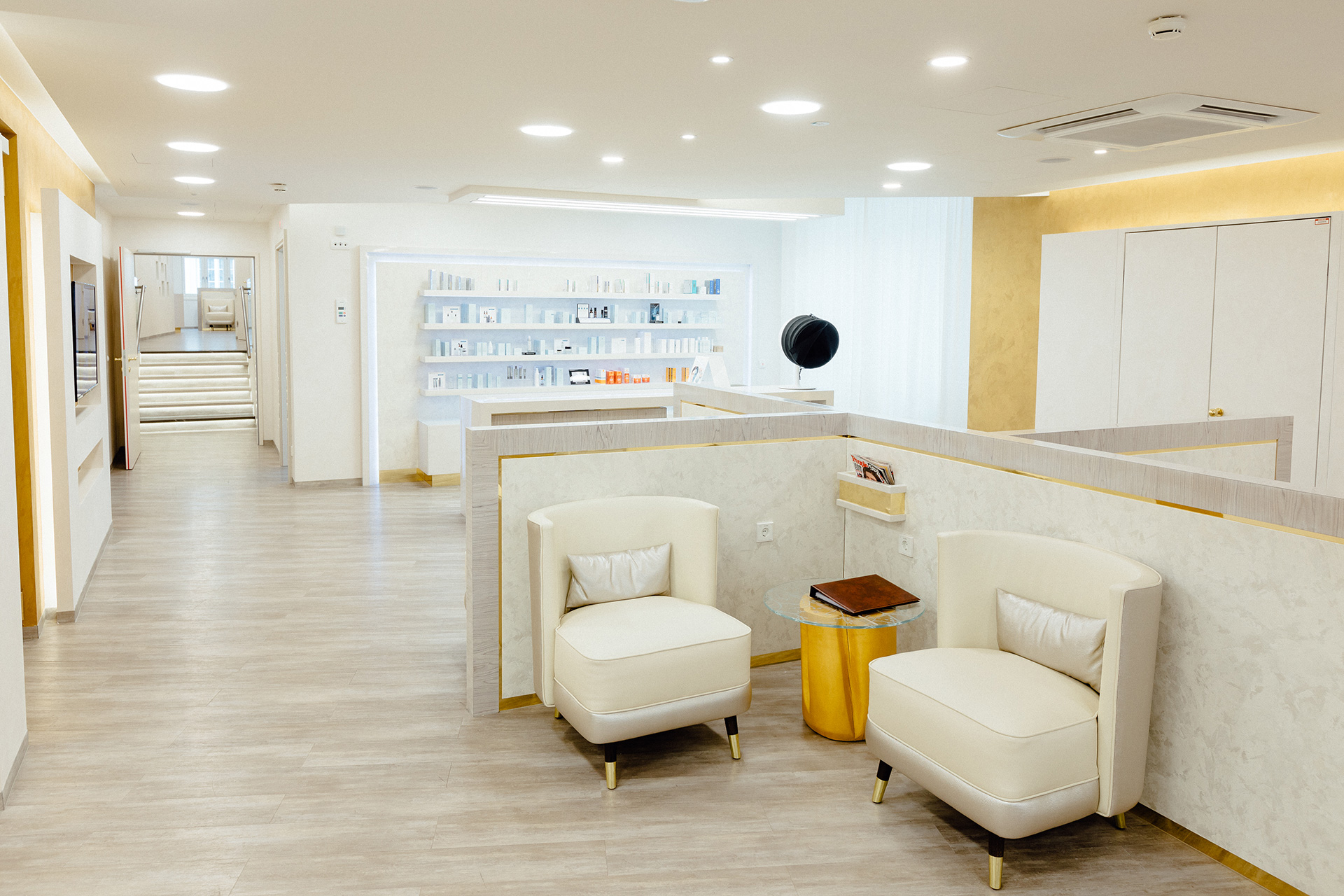
  • Waiting area
    Waiting area
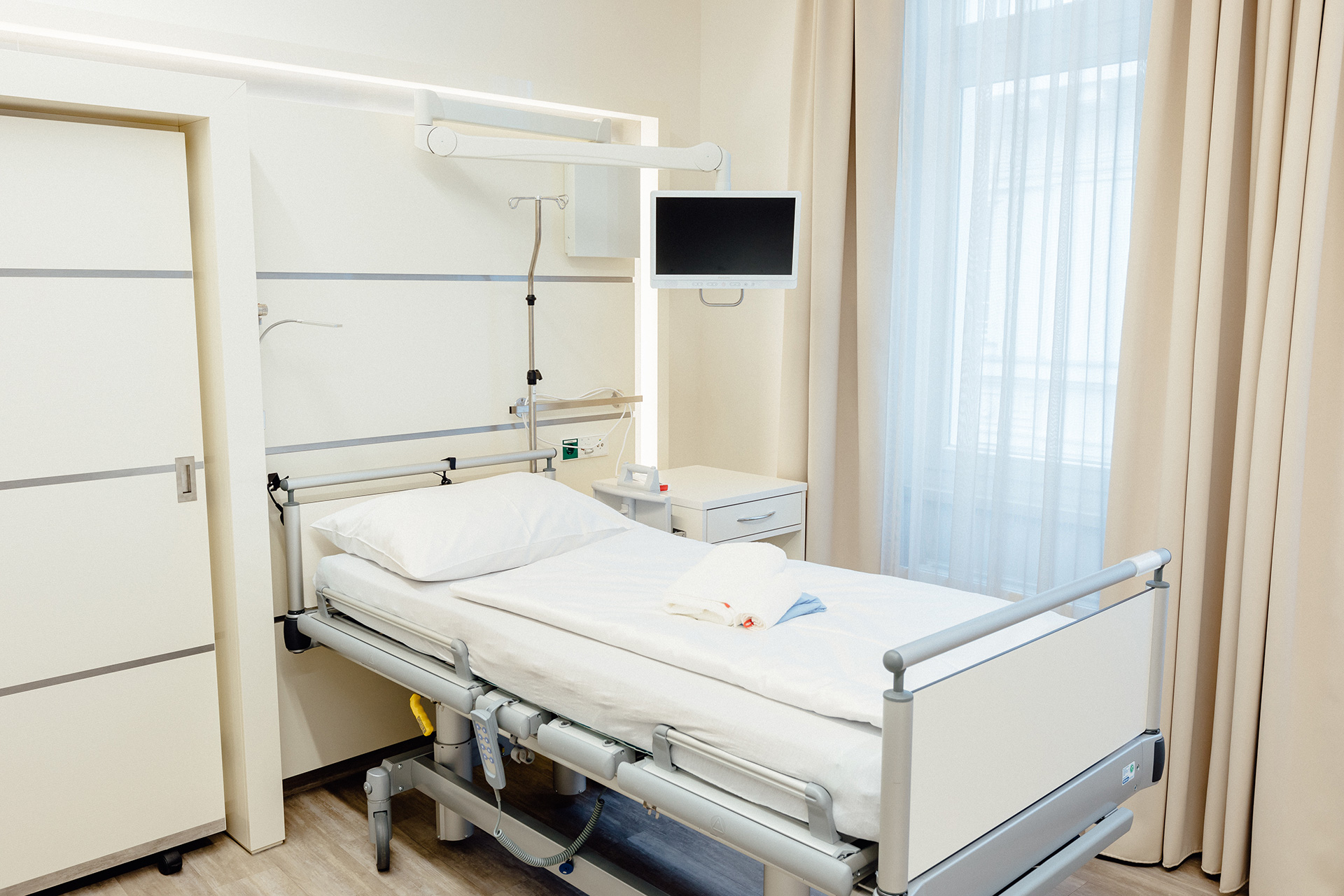
  • Patient room
    Your room for the overnight stay
Accompanied step by step

The path to your perfect nose

At the Kuzbari Centre we accompany you from the first contact to the aftercare — with the highest medical precision, state-of-the-art technology and personal attention.

  1. 01

    Arranging an appointment

    Our reception team organises your consultation appointment quickly, discreetly and straightforwardly.

  2. 02

    Consultation

    In the personal consultation our specialists analyse your wishes as well as the anatomical conditions. Together we develop an individual treatment plan.

  3. 03

    3D simulation

    With a state-of-the-art 3D simulation you experience before the operation how your nose can look after the procedure — realistically, precisely and comprehensibly.

  4. 04

    Marking & planning

    Immediately before the operation the desired changes are planned and marked precisely.

  5. 05

    Operation

    The operation is carried out by experienced specialists in nasal surgery in our state-of-the-art surgical wing.

  6. 06

    The ward

    After the procedure you are cared for on our ward — a well-established nursing team is there for you around the clock.

  7. 07

    Your stay

    As a rule 1 night — the highest comfort, personal care and meals from the kitchen of the neighbouring Park Hyatt Vienna (a five-star hotel).

  8. 08

    Aftercare & healing

    A nasal splint stabilises the result. With regular check-ups we accompany your healing closely — until you can fully enjoy your new, natural appearance.

Healing

What happens in the weeks after the operation

The healing of a nose proceeds in stages — and it proceeds more slowly than most people expect. This overview helps you to interpret what you see correctly.

  1. Day 1 to 2

    You stay with us for one night. The nose is protected by a splint, and often soft internal splints are in place as well. Nasal breathing is markedly restricted at this stage — not because of the operation, but because of the swelling of the mucous membrane. Pain is usually slight and easily managed with the medication prescribed. On the morning after the operation we talk with you at length before you go home. You will have your surgeon's mobile number with you.

  2. Day 3 to 7

    Bruising around the eyes reaches its peak at around the third day and then fades quickly. Cooling, elevation and rest help more than any preparation. Most patients are fit for work again during this week, provided their occupation is not physically demanding. After about a week we remove the splint and the sutures — for many the most moving moment of the whole treatment.

  3. Week 2 to 3

    The conspicuous signs disappear: the bruising has gone, the swelling visibly subsides. You are presentable in public again — people you have not taken into your confidence generally no longer notice anything remarkable. The nose still feels stiff and numb, however, and it is: the fine nerves need months to recover fully.

  4. Week 4 to 6

    Sport is possible again, beginning with light endurance activity. You continue to avoid anything that risks a blow to the nose for considerably longer. Glasses may only rest on the nose bridge again once we have expressly given our approval. Nasal breathing usually becomes noticeably better at this stage.

  5. Month 3 to 6

    To outsiders the nose has long looked finished. For us it is not yet: the nasal tip in particular still carries residual swelling, because the skin is thickest there and the lymphatic drainage takes longest. During this phase we see you for regular follow-up appointments — not because anything is to be expected, but because we want to accompany the course of healing.

  6. Month 6 to 12

    The final result becomes apparent. The contours become clearer, the tip more defined, the feeling in the skin of the nose returns. With thick skin and in revision rhinoplasty this process can extend to around 18 months. After that the nose only changes in the way the rest of the face changes.

The complete process in detail →

What is included

Your treatment from beginning to end

A rhinoplasty is not an appointment but a path over several months. At the Kuzbari Centre this is part of it.

Before the operation

  • Initial consultation of around an hour, without obligation
  • Vectra 3D simulation from three perspectives
  • Photographic documentation of your starting situation
  • Examination of shape and breathing function
  • A written, transparent cost estimate
  • Informed-consent discussion with your surgeon
  • Pre-anaesthetic consultation with a dedicated specialist

On the day of the operation

  • Our own operating theatre at the Kuzbari Centre
  • Operation under general anaesthesia, with anaesthetic supervision
  • One to four hours of operating time — according to the findings, not to a schedule
  • Piezotome for working the bone
  • One night as an inpatient with round-the-clock care
  • Catering from the kitchen of the neighbouring Park Hyatt Vienna

After the operation

  • A detailed follow-up discussion on the morning after the operation
  • The mobile number of your surgeon
  • Removal of splint and sutures after about a week
  • All follow-up appointments up to the final result included
  • Photographic documentation of the course of healing
  • A contact person even months later

Costs and financing →

An honest assessment

What a rhinoplasty can achieve — and what it cannot.

A rhinoplasty changes a nose. It does not change a life, and it does not solve problems that are not connected to the nose. We say this early and clearly, because it is the most important part of an honest consultation.

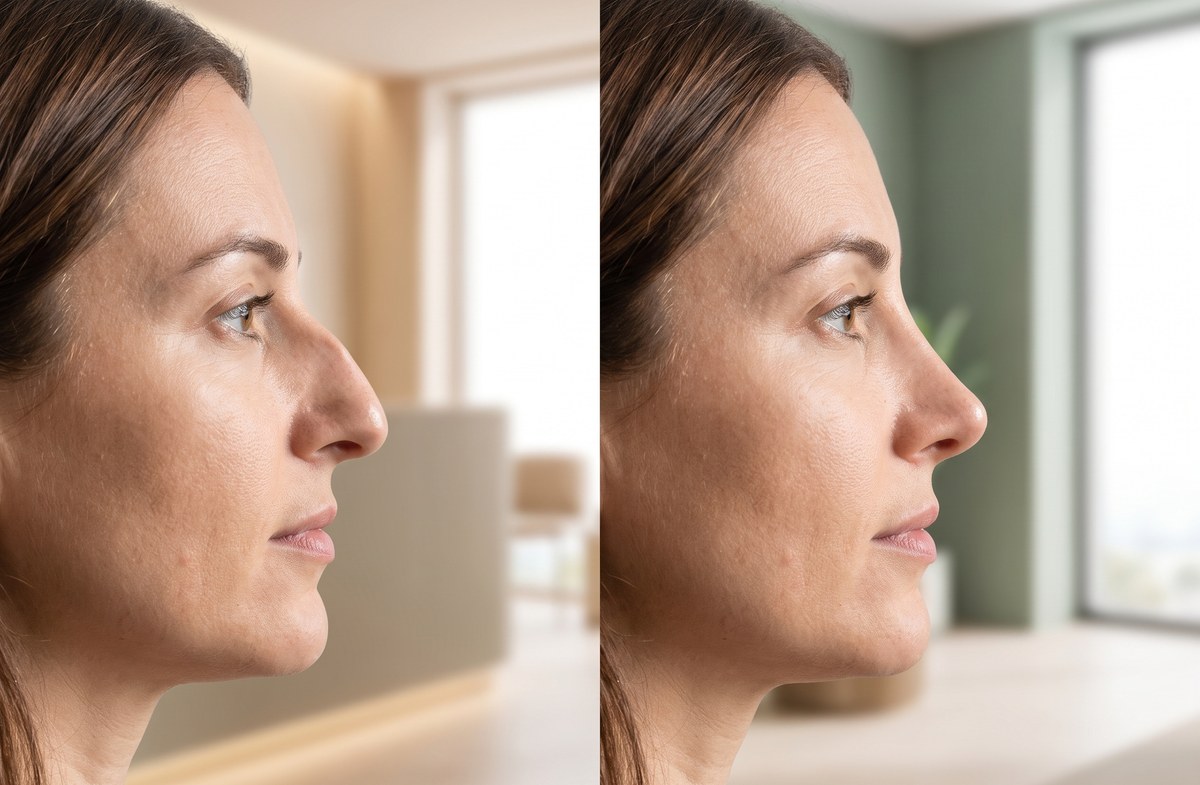
What is readily achievable: a hump that disappears. A tip that stands more defined and more stable. A nose that suits the face in profile and from the front. Breathing that improves where an anatomical narrowing is the cause. A result that no one recognises as operated on — that is our real benchmark.

What has limits: perfect symmetry exists in no face, not even after an operation — noses are by nature never exactly mirror images, and that is a good thing. Skin thickness cannot be changed at will; with thick skin the definition of the tip remains more limited and the final result takes longer to appear. Healing is individual: how scar tissue responds can be planned, but not forced. And a small proportion of all nose operations worldwide requires a minor secondary correction — that applies to us as well, and we tell you so beforehand.

When we advise against surgery: when the expectation does not match the anatomy. When someone wants a stranger's nose from a photograph that would not work in their own face. When a stressful life situation is to the fore, in which an operation would be the wrong step. And when the nose, just as it is, actually carries the face well. We never push anyone towards an operation — and we also decline when we cannot take responsibility for the request.

For your decision

How to recognise thorough planning

The choice of surgeon is the most important decision on the whole path. You can check these points in any consultation.

  • The first consultation lasts long enough to discuss your history, your wishes and your breathing properly.
  • Your nose is examined — from the outside and from the inside, not merely looked at.
  • You are told which technique is intended and why this one in particular suits your findings.
  • You see a simulated result from several angles, not only in profile.
  • You are told what is not possible — not only what is.
  • Skin thickness is discussed, because it also determines the result and the time it takes.
  • You know who will operate, where the operation will take place and who can be reached in an emergency.
  • You receive a written cost estimate that includes the aftercare.
  • There is no time pressure and no decision on the same day.
  • You are free to have a second consultation before you agree.

The process in detail — step by step

On the process page we show the whole journey from the first consultation to the final result.

Patient voices

What our patients say

„DDr. Wittmann responded perfectly to all my questions and wishes. From the first consultation through the operation to the follow-up check — everything was perfectly organised."
A patient of DDr. Wittmann Rhinoplasty DocFinder
„I felt I was in the best hands with DDr. Wittmann. She is very kind and sensitive. The final result is simply excellent and I am happy."
A patient of DDr. Wittmann Rhinoplasty DocFinder
„Happiness is a feeling of the greatest contentment. Thanks to Dr Grill's wonderful work I feel more confident and more comfortable in my own body."
Simone Rhinoplasty DocFinder
Appointment online

Book a consultation appointment directly

Choose an appointment directly below — or book specifically with one of our surgeons.

FAQ

Frequently asked questions about rhinoplasty

Is the rhinoplasty carried out open or closed?

Both techniques have their place. With the closed method all the incisions are inside the nose; with the open technique a tiny incision is added on the columella, barely visible later — it allows maximum precision in complex corrections. Which technique is ideal for you we decide together in the consultation.

What kind of anaesthesia is used?

We normally carry out rhinoplasty under general anaesthetic, supervised by our own specialist in anaesthesiology. That way you are safely looked after throughout the procedure.

How long does the operation take?

Depending on the extent, a rhinoplasty takes 1 to 4 hours. Because the operating theatres are ours, we operate without time pressure — for as long as it takes for the result to be right. We discuss the exact time frame with you beforehand.

Is the result permanent?

Yes. The result of a rhinoplasty is permanent — afterwards the nose only changes within the natural ageing process, like the rest of the face.

What are the arguments for a specialised centre?

A nose cannot be hidden — it sits at the centre of the face. At the Kuzbari Centre nose surgery is the main focus of three specialists, we operate in our own operating theatres and accompany consultation, operation and aftercare in one place. This concentration is the reason why we can take the time a nose requires.

What is the nose-bridge-preserving technique (dorsal preservation)?

With the nose-bridge-preserving technique the natural nose bridge is preserved rather than removed and rebuilt. The result looks particularly natural, it is stable in the long term, and the risk of later irregularities on the nose bridge is reduced — which matters above all with thin skin, because there even the smallest edge becomes visible. Certain deviations from the midline also recur less frequently. We work extensively with this technique and with hybrid techniques, not exclusively with the traditional structural septorhinoplasty. It is not generally superior — but for many findings it is the gentler choice.

Can the nasal tip drop again over the years?

The nasal tip is not supported by bone but by cartilage — which is why it is the part of the nose that changes most over the years. We stabilise the tip using modern cartilage-supported techniques. This considerably reduces the risk of it drooping again over the years.

How often is a rhinoplasty at your centre a revision rhinoplasty?

Four in ten nose operations at the Kuzbari Centre are revision procedures on a nose that has already been operated on. These procedures call for particular experience: the tissue is scarred, cartilage is sometimes missing, and the starting situation is different for every patient. We deliberately take on such cases.

From what age is rhinoplasty possible?

For aesthetic indications we operate once facial growth is complete — in women usually from around the age of 16, in men somewhat later. There is no upper age limit; what matters is your state of health and the quality of your tissue, not your year of birth. If there is a functional impairment, a correction may also be sensible earlier.

How long do I need to be in Vienna for the consultation, the surgery and the follow-up appointments?

The initial consultation is a separate appointment. For the surgery, plan to spend the day of the operation and the following night with us, and then around a week within easy reach until the splint and the sutures are removed. The further follow-up appointments are spread over several months and can easily be combined with other appointments.

How pronounced are the swelling and the bruising?

Both vary from person to person. Bruising around the eyes usually peaks on the third day and then fades quickly; after one to three weeks you are presentable in public. The residual swelling — particularly at the nasal tip — stays with you considerably longer and recedes over months. The piezotome we use to work on the bone spares soft tissue and blood vessels and generally leads to less bruising.

When may I exercise, wear glasses and fly again?

Light endurance exercise is usually possible again after four to six weeks. You should avoid contact sports and anything that risks a blow to the nose for considerably longer. When glasses may rest on the nose bridge again is something we clear individually. Flying is generally unproblematic from around two weeks after the operation — we set the exact timings at your follow-up appointment.

Where does the transplanted cartilage come from?

Preferably from the nasal septum, because it lies directly within the surgical field. If there is not enough — for instance for a larger augmentation or for a revision rhinoplasty — cartilage from the ear (conchal cartilage) or from the rib area is an option. Your body's own cartilage is accepted as your own tissue, integrates and is stable in the long term.

What happens to my sense of smell?

Immediately after the operation your sense of smell is limited by the swelling of the mucous membrane — this is to be expected and resolves as soon as the nose clears again. Permanent changes to the sense of smell are rare after a rhinoplasty; we discuss this subject with you in detail during the informed-consent consultation.

Can a rhinoplasty also improve breathing?

Yes, if an anatomical narrowing is the cause — for instance a deviated nasal septum, enlarged turbinates or a weak nasal valve. These parts can be corrected during the same operation. If, on the other hand, the cause is an allergy or a disease of the paranasal sinuses, a different approach is needed; we assess the paranasal sinuses together with an ENT specialist.

What does a rhinoplasty cost, and is payment by instalments possible?

A rhinoplasty starts at around €9,350 in total; the exact amount depends on the extent of the procedure and is set out in your written cost estimate after the initial consultation. Payment by instalments over up to five years is possible, and the effective annual interest rate is 9.99%. You will find all the details on the costs page.

How do I prepare for the operation?

In the two weeks beforehand, please avoid blood-thinning preparations, unless they are medically prescribed, as well as nicotine — smoking measurably impairs wound healing. Come with an empty stomach, without make-up and without jewellery. Arrange for someone to collect you, and set up a place at home where you can sleep with your upper body raised. You will receive everything else in writing.

Why the effort

What lies behind the price of a rhinoplasty.

An initial consultation with three-dimensional simulation, a technique that suits your nose, and an operating time that follows the findings — this effort is the reason why rhinoplasty with us has its price. It is also the reason why the result is meant to hold: for a lifetime, not for a few years.

Book your rhinoplasty consultation now

Simply arrange your no-obligation consultation by phone on +43 1 358 28 85 or via the online booking below:

Our rhinoplasty specialists

Univ. Doz. Dr Rafic Kuzbari

Univ. Doz. Dr Rafic Kuzbari

Specialist in Plastic, Aesthetic and Reconstructive Surgery

Dr Christoph Grill

Dr Christoph Grill

Specialist in Plastic, Aesthetic and Reconstructive Surgery

DDr. Jessica Wittmann

DDr. Jessica Wittmann

Specialist in Oral and Maxillofacial Surgery

DocFinder Patients’ Choice 2015 DocFinder Patients’ Choice 2016 DocFinder Patients’ Choice 2017 DocFinder Patients’ Choice 2018 DocFinder Patients’ Choice 2019 DocFinder Patients’ Choice 2020 DocFinder Patients’ Choice 2021 DocFinder Patients’ Choice 2022 DocFinder Patients’ Choice 2023 DocFinder Patients’ Choice 2024 DocFinder Patients’ Choice 2025