Nasal hump correction.
Do you look at your profile in the mirror and find yourself bothered by a hump, an irregularity or a crooked line on the bridge of your nose? Perhaps your bridge looks too flat or out of keeping with your features. A targeted nasal hump correction can change that.
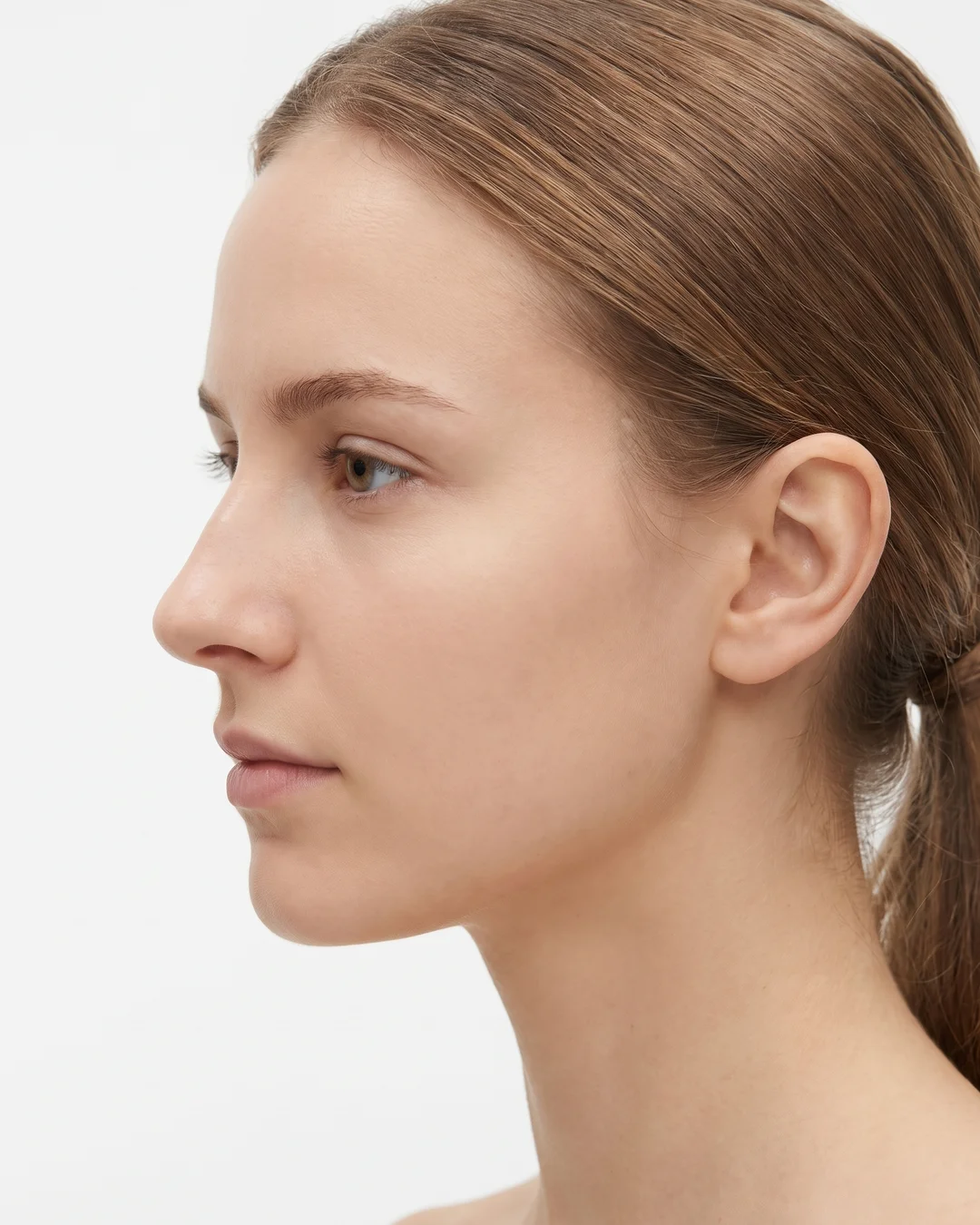
The bridge of the nose plays a central role in the aesthetics of your face.
Our patients come to us with a wide variety of concerns: many would like a troublesome hump removed, others the straightening of a crooked bridge or the building up of a flat profile. What they have in common is the wish for a harmonious, natural result that fits their face perfectly.
At the Kuzbari Centre we rely on individual solutions that underline your natural beauty without looking artificial.
What a dorsal hump actually is.
The nose bridge is not one continuous component but a junction. In the upper third it consists of bone — the two nasal bones, which widen towards the nasal root. Below that, cartilage takes over: the two upper lateral cartilages, which lie like a roof over the nasal septum. It is exactly at the point where bone and cartilage meet that the highest point of the nose bridge sits in most people.
A hump is therefore usually both: a bony and a cartilaginous portion, which together project beyond the ideal profile line. That is why it falls short simply to “file down” a hump — this would leave the cartilaginous part untouched, and once the swelling had gone a residual bulge would remain.
A second insight from the anatomy is more important still: some humps are not genuine humps. If the nasal root — the transition from the forehead to the nose — lies very deep, the nose looks arched in profile even though the nose bridge itself is not too high at all. Here removing tissue would be the wrong course. What is right is to raise the nasal root gently; this makes the profile line straight without the nose becoming smaller. We make this distinction at the examination and show it to you in the 3D simulation, because it determines the entire surgical strategy.
The causes of a genuine hump are almost always unspectacular. Usually it is constitutional and grows out with the face during puberty — one reason why many patients say that their nose “changed at 15”. Less often it develops after a fracture, when bone edges heal together out of alignment; the hump is then frequently combined with a crooked nose.
Nose-bridge-preserving: dorsal preservation.
We work extensively with the modern nose-bridge-preserving technique, known as dorsal preservation, as well as with hybrid techniques — not exclusively with the traditional structural septorhinoplasty. The natural nose bridge is preserved rather than removed and rebuilt.
With hump correction this difference is particularly tangible. If a hump is removed, an open surface is created at the point where the roof of bone and cartilage previously met. It then has to be closed again and rejoined — in our hands with supporting elements that secure the width and the line of the middle third of the nose. The profile line you see afterwards is a reconstructed line.
With the nose-bridge-preserving technique this roof remains untouched. The height is reduced lower down: a precisely measured piece of material is taken from the nasal septum and, depending on the variant, from the area beneath the nasal root. The entire nose bridge lowers as a unit and keeps the surface it has grown with. The hump disappears — the line remains your own, simply set lower.
This has three advantages. The result looks particularly natural. It is stable in the long term. And the risk of later irregularities on the nose bridge is reduced — which matters above all with thin skin, because there even the smallest edge becomes visible. Certain deviations from the midline also recur less frequently.
Dorsal preservation is therefore not generally superior, but for many findings it is the gentler choice. If the nasal septum is severely deformed, if material is missing after previous operations, or if the hump is very pronounced while the nasal root sits too low, a structural reconstruction may be the better solution. Often the best route is a hybrid technique at the nasal bridge: part of the bridge is preserved while other structures are modified in a targeted way — the advantages of dorsal preservation remain, and the range of cases it suits grows. The decision is made on your findings, not from a catalogue.
Why the nose bridge forgives nothing.
The thinnest skin of the entire nose lies over the nose bridge. Whatever lies beneath it therefore shows through almost immediately — an edge, a displaced bony rim, a strip of cartilage sitting too high. This is precisely where it is decided whether a hump correction still looks smooth years later.
We avoid this risk in three ways. First through the technique: where the nose bridge does not have to be opened, no suture can show through later either. Second through the instrument: the bone is worked with the piezotome, which cuts and smooths without injuring the soft tissue above it — the contour remains controllable. Third through care in the detail: all edges are rounded, strips of cartilage are cut with tapered ends, and transitions are cushioned with fine soft tissue where required.
We assess the nature of your skin during the examination and discuss it in the consultation. With thin skin we deliberately plan more conservatively, with thick skin we define the structure more clearly — and in both cases we tell you which interim stage you can expect, and when.
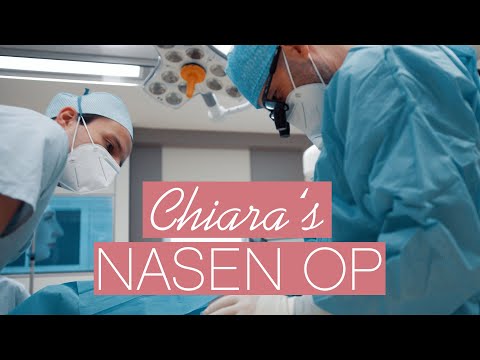
Elisabeth's new nose after an accident
For over 20 years Elisabeth suffered from her nasal hump after an accident — today she enjoys looking in the mirror again.

Nasal hump correction at a glance
| The aim of the operation | Smoothing a hump, straightening or building up the bridge of the nose |
|---|---|
| Duration of surgery | 1 – 4 hours |
| Fit for work | After 3 – 7 days |
| Presentable again | After 1 – 3 weeks |
| Recovery, sport | 4 – 6 weeks |
| Final result | 6 – 12 months in rare cases later still |
| Specialists | Dr Grill, DDr. Wittmann |
Rhinoplasty — from the first consultation to the aftercare
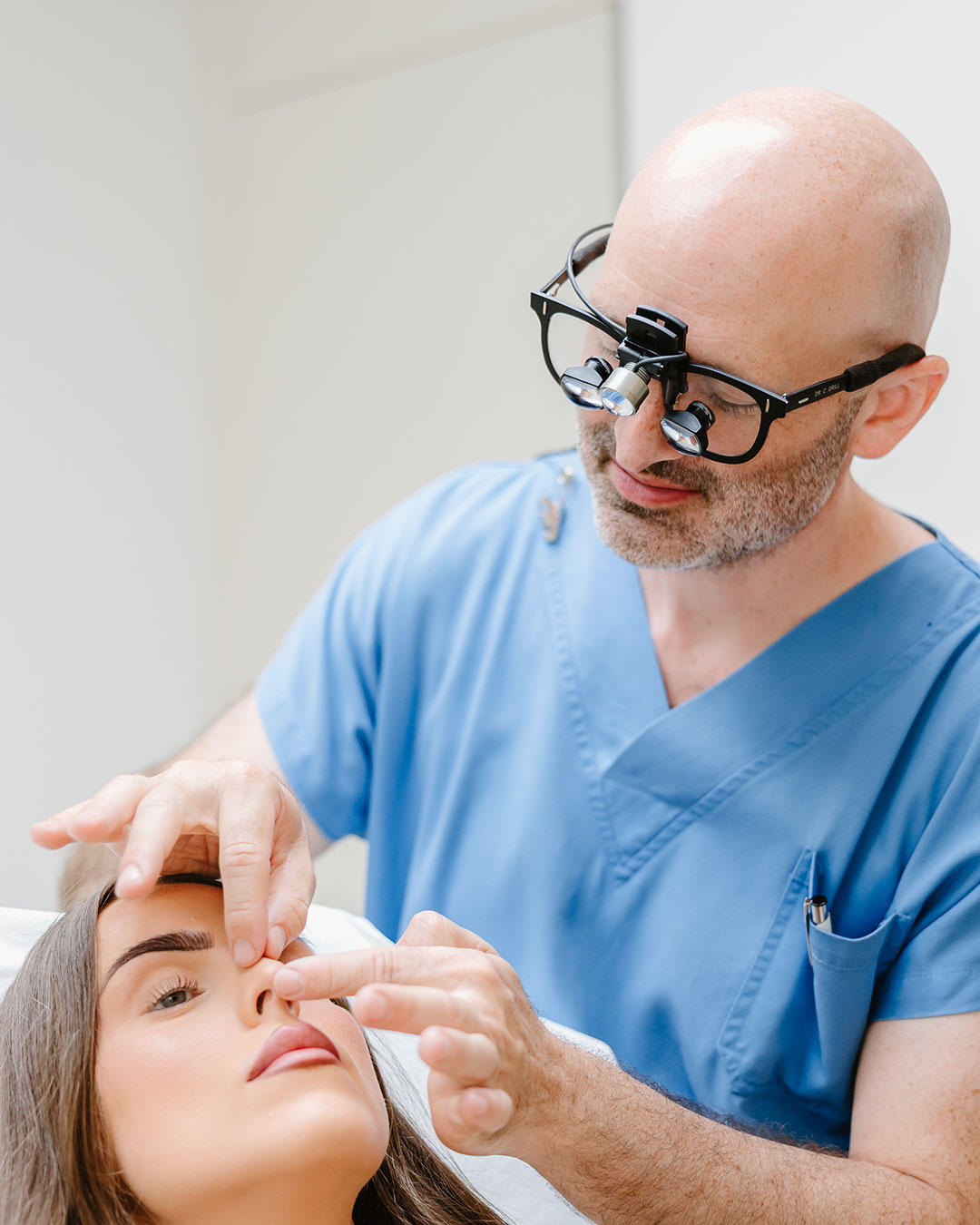
Specialisation. Safety. Experience.
There is hardly a clinic in Austria in which more operations in the field of aesthetic nasal surgery are carried out each year. At the Kuzbari Centre no fewer than three specialists devote themselves to facial surgery: Univ. Doz. Dr Rafic Kuzbari, Dr Christoph Grill and DDr. Jessica Wittmann.
From the first consultation with 3D simulation, through the operation in our own high-tech operating theatres, to the aftercare — everything under one roof.
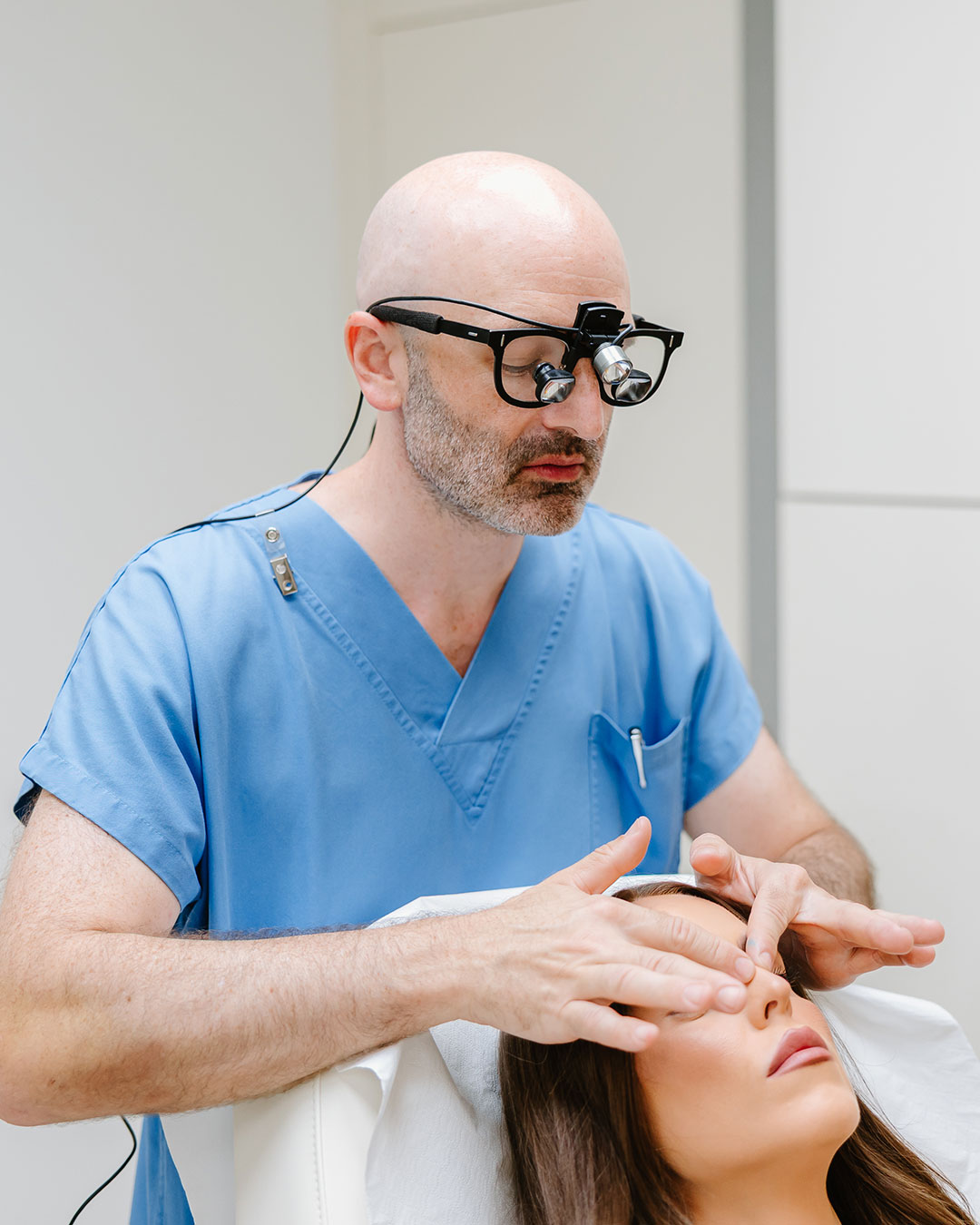
Your nasal hump correction step by step
-
01
The first consultation
Getting to know each other personally, a detailed analysis, a 3D simulation with Vectra technology, before-and-after comparisons and a thorough explanation of the process.
-
02
Preparation
Medical examinations, an anaesthetic consultation, individual surgical planning based on the 3D simulation.
-
03
The operation
The procedure in one of our modern operating theatres. Depending on what is needed, the hump is smoothed, the bridge straightened or a flat profile built up — often combined with further corrections for a harmonious overall result.
-
04
Aftercare & healing
The recovery room, a follow-up conversation, discharge with your surgeon's emergency number, regular check-ups until the final result after 6 – 12 months.
The piezotome: ultrasound instead of a chisel.
Whenever the bony part of the nose has to be altered during a rhinoplasty, we work with a piezotome. This is an ultrasound instrument that cuts and smooths bone while leaving the soft tissue, the mucous membrane and the blood vessels untouched — classically this step is carried out with a chisel and a saw. For patients it means more precise work on the bone and, as a rule, fewer bruises and less swelling in the days that follow.
An honest classification matters to us: the piezotome is not a method of rhinoplasty in its own right and it does not automatically make a nasal operation better. It is a tool for one step of the procedure. What remains decisive is the planning and the experience of the surgeon. We use the piezotome as standard in every nasal operation; Univ.-Doz. Dr Rafic Kuzbari has been doing so for years.
Why is cartilage grafted?
Univ. Doz. Dr Rafic Kuzbari explains why cartilage is grafted in rhinoplasty and how it stabilises the shape in the long term.

What you receive with us
-
Natural results
We create a straight, harmonious profile that complements your features without looking artificial.
-
Experienced specialists
Three specialists focused exclusively on facial surgery: Univ. Doz. Dr Kuzbari, Dr Grill and DDr. Wittmann.
-
State-of-the-art technology
Vectra 3D simulation and our own high-tech operating theatres.
-
Everything under one roof
Consultation, operation and aftercare — all in one place.
-
Maximum safety
The strictest hygiene standards, scientifically selected materials, quality-assured processes.
-
Recognised quality
Multiple DocFinder Patients' Choice Awards.
A straight profile that suits you.
A harmonious profile changes how a face comes across — and how comfortable you feel in it. After their rhinoplasty many patients describe one thing above all: that the nose finally feels “right” and no longer takes centre stage.
It is precisely that natural, unobtrusive result that we set out to achieve — a profile that complements your features instead of overshadowing them.

How much of the hump should go?
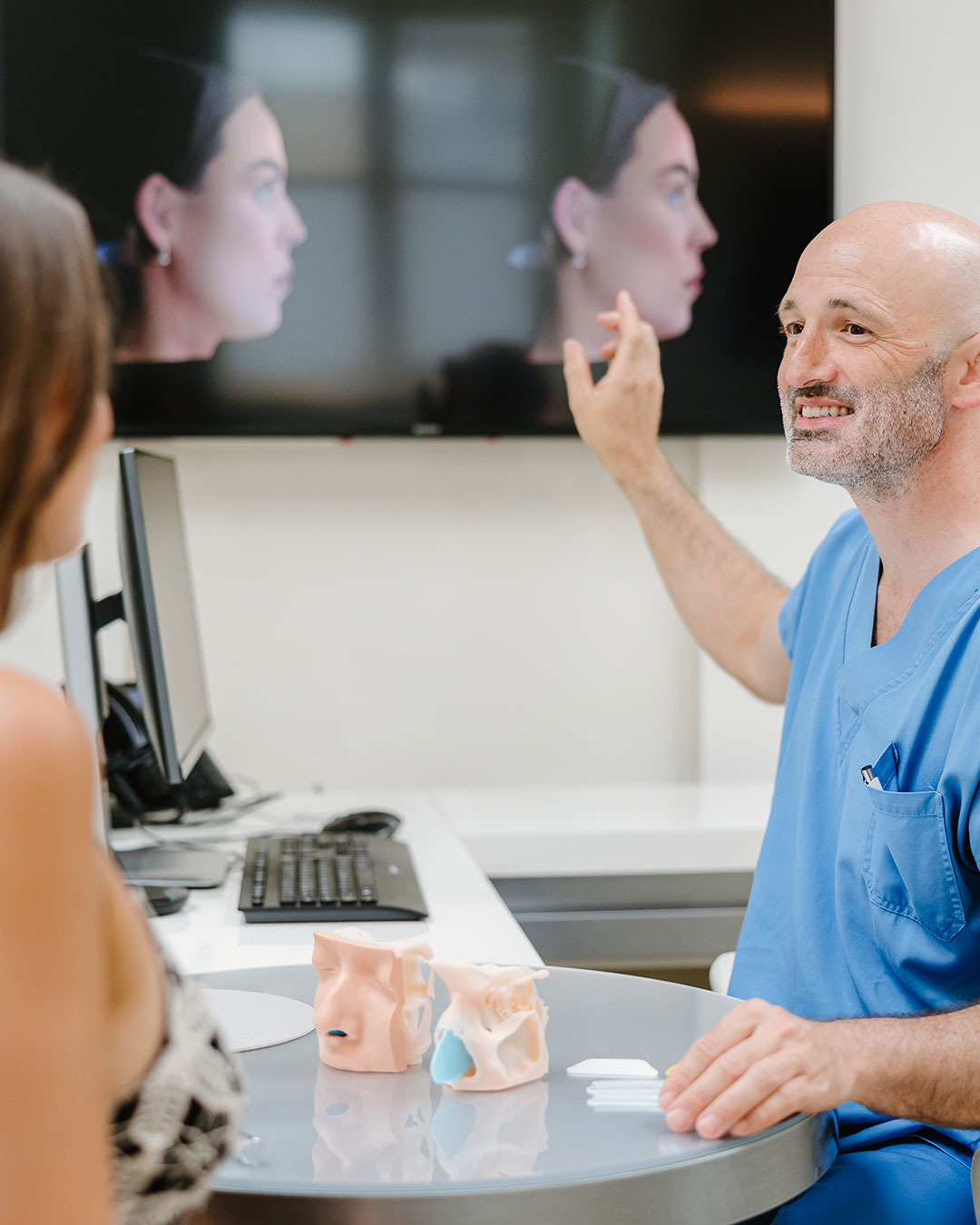
Our 3D simulation shows your future nose not only in profile, but also from the front and from below. You therefore see your possible result from exactly the angles from which others see you every day — and we discuss the same image before the operation.
With hump correction the most important question is not a medical one but a question of design: should the profile line be perfectly straight, gently curved or very softly curved inwards? Where exactly should the highest point lie? These are decisions of one or two millimetres — and they change the impression of a face considerably. They cannot be settled in words, but they can be settled on a simulated image.
The frontal view is just as important. When a hump is lowered, the width of the middle third of the nose changes at the same time — a nose can look broader from the front after the correction even though it is exactly right in profile. Because our simulation shows both views, we plan for this effect from the outset instead of noticing it afterwards.
The simulation remains a planning aid and is not a promise: how tissue heals always has its own share in the result. It does, however, ensure that you and we are talking about the same goal.
One to four hours — depending on the findings.
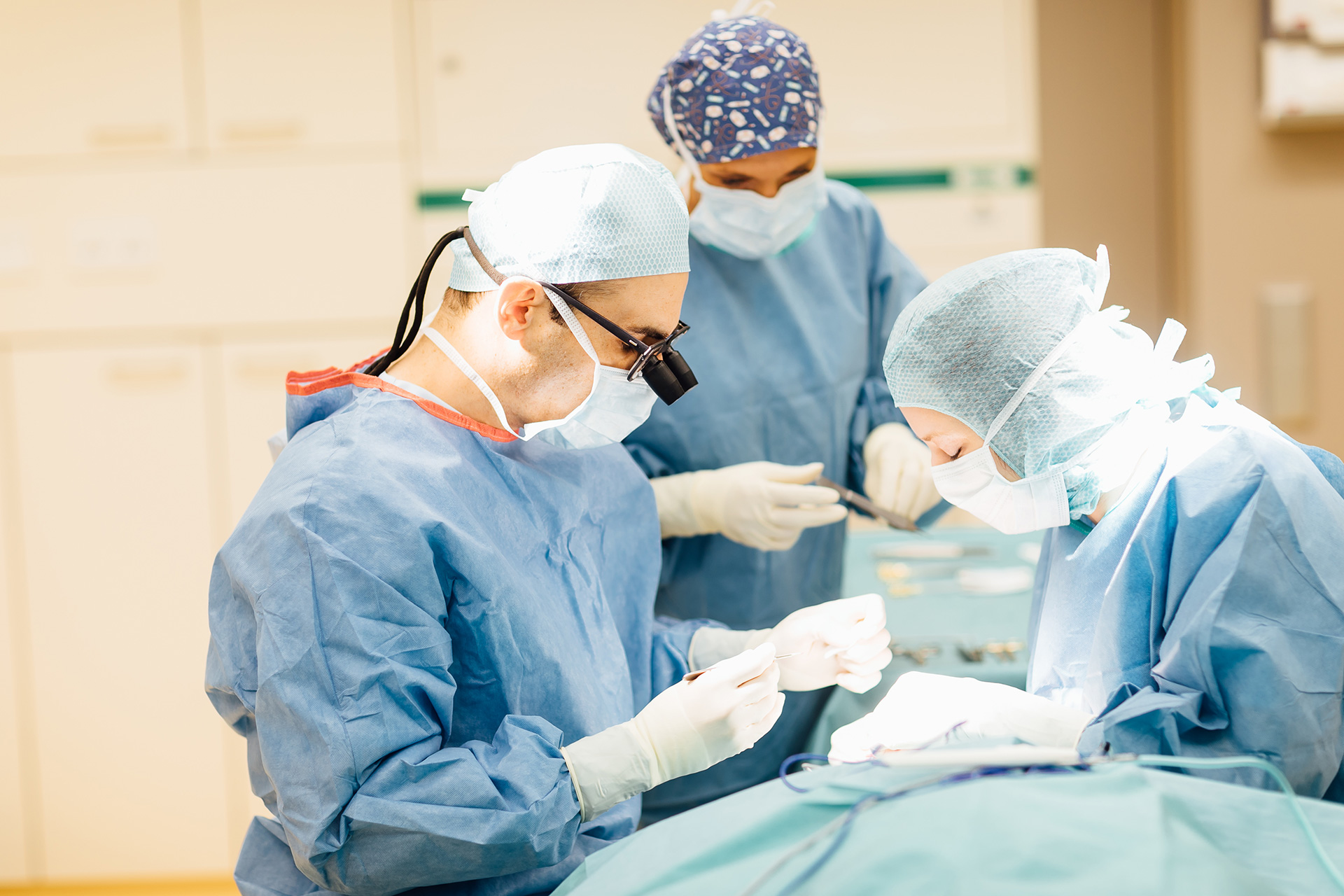
A rhinoplasty with us takes one to four hours. This range is deliberate: we operate in our own operating theatres and therefore without time pressure — for as long as it takes until every detail is right. How long a procedure takes is decided by the findings, not by the appointment schedule.
An isolated hump correction via the closed approach lies at the lower end of this range. If straightening of the nasal septum is added, or cartilage-supported stabilisation of the nasal tip, or raising of the nasal root, it takes longer. The more elaborate variant is not a more refined version of the same operation, but the technique that these findings require.
Incidentally, the step that takes up the most time on the nose bridge is checking. After every change the line is examined again from the side, from the front and with the finger — because an edge that is not yet apparent in the operating theatre may become so once the swelling has gone down. These repetitions are the reason why we do not save the last half-hour.
What becomes visible on the nose bridge, and when
The nose bridge shows its result earlier than the nasal tip — but here too it takes months before the line is final.
-
First week
The external splint protects the new line of the bridge and holds the soft tissue in place. Bruising around the eyes reaches its peak at around the third day. The piezotome used for the bone work spares soft tissue and vessels and generally leads to less bruising. After about a week we remove the splint and the sutures.
-
Week 2 to 3
The first honest look at the profile. The hump is gone, the line is recognisable — still with an even swelling over the nose bridge that makes the contour appear softer. At this stage you are presentable in public.
-
Week 4 to 8
The swelling on the nose bridge subsides noticeably, the line becomes clearer and narrower. The nasal bone has not yet healed completely at this stage: you continue to avoid contact sports and anything carrying a risk of impact, and we will tell you individually when glasses may rest on the bridge again.
-
Month 3 to 6
The nose bridge is largely in its final form. Now it becomes apparent whether the profile line sits as planned — at the follow-up appointments we compare it with the 3D plan and the photographic documentation.
-
Month 6 to 12
The final result. The nasal tip takes longer than the bridge, which is why the overall impression of the profile still changes slightly at this stage. With thick skin and after revision rhinoplasty this can extend to around 18 months.
Why breathing is almost always involved in a hump correction.
The nose bridge and the nasal septum are one connected structure: the septum supports the bridge from within. Anyone lowering the bridge therefore inevitably works on the septum — and thus on the structure that determines breathing.
For you this has two consequences. The first: a hump often goes together with a deviated nasal septum, particularly where there is a fracture in the history. Correcting both in one procedure is the obvious route — one anaesthetic, one healing phase. The second: hump correction means working in exactly the area where the internal nasal valve lies, the narrowest point of the entire airway. Its width has to be secured there, otherwise a beautiful profile line can make breathing worse. Where required we insert narrow strips of cartilage that keep the valve open and at the same time stabilise the line of the middle third of the nose.
This is why we also examine nasal breathing in every hump correction — and include it in the plan, even if you come to us with a purely aesthetic concern.
„The thinnest skin of the nose lies over the nose bridge. Everything we do beneath it will one day be visible — which is why we preserve the line you have grown with wherever the findings allow.“
A straight profile does not look the same in every face.
How much of a hump should go is not a universal figure. A profile looks harmonious when the line of the nose matches the forehead, the chin and the upper lip — and these reference points differ from face to face.
A receding chin makes every nose appear larger in profile; a hump correction has a stronger effect here than in a face with a strong chin. A high, prominent forehead can carry a slightly higher nasal line. And the angle between nose and upper lip changes the perception of the length of the nose without anything changing on the bridge. This is precisely why we never assess a hump correction in isolation, but always in the context of the whole profile.
The impression you wish to achieve also plays a part. Many female patients would like a very gentle curve to the nose bridge; many male patients expressly wish to keep a straight line and to have only the convexity removed, so that the profile remains strong. Both are readily achievable — and we discuss both on the simulation, not against an ideal of beauty.
What we do not do: give a nose a shape that does not work in the rest of the face. If a desired profile taken from a photograph would not carry in your face, we say so — and show you in the simulation why.
When a hump correction makes sense.
Age. For aesthetic indications we operate once facial growth is complete — as a rule from about the age of 16 in women, somewhat later in men. This is particularly relevant with a hump, because it often only develops during puberty; anyone operated on too early has a nose corrected that is not yet finished. There is no upper age limit: what matters is general health and tissue quality.
After a fracture. If the nose has just been broken, there is a short window in which the bone can be realigned without a major procedure. Once this window has passed, one waits until everything has healed — and then corrects the hump, the deviation and the nasal septum in one planned procedure. This is not a disadvantage: a planned correction generally leads to a more precise result than an immediate measure.
Everyday life and the calendar. Allow two to three weeks in which you do not have to be in the spotlight. Contact sports are out for a longer period, and glasses may only rest on the nose bridge again once we have given our approval. If you are working towards a fixed date, allow generous time — at least six months, and rather twelve with thick skin.
And the most important point. A rhinoplasty is a good decision when it comes from your own calm wish. Under pressure from those around you, or during a stressful phase of life, we advise postponing the procedure. The consultation about it is without obligation.
Your hump correction from beginning to end
Before the operation
- Initial consultation of around an hour, without obligation
- Vectra 3D simulation from the profile, frontal and basal view
- Examination of the nose bridge, nasal root, skin thickness and breathing function
- Photographic documentation of your starting situation
- Written cost estimate
- Informed-consent consultation and pre-anaesthetic assessment
On the day of the operation
- Our own operating theatre at the Kuzbari Centre
- One to four hours — according to the findings, not to a plan
- Nose-bridge-preserving or structural technique, depending on the findings
- Piezotome for working the bone
- One night as an inpatient with round-the-clock care
After the operation
- A follow-up talk on the morning after the operation
- The mobile number of your surgeon
- Removal of splint and sutures after about a week
- All follow-up appointments up to the final result included
- Comparison of the course of healing with the 3D plan
Rhinoplasty, 26
The patient wants an improvement in the shape of her nose in the three-quarter and profile views. What bothers her above all is the nasal hump. She wants the nasal tip to be less prominent. Otherwise she does not want too great a change to her nose.
Operation performed: Open nose surgery (open septorhinoplasty).


What a hump correction can achieve — and what it cannot.
Readily achievable: a hump that disappears. A profile line that runs straight or gently curved — exactly as planned. A nose that is no longer the first thing one notices in profile. And a result that no one recognises as operated on.
There are limits, too. A hump correction does not automatically make a nose smaller: anyone who feels their nose is too large overall needs more than a lowering of the bridge. Skin thickness cannot be changed — with thin skin we deliberately plan more conservatively, because there every edge would be visible. And healing is individual: how tissue settles over the months can be planned, but not forced. A small proportion of all nose surgery requires a minor secondary correction; that applies to us as well, and we say so beforehand.
What we advise against: a perfectly straight, almost sunken profile line where it does not suit the face — it quickly looks contrived and makes the nasal tip appear longer over the years. And an isolated hump correction where there is at the same time a drooping nasal tip or a marked deviation: the correction would then stop halfway.
For your consultation
Questions specifically about the nose bridge
- Do I have a genuine hump or a nasal root that sits too low?
- Will my nose bridge be lowered while preserved, or removed and rebuilt?
- How is the bone worked?
- How thin is my skin — and what does that mean for visible edges?
- How will the width of my nose change when seen from the front?
- Where should the highest point of the profile line lie?
- Should the line run straight or gently curved?
- Does the nasal tip need to be treated as well for the profile to be right?
- Will the nasal septum be straightened — and what is the cartilage needed for?
- When may I wear glasses again?
What is often corrected together
-

Nasal tip correction
A hump and a drooping tip often occur together — we stabilise the tip with cartilage support.
Learn more → -

Crooked nose
After a fracture, a hump and a deviation are often one and the same issue.
Learn more → -
Surgical methods
Nose-bridge-preserving, structural, hybrid — an overview of all the techniques.
Learn more →
Three surgeons for your nasal hump correction
-
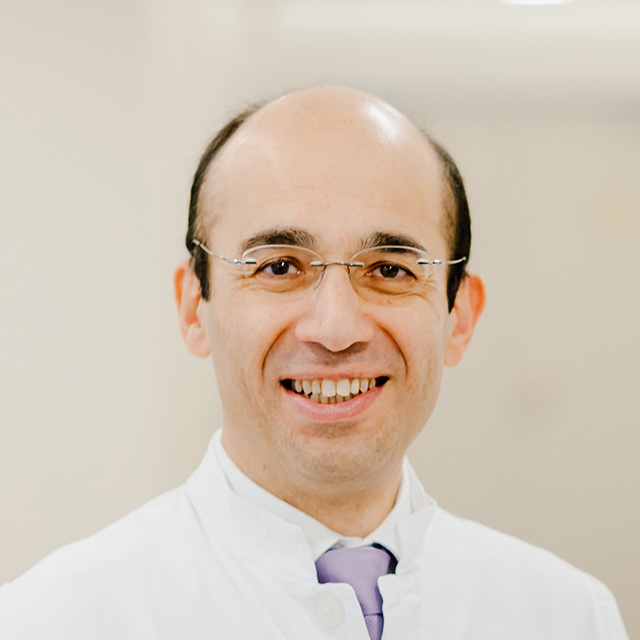
Univ. Doz. Dr Rafic Kuzbari
Specialist in Plastic, Aesthetic and Reconstructive Surgery
Over 30 years of experience; internationally regarded as an expert in revision procedures and complex rhinoplasty.
-
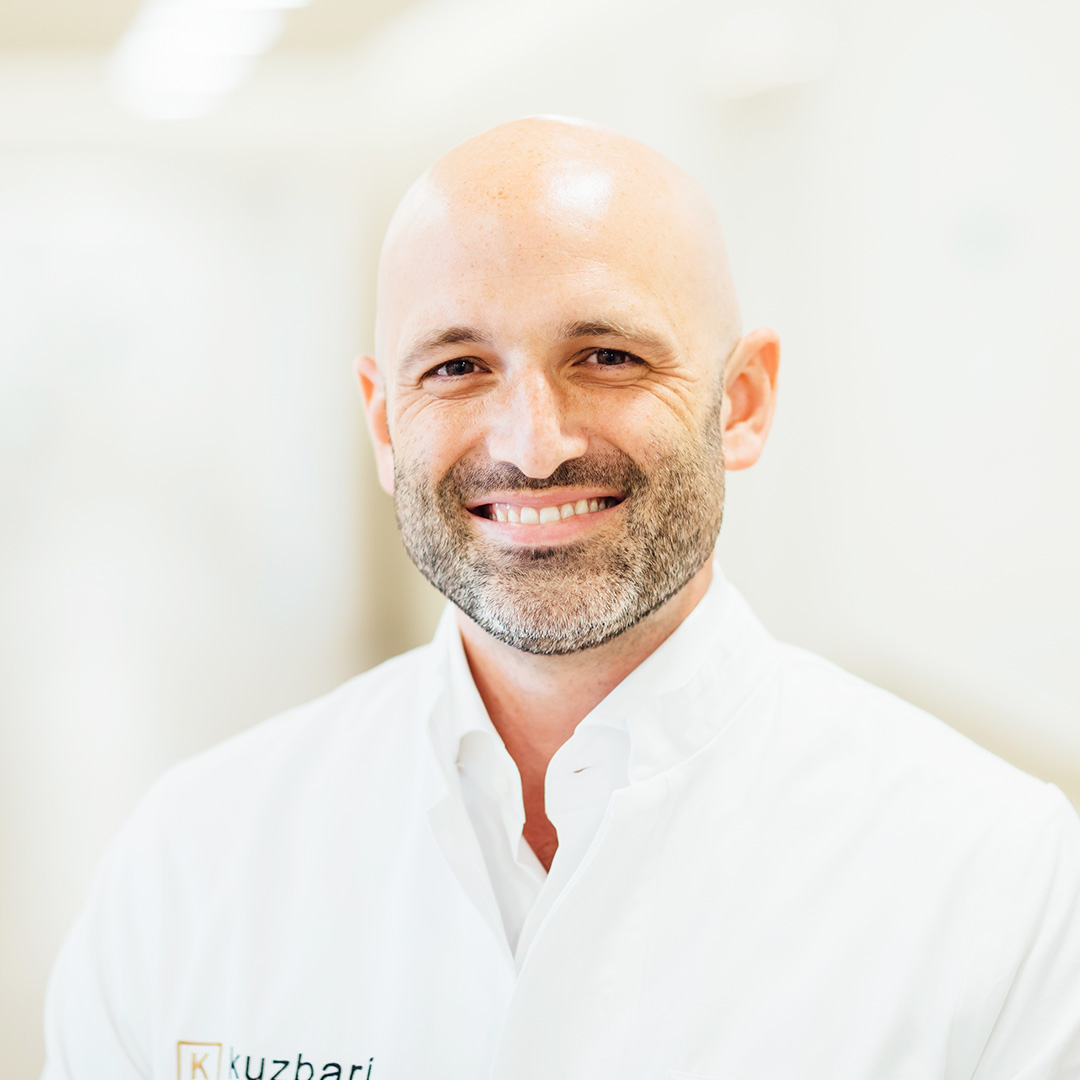
Dr Christoph Grill
Specialist in Plastic, Aesthetic and Reconstructive Surgery
A specialist in aesthetic and functional rhinoplasty with a focus on natural results.
-

DDr. Jessica Wittmann
Specialist in Oral and Maxillofacial Surgery
Combines the surgical and the aesthetic eye: precise nasal surgery with a sense for harmonious proportions.
Answers about nasal hump correction
Is a nasal hump correction painful?
During the operation you feel nothing thanks to the anaesthesia. After the procedure our patients usually report only mild pain — easily treated with painkillers.
How long does healing take?
You are fit for work after 3 – 7 days and presentable in company after 1 – 3 weeks; after 4 – 6 weeks you can take up sport and strenuous activities again. The final result is visible after 6 – 12 months, in rare cases only after 18 months.
Will there be scars?
Usually all that remains is a small, barely visible scar on the columella, plus possibly small scars on the bridge of the nose (about 2 mm) or on the nostril wall, depending on what is needed. In some cases it is also possible to operate without a scar, using the closed technique.
Can breathing be affected?
Our specialists take care to preserve or improve the function of the nose. Where necessary a septum correction can be integrated to optimise the breathing.
How much does a nasal hump correction cost?
The cost depends on the extent of the procedure. At the first consultation you receive a transparent quotation.
What is a piezotome?
A piezotome is an ultrasound instrument for working on bone without injuring the soft tissue, the mucous membrane or the blood vessels; classically this is done with a chisel and a saw. It means more precise work on the bone and, as a rule, fewer bruises and less swelling. The piezotome is not a method of rhinoplasty in its own right — it is a tool for one step of the procedure, and the planning and the experience of the surgeon remain decisive. We use it as standard in every nasal operation; Univ.-Doz. Dr Rafic Kuzbari has been doing so for years.
Is the result permanent?
Yes, the results are permanent. Slight changes due to the ageing process are possible, but they hardly affect the result. The nose-bridge-preserving technique helps the line to remain stable in the long term.
What is the nose-bridge-preserving technique (dorsal preservation)?
With dorsal preservation (the nose-bridge-preserving technique) the natural nose bridge is retained instead of being removed and rebuilt. The height is reduced further down — at the nasal septum and below the nasal root — so that the bridge is lowered as a unit that has grown together. The result looks particularly natural, it is stable in the long term, and the risk of later irregularities on the nose bridge is reduced, which counts above all with thin skin. Certain forms of crookedness also recur less often. We work a great deal with this technique and with hybrid techniques, not exclusively with the traditional structural septorhinoplasty.
Is the nose-bridge-preserving technique suitable for every hump?
No. For many findings it is the gentler choice, but it is not generally superior. If the nasal septum is severely deformed, if material is missing after previous operations, or if the nose bridge is to be raised rather than lowered, a structural reconstruction is the better solution. Often a combination is the best approach: the bridge lowered while preserved, the nasal tip stabilised with cartilage support.
Can a hump simply be filed down?
A hump almost always consists of a bony and a cartilaginous part. If only the bone were removed, a residual convexity would remain once the swelling had gone down. This is why a hump is always treated as a whole — either lowered while preserved, or structurally removed and rejoined.
I do not have a hump at all, my nose merely looks convex. How can that be?
Then your nasal root — the transition from forehead to nose — may sit very low. This makes the profile line look convex even though the nose bridge itself is not too high. Removing tissue would be the wrong approach here; the right one is to raise the nasal root carefully. The line becomes straight without the nose becoming smaller. We make this distinction during the examination and show it to you in the 3D simulation.
Will my nose look broader from the front once the hump is gone?
That can happen if the width of the middle third of the nose is not planned for as well — which is why we always assess every hump correction in the frontal view of the 3D simulation too. Depending on the technique, the bony base is narrowed with the piezotome or the line is secured with supporting elements.
Should the profile line be straight or gently curved?
That is a question of design which we decide together — and it concerns one to two millimetres that change the impression of a face considerably. A perfectly straight, almost sunken line looks contrived in many faces; a very gentle curve usually ages better. In the 3D simulation you see both variants.
Will irregularities on the nose bridge be visible later?
The thinnest skin of the nose lies over the nose bridge, which is why this is the decisive question. We limit this risk through the technique — where the bridge does not have to be opened, no suture can show through later either —, through the piezotome for controlled work on the bone, and through care in the detail: rounded edges, strips of cartilage cut with tapered ends, cushioned transitions.
Does the hump form again after the operation?
A hump that has been lowered or removed does not grow back. What can occur in rare cases is a small thickening in the area of the transition from bone to cartilage, which becomes apparent once the swelling has gone down. We assess whether such a fine correction makes sense at the earliest after twelve months, once the tissue has healed completely.
When may I wear glasses again after a hump correction?
Because glasses rest precisely on the operated nose bridge, we give our approval individually — as a rule after several weeks. Until then contact lenses are the simpler solution. If you cannot do without glasses, we will give you instructions on how they can be worn in the meantime.
Can a hump be corrected after a fracture?
Yes, and it is a frequent reason for surgery. After a fracture the hump is usually combined with a deviation, because the edges of the bone have healed together out of line. Straightening and hump correction are then carried out in one procedure, often together with the nasal septum — which is almost always affected as well in a fracture.
How often is a hump correction at your centre a revision rhinoplasty?
Four in ten nose operations at the Kuzbari Centre are revision procedures on a nose that has already been operated on. These procedures call for particular experience: the tissue is scarred, cartilage is sometimes missing, and the starting situation is different for every patient. We deliberately take on such cases.
A profile that is meant to last.
An initial consultation with three-dimensional simulation, a technique that suits your nose, and an operating time that follows the findings — this effort is the reason why rhinoplasty with us has its price. It is also the reason why the result is meant to hold: for a lifetime, not for a few years.
Book your rhinoplasty consultation now
Our rhinoplasty specialists
Univ. Doz. Dr Rafic Kuzbari
Specialist in Plastic, Aesthetic and Reconstructive Surgery
Dr Christoph Grill
Specialist in Plastic, Aesthetic and Reconstructive Surgery
DDr. Jessica Wittmann
Specialist in Oral and Maxillofacial Surgery