Nostril correction.
Do you feel uncomfortable because your nostrils look too wide, asymmetrical or out of keeping with your face? Perhaps you find your nose too dominant, when in fact it is only the shape or width of the nostrils that bothers you. A targeted nostril correction can change that.

The nostrils play a decisive role in the harmony of your face.
Our patients come to us with a wide variety of concerns: some would like narrower nostrils, others a correction of asymmetries or an adjustment that makes their nose look more proportionate. What they have in common is the wish for a natural, aesthetic result that complements their personality perfectly.
A precise analysis often shows that with a nostril correction the tip or other parts of the nose should also be corrected for a harmonious result. We model the result you want together with you on the Vectra 3D model.
Too crooked, too broad, too pointed?
DDr. Jessica Wittmann explains the most common irregularities in the shape of the nose and how they can be corrected.

The alar base — the most underestimated third of the nose.
What we colloquially call the nostrils is, strictly speaking, the entire alar base: the two alar walls, the nasal openings between them, the columella in the middle and the points at which the nostrils merge into the cheek and the upper lip. This area determines how wide a nose appears from the front — and when a rhinoplasty is planned it is often the last thing to be considered, even though it shapes the frontal impression more strongly than the nose bridge.
The base is carried by the alar cartilages, whose outer crura run into the alar wall. Further out, the nostril consists only of skin, connective tissue and fine muscles — without any cartilaginous support. This construction explains two things. First, the alar wall is mobile and can be drawn inwards on vigorous inhalation. Second, its width can be adjusted readily, because no load-bearing structure is altered here.
Four dimensions matter for the assessment. The width of the alar base in relation to the distance between the eyes. The degree of flaring of the nostrils — that is, how far they project sideways beyond their point of attachment. The thickness of the alar wall, which determines how much substance is present at all. And the height of the columella, because a columella drawn far down or sitting very high changes how much of the nasal openings can be seen.
These four dimensions are the reason why “nostrils that are too wide” can mean very different findings at the examination — and why the technique depends on which of the dimensions actually deviates.
What “too wide” actually means
Each of these findings calls for a different technique — and with some of them the solution does not lie at the nostrils.
-
Wide alar base
The attachment points of the nostrils lie far apart and the nose looks wide from the front, even though the alar walls themselves are unremarkable. Here the base is narrowed through very small incisions in the natural fold at the alar attachment — to the millimetre and matched on both sides.
-
Widely flaring nostrils
The nostrils project sideways beyond the base, often more markedly when smiling. What is corrected is not the width of the base but the arch of the nostril — otherwise the nasal openings would become too small.
-
Thick alar wall
A great deal of soft tissue in the alar wall makes the nose look bulky and also makes the nasal tip rounder. Here the wall is thinned from the inside rather than the base being narrowed. The result shows itself later than with other findings, because this tissue is slow to lose its swelling.
-
Asymmetrical nostrils
Nostrils of differing shape or attached at differing heights — congenital, following an accident or following a previous operation. We match the two sides to one another; complete symmetry is rarely achievable at the alar base, a clear improvement usually is.
-
Hanging alar rim
The rim of the nostril covers the nasal opening or appears retracted. Rather than taking tissue away, support is usually provided here with fine strips of cartilage — taking tissue away would make the problem worse.
-
The impression after a correction of the tip
If the nasal tip is raised or narrowed, the base appears wider from the front even though nothing about it has changed. That is precisely why correction of the nostrils is often planned as the last step of a larger correction — and only decided upon at that point.
Nostril correction at a glance
| The aim of the operation | Narrowing, evening out or adjusting the nostrils |
|---|---|
| Duration of surgery | 1 – 4 hours |
| Fit for work | After 3 – 7 days |
| Presentable again | After 1 – 3 weeks |
| Recovery, sport | 4 – 6 weeks |
| Final result | 6 – 12 months |
| Specialists | Dr Grill, DDr. Wittmann |
Specialisation. Safety. Experience.
There is hardly a clinic in Austria in which more operations in the field of aesthetic nasal surgery are carried out each year. At the Kuzbari Centre no fewer than three specialists devote themselves to facial surgery: Univ. Doz. Dr Rafic Kuzbari, Dr Christoph Grill and DDr. Jessica Wittmann.
From the first consultation with 3D simulation, through the operation in our own high-tech operating theatres, to the aftercare — everything under one roof.

Your nostril correction step by step
-
01
The first consultation
Getting to know each other personally, a detailed analysis, a 3D simulation with Vectra technology, before-and-after comparisons and a thorough explanation of the process — without time pressure.
-
02
Preparation
Medical examinations, an anaesthetic consultation, individual surgical planning based on the 3D simulation.
-
03
The operation
The procedure in one of our modern operating theatres. The incisions are usually placed at the base of the nostrils and are mostly barely visible once healed.
-
04
Aftercare & healing
The recovery room, a follow-up conversation, discharge with your surgeon's emergency number, regular check-ups until the final result.
Narrowing without taking away the nose's support.
At the alar base a principle applies that sounds contradictory at first: the less is taken away, the better the result holds. This is because substance and function are directly connected here. If too much is removed, the nasal openings become narrow, the alar wall loses its support and can be drawn inwards on inhalation. We therefore work very conservatively and to the millimetre at the base.
Narrowing the base. Through very small incisions in the natural fold at the alar attachment, a precisely measured wedge of tissue is removed. The attachment points thereby move closer together and the nose looks narrower from the front. The amount is determined separately for each side, because the two sides are almost always different. The incision is deliberately kept on the inner side of the fold, so that the scar lies in the natural shadow.
Adjusting the alar arch. If the nostrils flare sideways, the base is not narrowed; instead the arch of the nostril itself is altered. In this way the size of the nasal opening is preserved — which is decisive for breathing.
Thinning the alar wall. Where there is a great deal of soft tissue, the wall is carefully thinned from the inside. On the outside everything remains untouched and no additional scar arises. This tissue is slow to lose its swelling, so the result shows itself later here than with other findings.
Supporting instead of removing. If the alar rim is retracted or the nasal opening collapses on inhalation, fine strips of cartilage are inserted to hold the rim outwards. This measure improves form and breathing at the same time — taking tissue away would make both worse.
Suture techniques. For fine corrections of symmetry and of the position of the nostrils, very fine sutures that realign the cartilages are often enough. Shaping rather than removing is gentler on the tissue and more stable in the long term — the same principle by which we also stabilise the nasal tip in a cartilage-supported manner.
Which of these steps are necessary in your case is something we decide from the findings, and often only in the course of the operation, once the nose bridge and the nasal tip have taken on their new form. Because the operating theatres are our own, we operate without time pressure — this last fine adjustment needs calm.
Where the incisions lie — and what becomes of them.
Correction of the nostrils is the only part of nasal surgery in which incisions in the external skin may be necessary. That is why we raise the subject early and openly instead of glossing over it.
The incisions lie in the natural fold in which the nostril merges into the cheek and the upper lip — where a shadow falls in any case. They are placed so that the scar comes to lie on the inner side of the fold and not on the cheek. Closure is carried out with very fine suture material in several layers, so that there is no tension on the skin: tension is the most important factor in a conspicuous scar.
In the first weeks the suture line is visible as a fine reddish line. Over months it fades and becomes softer; after about a year it is as a rule barely recognisable. At the follow-up appointments we show you how your scar is developing and give you guidance on what you can do for it — above all consistent sun protection in the first months, because fresh scars can darken under UV light.
Where an external suture is not necessary, we avoid it. Thinning the alar wall from the inside, suture techniques on the cartilages or support of the alar rim leave no visible scar.
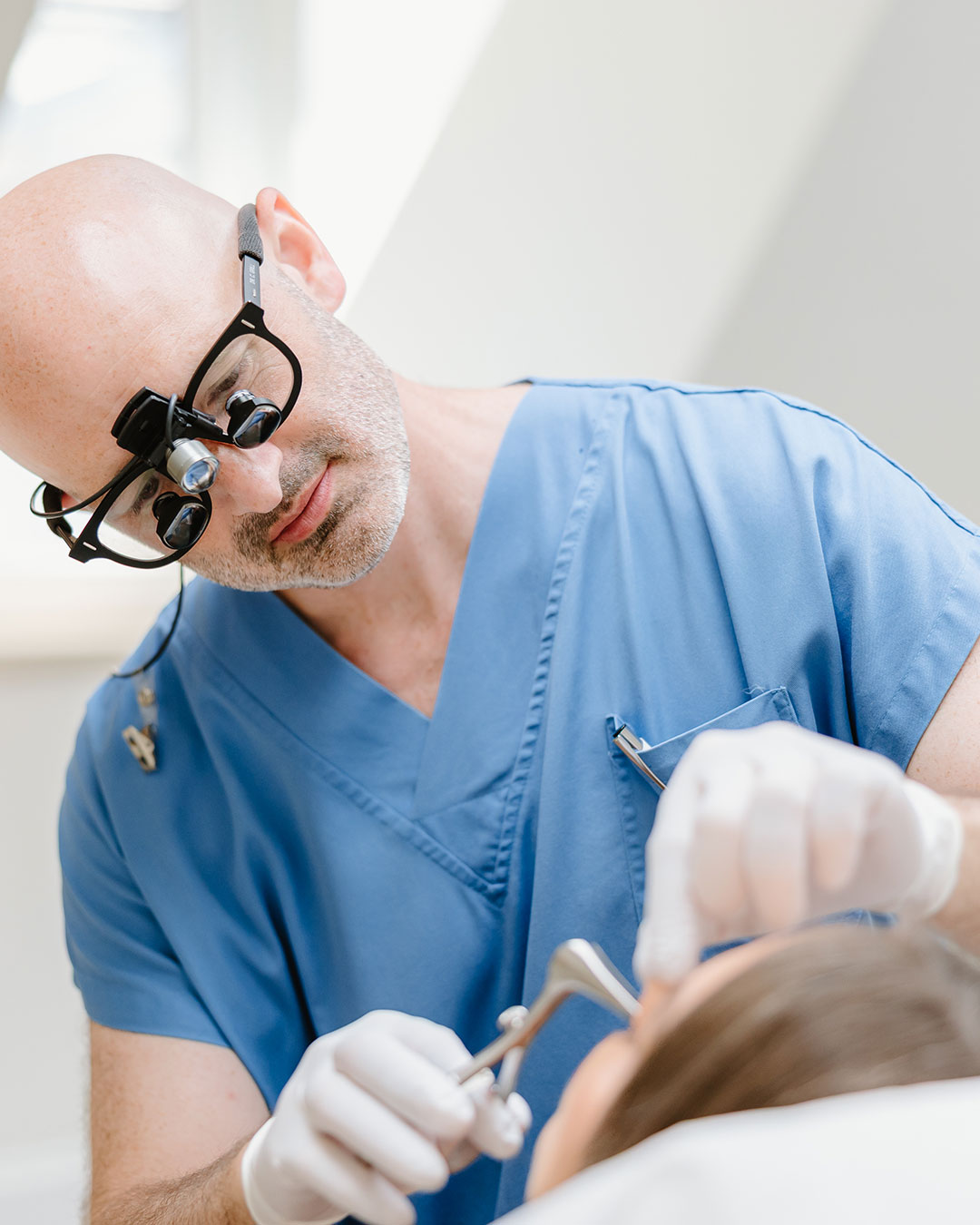
The nostrils determine the external nasal valve.
The nasal opening is not held open by bone but by the outer crus of the alar cartilage and by the tension of the alar wall. This area is called the external nasal valve. If the cartilages are naturally weak, bent inwards or weakened during a previous operation, the alar wall is drawn inwards on vigorous inhalation and the opening narrows.
Those affected notice this above all during sport, when lying down and in cold air — and often help themselves unconsciously by pulling the nostril outwards with a finger. If this simple manoeuvre immediately improves breathing, it is a strong indication of a weak external nasal valve. Do try it, and tell us about it.
For the operation this means that the alar base must not simply be narrowed without examining this area. We assess the valve at every consultation and support it with fine strips of cartilage where needed — the same measure then improves form and breathing in one step. A correction of the nostrils that made breathing worse would not be a good result for us, even if the nose looked narrower.
What you receive with us
-
Natural results
We create harmonious nostrils that complement your features without looking artificial.
-
Experienced specialists
Three specialists focused exclusively on facial surgery: Univ. Doz. Dr Kuzbari, Dr Grill and DDr. Wittmann.
-
State-of-the-art technology
Vectra 3D simulation and our own high-tech operating theatres.
-
Everything under one roof
Consultation, operation and aftercare — all in one place.
-
Maximum safety
The strictest hygiene standards, scientifically selected materials, quality-assured processes.
-
Recognised quality
Multiple DocFinder Patients' Choice Awards.
A small correction, a big effect.
Even a subtle adjustment of the nostrils can make the face appear more balanced. What matters is a result that looks symmetrical and natural — never conspicuous.
The finest thing about it: what you see is not the operation but simply a coherent overall picture. Many patients describe it by saying that after the correction their nose looks “calmer” from the front — without anyone being able to name what has changed.
That is exactly where our benchmark lies: a successful correction of the nostrils does not draw attention. It takes the dominance out of the nose within the face and lets the eyes come to the fore.

The alar base is assessed from the front and from below.
Our 3D simulation shows your future nose not only in profile but also from the front and from below. You therefore see your possible result from exactly the angles from which others see you every day — and before the operation we talk about the same image.
For the nostrils this is not a detail but a prerequisite. In profile the width of the alar base is practically impossible to make out; the frontal view shows the width, the view from below shows the form and symmetry of the nasal openings and the position of the columella. Anyone who plans in profile alone plans past this area.
The simulated image also allows a question to be settled that can hardly be answered in words: how much narrower a nose should actually appear. Two millimetres on each side change the frontal impression considerably — and more than that is rarely sensible at the alar base, because the nasal openings and breathing have to be preserved. The simulation is a planning aid here and not a promise: how tissue heals always plays its own part in the result.

A narrower nose is not automatically the more beautiful one.
The width of the alar base is one of the features that make a face unmistakable. We therefore do not treat it as a deviation from an ideal measurement but as part of your proportions. Whether an alar base looks too wide is not decided by a number but by its relation to the distance between the eyes, the width of the cheeks and the width of the mouth — and by your own impression in the mirror.
At the consultation we therefore first ask what bothers you, and not what deviates from a measurement. And we say so if we find that an alar base carries the face well as it is. A nose that is more delicate after the operation but no longer suits the face would not be a good result for us.
What we aim for is a change that preserves the character of a face. That is why we correct the alar base in millimetres, remain conservative when in doubt and deliberately plan this step last — once the bridge and the tip have taken on their new form and it becomes apparent whether the base still needs anything at all.
What happens at the alar base, and when
The alar base heals visibly faster than the nasal tip — the scar, by contrast, needs months until it has faded.
-
First week
Small sutures at the alar attachments, slight swelling, occasionally a feeling of tightness. Pain is usually mild in this area. After about a week the sutures are removed.
-
Weeks 2 to 4
The swelling at the base subsides briskly and the new width becomes recognisable. The scar is visible as a fine reddish line in the alar fold and can be covered well with make-up. From now on, sun protection is the most important contribution to an inconspicuous scar.
-
Months 2 to 4
The scar becomes softer and begins to fade. If the alar wall was thinned from the inside, the actual result only shows itself in this phase — this tissue is slower to lose its swelling.
-
Month 6 to 12
As a rule the scar is barely recognisable any more and the form of the alar base is final. Because the nasal tip needs longer than the base, the frontal impression of the nose still changes slightly during this phase.
Three assumptions that we often put right at the consultation.
“A small correction, so a small procedure.” In terms of time, correction of the nostrils is the shortest part of nasal surgery — and nonetheless the least forgiving. Whatever substance is taken away here cannot be put back, and the effect on the frontal impression is disproportionately large. That is why we treat this step not as a minor matter but as millimetre work at the end of an operation.
“Wide nostrils can simply be cut away.” Together with the outer crus of the alar cartilage, the alar wall holds the nasal opening open. If it is narrowed too far, breathing becomes worse — particularly during sport and when lying down. How much is possible is therefore decided not by the wish but by function.
“My nose looks wide from the front, so it must be the nostrils.” Often it is the nasal tip or the middle third of the nose — and an isolated correction of the base would barely change the impression. This can be told apart clearly at the examination and in the frontal view of the 3D simulation. We will tell you if the cause lies at a different part of the nose than assumed.
The last fine adjustment needs calm.
A rhinoplasty with us takes one to four hours. This range is intentional: we operate in our own operating theatres and therefore without time pressure — for as long as it takes until every detail is right. How long a procedure takes is decided by the findings, not by the schedule.
In terms of time, an isolated correction of the nostrils is the shortest procedure on this page. Its part within a larger rhinoplasty, by contrast, comes at the end — and it is planned precisely when all the other steps have been completed. By then surgery has often been under way for a long time; it is exactly in this phase that time pressure is most dangerous, because millimetres and symmetry between the sides are what count.
That we are able to carry out this last section calmly is down to the fact that the operating theatres are our own. Nobody is waiting for the room. And what has once been taken away at the alar base cannot be put back — which is why we would rather adjust twice here than take too much once.
When a correction of the nostrils makes sense.
Age. For an aesthetic indication we operate once facial growth is complete — in women as a rule from about the age of 16, in men somewhat later. There is no upper age limit: what is decisive is the state of health and the quality of the tissue, not the year of birth.
Sun and season. With this procedure the season plays a greater role than with other rhinoplasties, because a scar may lie on the external skin and fresh scars can darken under UV light. Anyone who spends a lot of time outdoors in summer therefore likes to plan the procedure for the cooler half of the year — or is very consistent with sun protection in the first months.
As a procedure of its own or as part of a larger correction. If you are thinking about a rhinoplasty anyway, it makes sense to include the alar base in the same plan rather than addressing it separately later: one anaesthetic, one healing phase. If you are coming solely because of the nostrils, we will tell you honestly whether that is enough.
And the most important point. A correction is a good decision when it comes from your own calm wish. The width of the alar base is one of the features that make a face unmistakable — under pressure from those around you we advise against changing anything about it. The consultation about it is without obligation.
„At the alar base, two millimetres decide the frontal impression. What is taken away here cannot be put back — which is why we remain conservative when in doubt.“
Rhinoplasty, 33
The patient says she would like a natural-looking nose. What bothers her above all is the broad nasal tip, the nasal hump and the wide nostrils.
Operation performed: Open nose surgery (open septorhinoplasty).


What is possible at the nostrils — and what is not.
Readily possible is: an alar base that appears narrower in relation to the face. A degree of flaring that noticeably recedes. A marked asymmetry that is visibly softened. An alar wall that is less bulky. And a retracted alar rim that regains support — with better breathing as a side effect.
There are limits as well. The nasal openings have to remain large enough: narrowing is therefore limited, and more than a few millimetres per side is rarely sensible. Complete symmetry is hardly achievable at the alar base, because the two sides are naturally different. And a scar in the alar fold remains a scar — as a rule it is barely recognisable once healed, but we do not promise that it will be invisible.
What we advise against: an isolated correction of the nostrils when the actual reason for the wide impression lies at the nasal tip or in the middle third of the nose. And a very extensive narrowing, because it makes the nose look increasingly tight and contrived with age — and can impair breathing permanently.
For your consultation
Questions specifically about the alar base
- Is my alar base wide, are the nostrils flaring, or is the alar wall thick?
- How many millimetres should be changed per side?
- Where exactly do the incisions lie — and what becomes of the scar?
- Can the result be achieved without an external suture?
- Will my nasal openings remain large enough?
- Does my nostril collapse when I breathe in — and will that be treated as well?
- Might the wide impression be due to the nasal tip?
- What does the nose look like from below, not only from the front?
- Will the correction of the nostrils be carried out at the same time or decided later?
- When may I expose the scar to the sun again?
What is often planned together
-
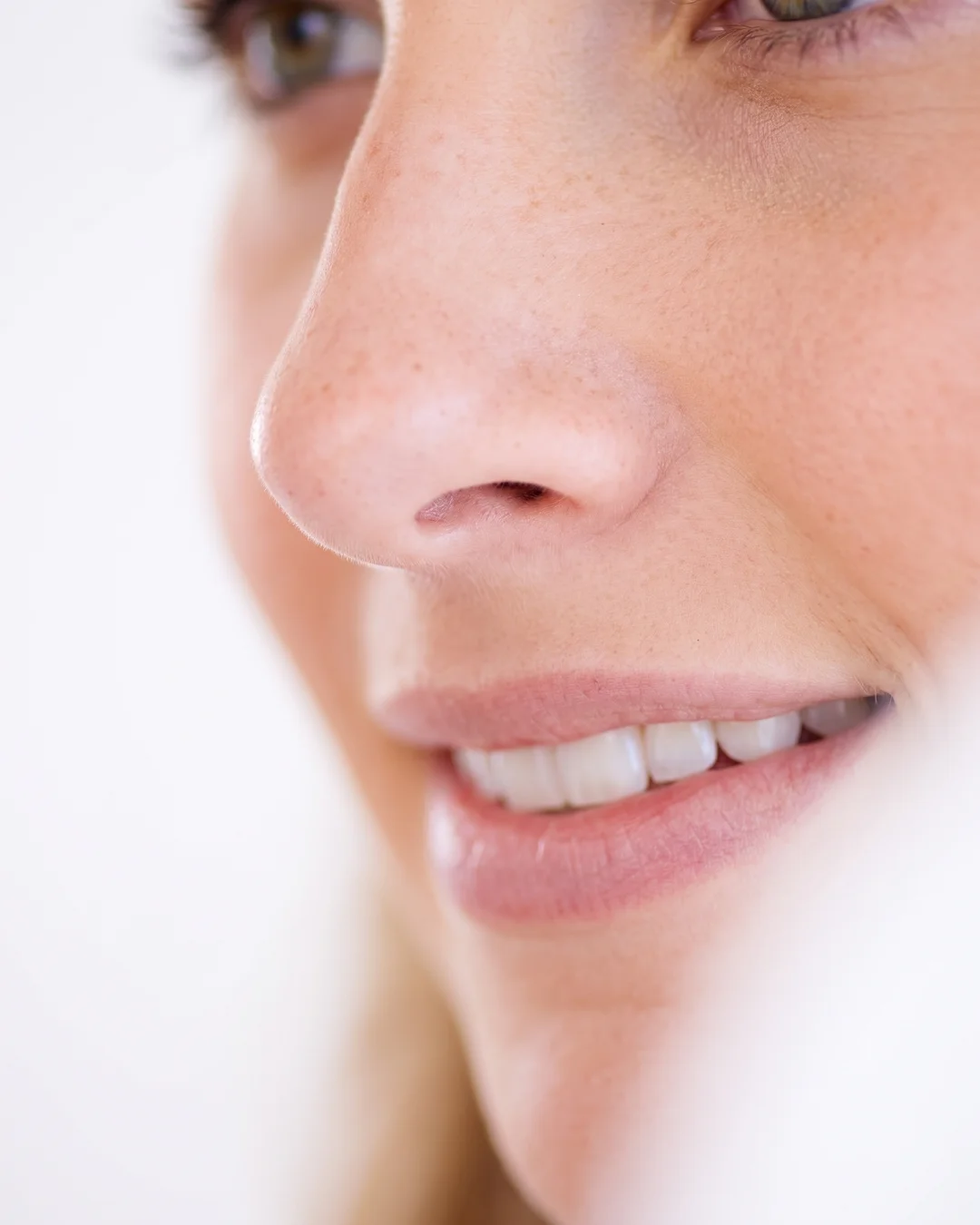
Nasal tip correction
If the tip is raised, the base looks wider — which is why the two subjects belong together.
Learn more → -

Nose reduction
When it is not only the base but the whole nose that seems too dominant.
Learn more → -

Functional correction
When the nostrils collapse on inhalation and breathing is the main concern.
Learn more →
Your correction of the nostrils from beginning to end
Before the operation
- Initial consultation of around an hour, without obligation
- Vectra 3D simulation from the frontal view, from below and in profile
- Examination of base width, position of the nostrils and external nasal valve
- Photographic documentation of your starting situation
- Written cost estimate
- Informed-consent consultation and pre-anaesthetic assessment
On the day of the operation
- Our own operating theatre at the Kuzbari Centre
- One to four hours — according to the findings, not to a plan
- Adjustment to the millimetre, determined separately for each side
- Incisions placed in the natural alar fold
- Multi-layered, tension-free wound closure
After the operation
- Follow-up conversation after the operation
- The mobile number of your surgeon
- Suture removal after about a week
- Scar care with clear recommendations on sun protection
- All follow-up appointments up to the final result included
Three surgeons for your nostril correction
-
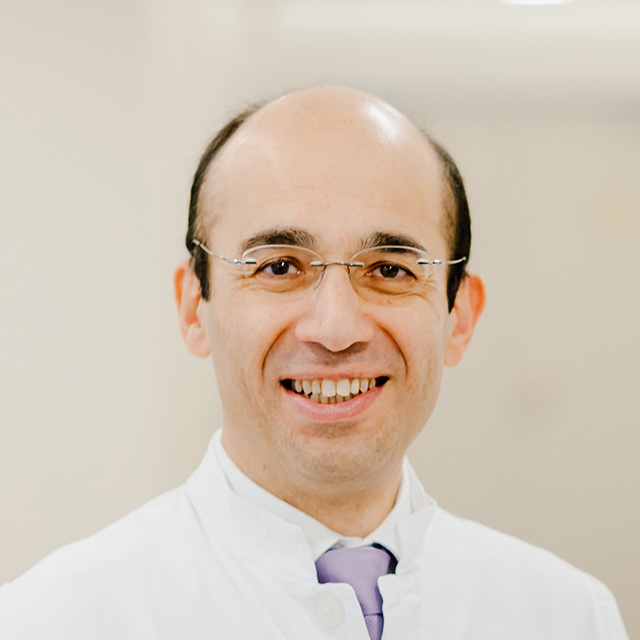
Univ. Doz. Dr Rafic Kuzbari
Specialist in Plastic, Aesthetic and Reconstructive Surgery
Over 30 years of experience; internationally regarded as an expert in revision procedures and complex rhinoplasty.
-
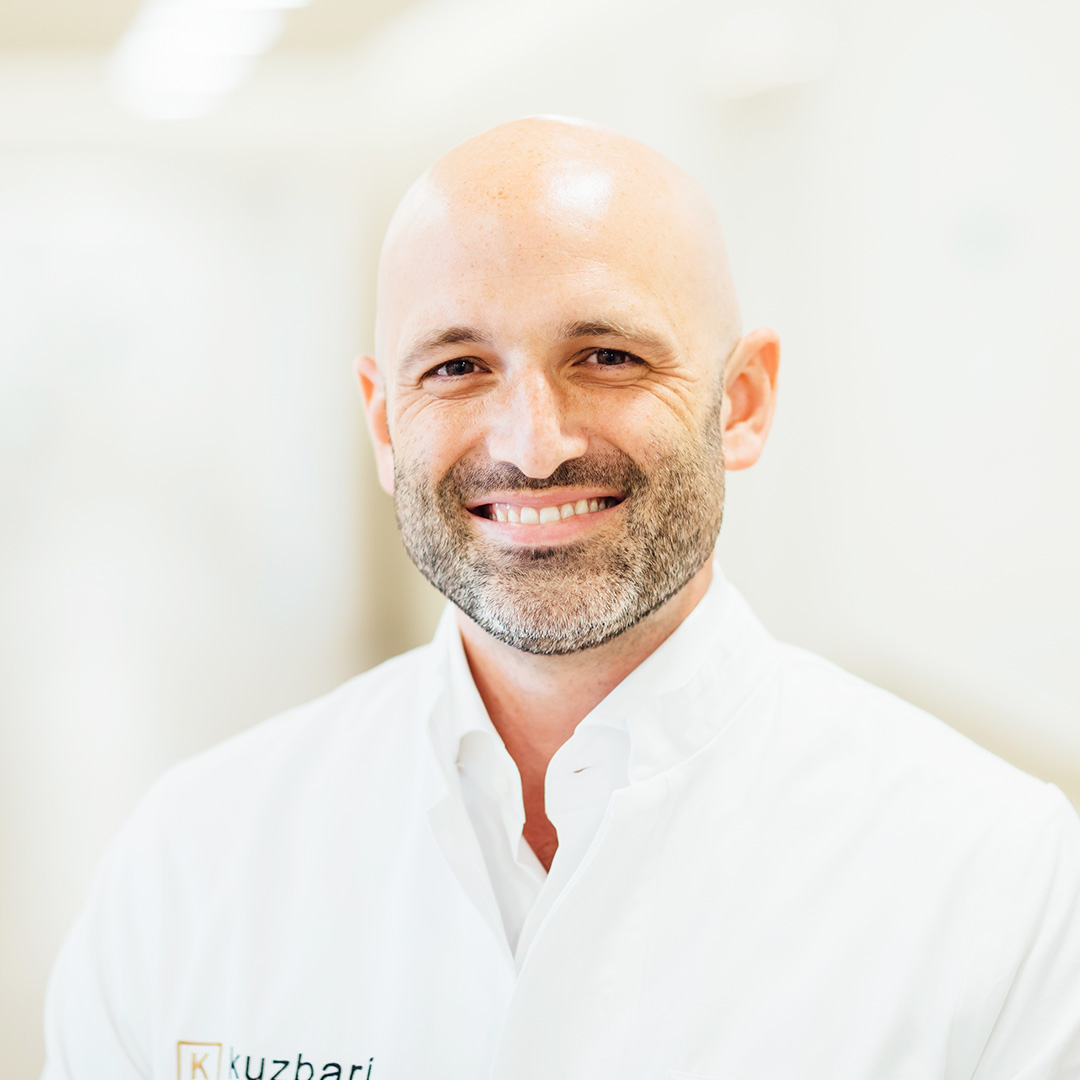
Dr Christoph Grill
Specialist in Plastic, Aesthetic and Reconstructive Surgery
A specialist in aesthetic and functional rhinoplasty with a focus on natural results.
-

DDr. Jessica Wittmann
Specialist in Oral and Maxillofacial Surgery
Combines the surgical and the aesthetic eye: precise nasal surgery with a sense for harmonious proportions.
Answers about nostril correction
Is a nostril correction painful?
After the procedure our patients usually report a slight feeling of tightness or pressure — both easily treated with painkillers.
How long does healing take?
You are fit for work after 3 – 7 days and presentable in company after 1 – 3 weeks; after 4 – 6 weeks you can take up sport and strenuous activities again. The final result is visible after 6 – 12 months.
Will there be scars?
The incisions are usually placed at the base of the nostrils and are mostly barely visible once healed. Where possible, scar-sparing techniques are used.
Can breathing be affected?
Our specialists take care to preserve the function of the nose. The nostril correction is carried out in such a way that the airways are not restricted.
How much does a nostril correction cost?
The cost depends on the extent of the procedure. At the first consultation you receive a transparent quotation.
Is the result permanent?
Yes, the results are permanent. Minimal changes through the ageing process are possible, but they barely affect the result.
How much narrower can my alar base become?
As a rule it is a matter of a few millimetres per side — and that already changes the frontal impression noticeably. More is rarely sensible, because the nasal openings have to remain large enough for breathing not to suffer. How much is possible and sensible in your case is something we will show you in the 3D simulation from the frontal view and from below.
Will my nostril openings become smaller as a result?
With a narrowing of the base the size of the nasal opening changes slightly; with an adjustment of the alar arch, considerably less. That is precisely why we choose the technique according to the findings: if the nostrils flare sideways, we change the arch and not the base, so that the opening is preserved.
Can the correction of the nostrils be carried out on its own?
Yes, as a procedure of its own this is possible if it really is only the alar base that bothers you. Often, however, the wide impression is due to the nasal tip or the middle third of the nose — in which case an isolated correction of the base would be the wrong course. We clarify this at the examination, and we will tell you openly.
Why is the correction of the nostrils often carried out as the last step?
Because the need only becomes apparent once the nose bridge and the nasal tip have taken on their new form. A raised or narrowed tip makes the base look wider from the front, even though nothing about it has changed. That is why we often only decide on this fine adjustment in the course of the operation.
How noticeable is the scar really?
The incision lies in the natural fold in which the nostril merges into the cheek and the upper lip — where a shadow falls in any case. In the first weeks a fine reddish line is visible; over months it fades, and after about a year it is as a rule barely recognisable. We do not promise that it will become invisible — but with a multi-layered, tension-free closure we do everything to keep it inconspicuous.
What can I do myself for a good scar?
The most important point is consistent sun protection in the first months, because fresh scars can darken under UV light. In addition: do not pull at the suture line, do not scratch, and go without nicotine. Everything else — care, massage, timing — we will give you guidance on at the follow-up appointments.
Is there a correction without an external scar?
Yes, for certain findings. A thick alar wall is thinned from the inside, and suture techniques on the cartilages and support of a retracted alar rim likewise leave no visible scar. Where an external suture is not necessary, we avoid it.
My nostrils collapse when I breathe in. Does a correction of the nostrils help?
Not by narrowing — that would make it worse. In this case there is a weak external nasal valve, and the solution is support rather than removal: fine strips of cartilage hold the alar rim outwards. The same measure improves form and breathing in one step. A good self-test: if you pull the nostril outwards with a finger and can breathe better immediately, do mention it to us.
Will my smile change?
When you smile, small muscles pull the nostrils outwards and upwards — with flaring nostrils this is particularly noticeable. After a correction this movement is usually less pronounced. The smile itself does not change; we do, however, expressly assess it at the consultation as well, because a nose looks different in a moving face than in a photograph.
I only find my nose too wide from the front; in profile it suits me. Is that common?
Very common — and it is the classic finding for this page. In profile the width of the alar base is practically impossible to make out, which is why it goes unconsidered in any planning that looks only at the profile. Our 3D simulation expressly shows the frontal view and the view from below as well.
Can nostrils that have already been operated on still be corrected?
Yes. Four in ten nose operations at the Kuzbari Centre are revision rhinoplasties on a nose that has already been operated on. Such procedures call for particular experience: the tissue is scarred, cartilage is sometimes missing, and the starting point is different for every patient. At the alar base this usually means supporting and building up rather than taking away.
Millimetre work that is meant to last.
An initial consultation with three-dimensional simulation, a technique that suits your nose, and an operating time that follows the findings — this effort is the reason why rhinoplasty with us has its price. It is also the reason why the result is meant to hold: for a lifetime, not for a few years.
Book your rhinoplasty consultation now
Our rhinoplasty specialists
Univ. Doz. Dr Rafic Kuzbari
Specialist in Plastic, Aesthetic and Reconstructive Surgery
Dr Christoph Grill
Specialist in Plastic, Aesthetic and Reconstructive Surgery
DDr. Jessica Wittmann
Specialist in Oral and Maxillofacial Surgery