Straightening a crooked nose.
A nose that deviates from the midline stands out particularly in the face — from the front as well as in profile. A crooked nose can be congenital, arise from an accident or remain after previous surgery. It frequently goes together with a deviated septum and thus with obstructed breathing. A crooked nose correction brings form and function back into harmony.

When the nose does not follow the midline.
A crooked nose is one whose axis deviates from the middle of the face. The deviation can affect the bony bridge, the cartilaginous part or the nasal tip — often a combination of these. Because the nose sits at the centre of the face, even a small deviation is clearly noticeable.
The causes are varied: some crooked noses are constitutional, others arise from a blow or a fall, others again remain after previous surgery. Very often the septum is deviated at the same time — which affects not only the shape but also nasal breathing.
Too crooked, too broad, too pointed?
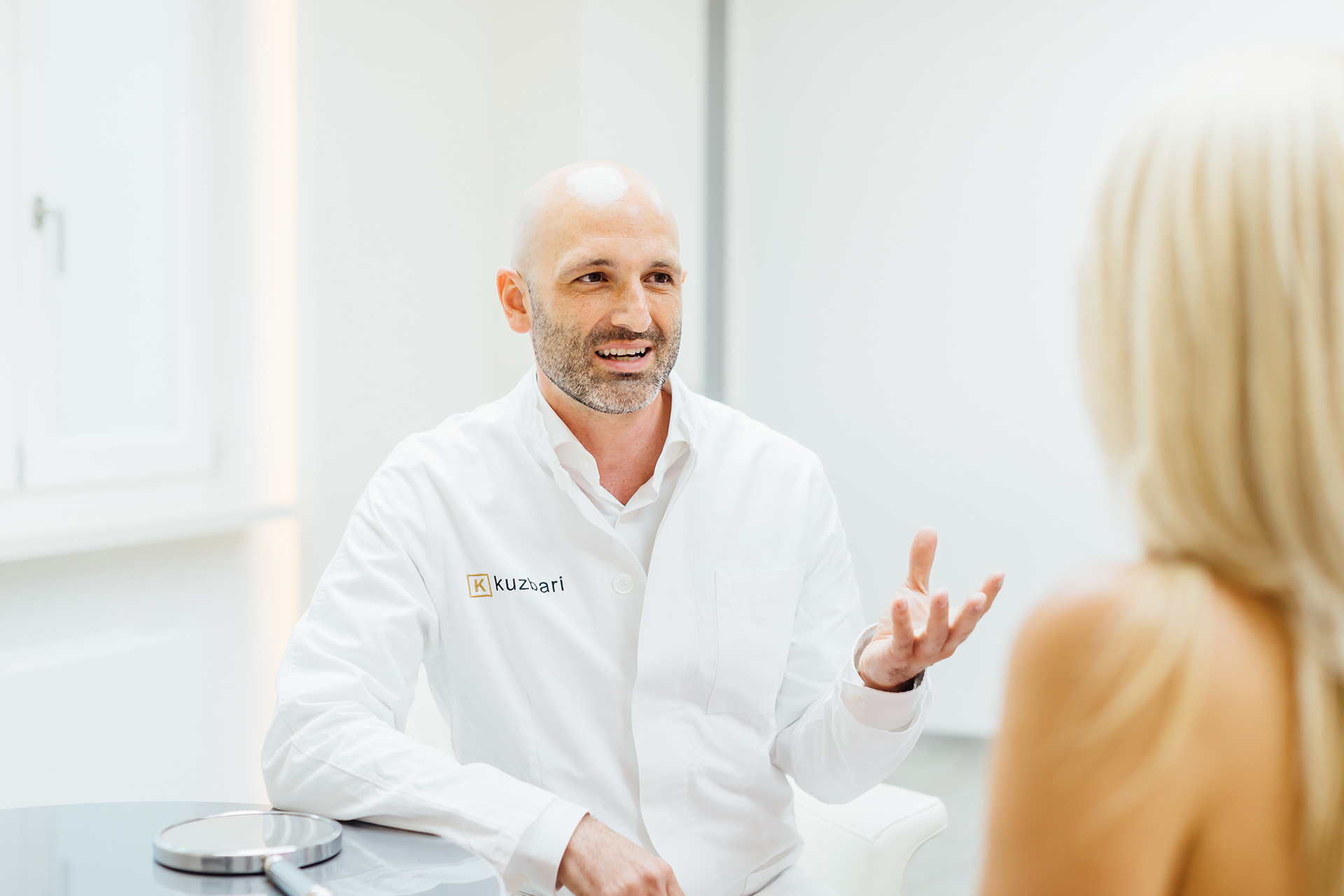
DDr. Jessica Wittmann explains the most common irregularities in the shape of the nose — among them the crooked nose — and how they can be corrected.

Not every crooked nose is crooked in the same way
The form of the deviation determines the technique. Which one applies in your case is established during the examination — and we show it to you in the frontal view of the 3D simulation.
-
Deviation to one side
The entire axis of the nose sits at an angle to the midline of the face, yet runs straight in itself. Usually the two nasal bones are displaced against one another — typical after a blow from the side. Straightening is achieved through precise cuts in the nasal bone, which allow the bony base to be aligned centrally again.
-
C-shape
The nose describes a single curve: it deviates to one side in the middle third and returns towards the tip. Almost always there is a deviated nasal septum behind this, pushing the nose bridge to one side. Without straightening the septum, a correction here would stop halfway.
-
S-shape
Two opposing curves — the most demanding variant. The bony and the cartilaginous section deviate in different directions. The correction is carried out on several levels and then requires consistent stabilisation, so that the nose does not draw back into its accustomed curve.
-
Crooked nasal tip
The nose bridge is straight, but the tip deviates to one side or the columella sits at an angle. The cause lies in differently shaped alar cartilages, or in a nasal septum whose front edge has moved off centre. The correction is carried out at the tip itself, not at the bridge.
-
Crookedness after a fracture
Bone edges have healed together out of alignment, frequently alongside a hump and a deviated nasal septum. All three components are corrected in a single procedure — done separately it would mean more effort for you and a poorer result.
-
Crookedness after previous surgery
Scarred tissue pulls asymmetrically and can draw a previously straight nose to one side over the course of months. Here it is less a matter of removing tissue than of building up, and of a stabilisation that has to be stronger than the pull of the scar tissue. Four in ten nose operations at our centre are revision rhinoplasties.
The nasal septum is almost always the driving force.
The nasal septum is a plate of cartilage and bone standing vertically in the middle of the nose. It separates the two airways — and it supports the nose bridge from within. This second detail explains why a crooked nose is so rarely a matter of shape alone.
Cartilage is under tension. If the nasal septum is deviated, it pushes the nose bridge continuously to one side — like a bent pole pulling a tent out of true. Straightening only the outer nose and leaving the septum untouched means working against that tension. Over the months it frequently reasserts itself. This is precisely why correcting a crooked nose without treating the nasal septum is an uncertain undertaking.
Then there is function. A deviated nasal septum narrows one side of the nose and impairs breathing — often so gradually that those affected consider it normal and only notice after the operation how much air had been missing. The two therefore belong together: we always plan the correction of a crooked nose starting from the nasal septum.
That does not mean the septum is simply removed. It is the supporting structure of the nose; a marginal strip always remains in place. Straightening is achieved by releasing the tension in a targeted way, by realignment and, where necessary, by supporting elements made from the cartilage obtained in the process.
Crooked nose correction at a glance
| The aim of the operation | Straightening and evening out the nose, restoring free breathing |
|---|---|
| Duration of surgery | 1 – 4 hours |
| Fit for work | After 3 – 7 days |
| Presentable again | After 1 – 3 weeks |
| Recovery, sport | 4 – 6 weeks |
| Final result | 6 – 12 months in rare cases later still |
| Specialists | Kuzbari, Grill, Wittmann |
A crooked nose is often a question of breathing too.
Because a crooked nose so frequently goes together with a deviated septum, we plan every procedure from the function outwards. The narrow points of the nose are specifically taken into account and the straightened structure stabilised with the body's own cartilage where necessary — so that the nose not only looks straight but stays straight for good and you can breathe freely.
Nasal surgery is the main focus of Univ. Doz. Dr Rafic Kuzbari, Dr Christoph Grill and DDr. Jessica Wittmann. Straightening a crooked nose in particular is one of the more demanding corrections — experience and precision are decisive here.
Elisabeth's new nose after an accident
For over 20 years Elisabeth suffered from her nose after an accident — today she enjoys looking in the mirror again.

Straightening while preserving the nose bridge — and keeping it stable.
We work extensively with the modern nose-bridge-preserving technique, known as dorsal preservation, and with hybrid techniques — not exclusively with the traditional structural septorhinoplasty. The natural nose bridge is preserved rather than being removed and rebuilt. The result looks particularly natural, it is stable in the long term, and the risk of later irregularities on the nose bridge is reduced — which counts above all with thin skin. Certain forms of crookedness also recur less often.
That last point is the decisive one for this page. In the classical approach the nose bridge is opened and then reassembled; the straightened line is a reconstructed line that has to be held against the pull of the surrounding tissue. With the nose-bridge-preserving technique the bridge remains intact as a naturally grown unit and is aligned as a whole — there is no join at which a deviation could reappear.
This does not make the technique superior in general. With very pronounced S-shapes, with a severely deformed nasal septum or where material is lacking after previous surgery, a structural reconstruction is the better solution. Often the best route is a hybrid technique: part of the nasal bridge is preserved while other structures are modified in a targeted way — the advantages of dorsal preservation remain, with a wider range of application.
Whichever route is chosen, the correction of a crooked nose usually involves these steps: the nasal septum is released from its tension and realigned. The bony base is centred through precise cuts in the nasal bone — using the piezotome, the ultrasound instrument that works on bone without injuring soft tissue, mucous membrane and blood vessels; control over the line of the fracture is considerably greater than with chisel and saw. The middle third of the nose is held with narrow strips of cartilage, often of differing thickness because they have to compensate for an asymmetry. And the nasal tip is stabilised with cartilage support, so that it does not return to its old direction.
A straight nose in an asymmetrical face.
No face is symmetrical. One eyebrow sits higher, the cheeks differ in fullness, the jaw is shifted to one side — this applies to virtually everyone and nobody notices it in everyday life. For the correction of a crooked nose it has one important consequence.
If the midline of the face is not itself straight, a nose placed exactly in the centre can still look crooked in that face — while a minimally offset nose looks perfectly straight. We therefore align the nose not to a ruler but to the face it sits in: to the position of the eyes, the line of the forehead and chin, the midline of the lips.
And we say beforehand if part of the crooked impression does not come from the nose. That is not a limitation of the result but the precondition for your being satisfied afterwards. In the 3D simulation we show you your face with the planned nose — and with it, which part of the asymmetry will remain.
What we do not promise: a perfectly symmetrical nose. What we aim for: a nose that looks straight in the face and still sits straight there in ten years' time.
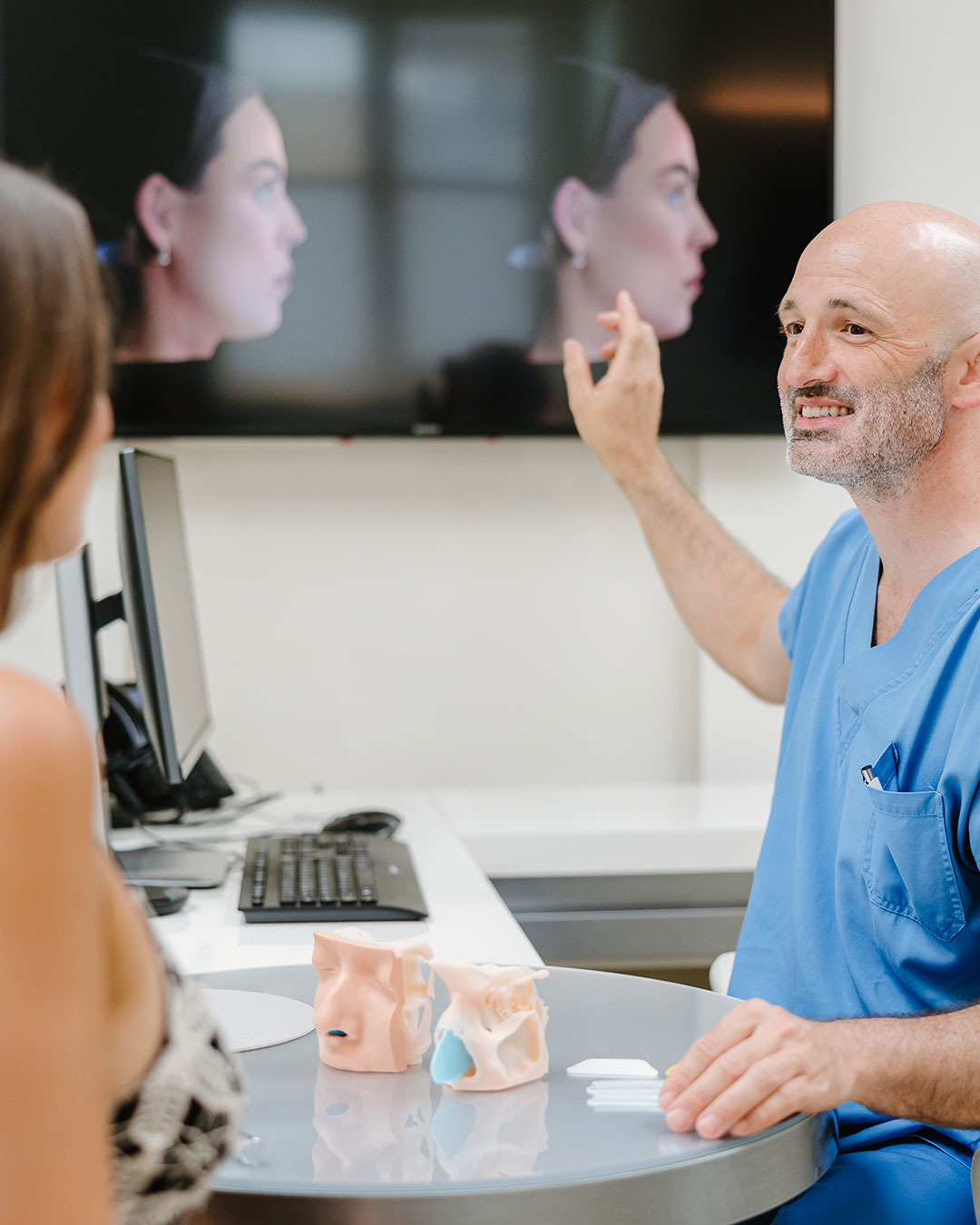
Your crooked nose correction step by step
-
01
The first consultation
Getting to know each other personally, a detailed analysis of form and breathing, a 3D simulation with Vectra technology, before-and-after comparisons and a thorough explanation of the process.
-
02
Preparation
Medical examinations, an anaesthetic consultation, individual surgical planning on the basis of the 3D simulation.
-
03
The operation
The procedure in one of our modern operating theatres. Bony and cartilaginous parts are straightened and evened out, a deviated septum corrected at the same time where necessary and stabilised with the body's own cartilage.
-
04
Aftercare & healing
The recovery room, a follow-up conversation, discharge with your surgeon's emergency number, regular check-ups until the final result after 6 – 12 months.
What you receive with us
-
Natural results
A straight, symmetrical nose that complements your features without looking artificial.
-
Form and function
We straighten the nose and keep free breathing in view throughout.
-
Experienced specialists
Three specialists focused exclusively on facial surgery: Univ. Doz. Dr Kuzbari, Dr Grill and DDr. Wittmann.
-
State-of-the-art technology
Vectra 3D simulation and our own high-tech operating theatres.
-
Everything under one roof
Consultation, operation and aftercare — all in one place.
-
Recognised quality
Multiple DocFinder Patients' Choice Awards.
„Straightening a crooked nose in particular calls for experience — we take the time to bring the shape and the breathing into harmony together.“
When the nose finally sits straight in the face.
A straight nose changes how a face comes across — and how comfortable you feel in it. Many patients describe how, after the correction, their nose is no longer “the first thing” they notice in the mirror.
With a crooked nose there is almost always a second point, rarely discussed beforehand: breathing. Anyone who has drawn air through only one side for years often realises only after healing how much that affected their sleep, their exercise and their concentration.
This natural, coherent result is exactly what we set out to achieve — a nose that sits straight in the face, lets air through freely and still sits the same way in ten years.
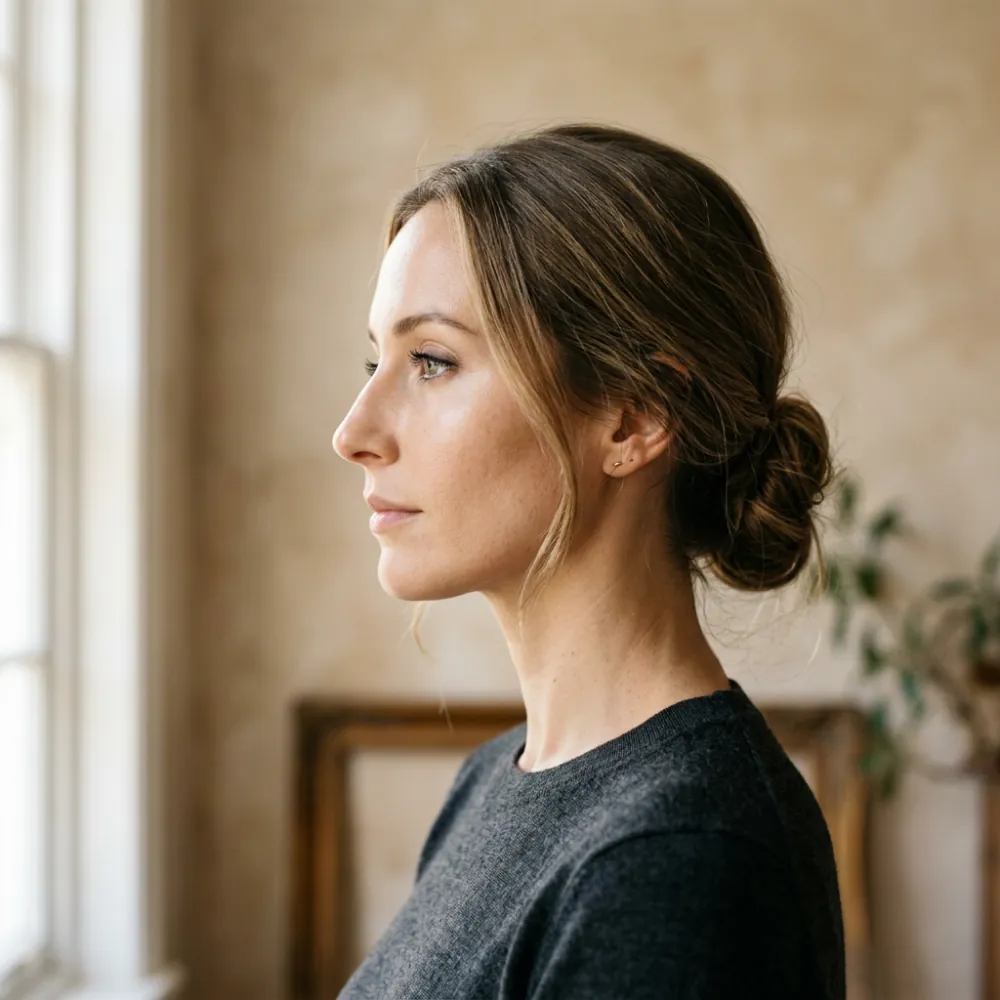
Why many people only realise after the operation how much air had been missing.
A deviated nasal septum almost always narrows one side of the nose. Because this has usually been the case since childhood, those affected regard it as normal — they have never known anything else. Typical signs are: breathing through the mouth at night, waking up with a dry throat, running out of breath sooner during exercise, constantly using decongestant nasal sprays, always getting too little air on the same side.
During the examination we therefore look at the nose from the inside and assess the narrow points individually: the nasal septum, the turbinates, the internal nasal valve between the nasal septum and the upper lateral cartilages, and the external nasal valve at the nostrils. Each of these points is treated differently, and with a crooked nose several are frequently affected at once.
For you this has a practical advantage: shape and breathing can be corrected in a single procedure — one anaesthetic, one healing phase. What does not belong to the nasal skeleton, however, does not belong to our field either: allergies and disorders of the sinuses are investigated together with an ENT specialist, so that you do not expect an operation to improve something that has a different cause.
Straightening takes time — and we take it.
A rhinoplasty with us takes one to four hours. That range is deliberate: we operate in our own operating theatres and therefore without time pressure — for as long as it takes until every detail is right. How long a procedure takes is decided by the findings, not by the schedule.
The crooked nose is among the findings that tend towards the upper end. Straightening a nasal septum is millimetre work on a material that is under tension and keeps striving back towards its old form. The bony base has to be aligned so that both sides match. And then comes the stabilisation, which frequently has to be built asymmetrically because the two sides need differing amounts of counter-support.
Between these steps we check again and again: from the front, from the side, from below. These loops of checking are the reason we do not save the last half hour — with a crooked nose it decides whether the nose looks straight or almost straight.
What becomes visible, and when, after a straightening
A crooked nose calls for a particular amount of patience: only once the swelling has subsided symmetrically can it be judged whether the nose sits straight.
-
First week
An external splint, internal splints to protect the straightened nasal septum. Breathing is severely restricted by the swelling of the mucous membrane — this has nothing to do with the result of the straightening. After about a week we remove the splints and sutures; nasal breathing then often improves markedly within a few days.
-
Weeks 2 to 4
The nose can now be seen to be straight, but the swelling is rarely distributed evenly — frequently the side on which more work was done is the more swollen one. In this phase a nose can look slightly crooked even though it sits straight. We say so beforehand, so that this impression does not worry anyone.
-
Months 2 to 4
The swelling evens out and the axis becomes clearly assessable. At the check-ups we compare the frontal view with the photographic documentation and the 3D plan.
-
Month 4 to 8
The phase in which scar tissue contracts and in which it becomes apparent whether the stabilisation holds. That is why we continue to see you regularly during this period — not because anything is to be expected, but because we want to accompany the course of healing.
-
Month 8 to 12
The final result. The axis is settled, breathing is stable, sensation in the skin of the nose has returned. After a revision rhinoplasty or with pronounced S-shapes this can extend to around 18 months.
Three points we raise before every straightening.
A crooked nose is rarely crooked only on the outside. What you see in the mirror is the consequence — the cause usually lies within, in a nasal septum that is under tension. Straightening a crooked nose is therefore almost always a larger procedure than a purely aesthetic reshaping, even when the visible deviation appears small.
Breathing often improves more than expected. Many of those affected consider their restricted nasal breathing normal, because they have known nothing else since childhood. The difference after healing is then frequently the part of the result that is talked about most — more than the straight nose itself.
Patience is part of the procedure. With no other correction is the interim state as uninformative as with the crooked nose, because the swelling subsides unevenly. We therefore accompany you over months with regular check-ups and compare the axis with the photographic documentation each time.
Where crookedness comes from — and why that changes the planning.
Constitutional. The nose does not grow entirely evenly. If the nasal septum grows faster than the frame it sits in, it gives way — and takes the nose bridge with it. Crookedness of this kind usually shows itself in puberty, when the nose goes through its last growth spurt. The tissue is unscarred, the structure intact, and the planning correspondingly predictable.
After an accident. A blow from the side displaces the nasal bones against one another; if they heal together out of alignment, the deviation remains. Very often the nasal septum has been injured as well — it buckles with the same impact and is thereafter part of the reason for the crookedness and for the restricted breathing. Many broken noses from childhood go unnoticed and are taken for a harmless knock; the nose then continues to grow crookedly. For the operation this is no disadvantage — what matters is today's findings.
After previous surgery. Scar tissue contracts over months, and it rarely does so evenly. A nose that sat straight after the procedure can thereby drift to one side over the course of a year. Here it is less a matter of removing tissue than of building up, and of a stabilisation that is stronger than the pull of the scar tissue. Four in ten nose operations at the Kuzbari Centre are revision rhinoplasties on a nose that has already been operated on; we take such cases on deliberately.
Why this counts for the planning: a constitutional crooked nose needs above all a clean straightening. A nose after a fracture additionally needs the bony base to be aligned. And a nose after previous surgery needs more material, more stability and more patience during healing — here the final result tends to be reached at twelve to eighteen months.
When a straightening makes sense.
After a fresh fracture there is a short window of a few days in which the bone can be realigned without a major procedure. Once it has passed, one waits until everything has healed and then corrects the crookedness, the nasal septum and any hump afterwards in a single planned procedure. That is no disadvantage: a planned correction generally leads to a more precise result than an immediate measure.
Age. For aesthetic indications we operate once facial growth is complete — in women generally from around the age of 16, in men somewhat later. If a marked obstruction of breathing is the main concern, a correction may make sense earlier; we then discuss this on an individual basis. There is no upper age limit.
Calendar. Allow for two to three weeks in which you do not have to be in the public eye. And expect the axis to be reliably assessable only after some months, because the swelling subsides unevenly at first. If you are working towards a fixed date, allow generously — at least eight months.
Rhinoplasty, 32
The patient would like a correction of the arched profile of her nose. Instead she would like a gentle curve to the bridge. The prominent, broad nasal tip also bothers her. She has a deviated septum with obstructed nasal breathing.
Operation performed: Open nose surgery with straightening of the nasal septum (open septorhinoplasty).


For your consultation
Questions specifically about the crooked nose
- Is my nose offset to one side, C-shaped or S-shaped?
- Does the deviation involve the bone, the cartilage or both?
- Will my nasal septum be straightened as well — and why is that necessary?
- How is the old curvature prevented from reasserting itself?
- Will the nose bridge be aligned in a preserving manner, or opened and reassembled?
- What is used to work on the bone?
- How straight is the midline of my face in the first place?
- Which part of the crooked impression will remain, because it does not come from the nose?
- Will my breathing improve — and which narrow point will be worked on?
- When can it be judged whether the nose sits straight?
What often plays a part with a crooked nose
-

Functional correction
Nasal septum, turbinates and nasal valve — when breathing is the main concern.
Learn more → -
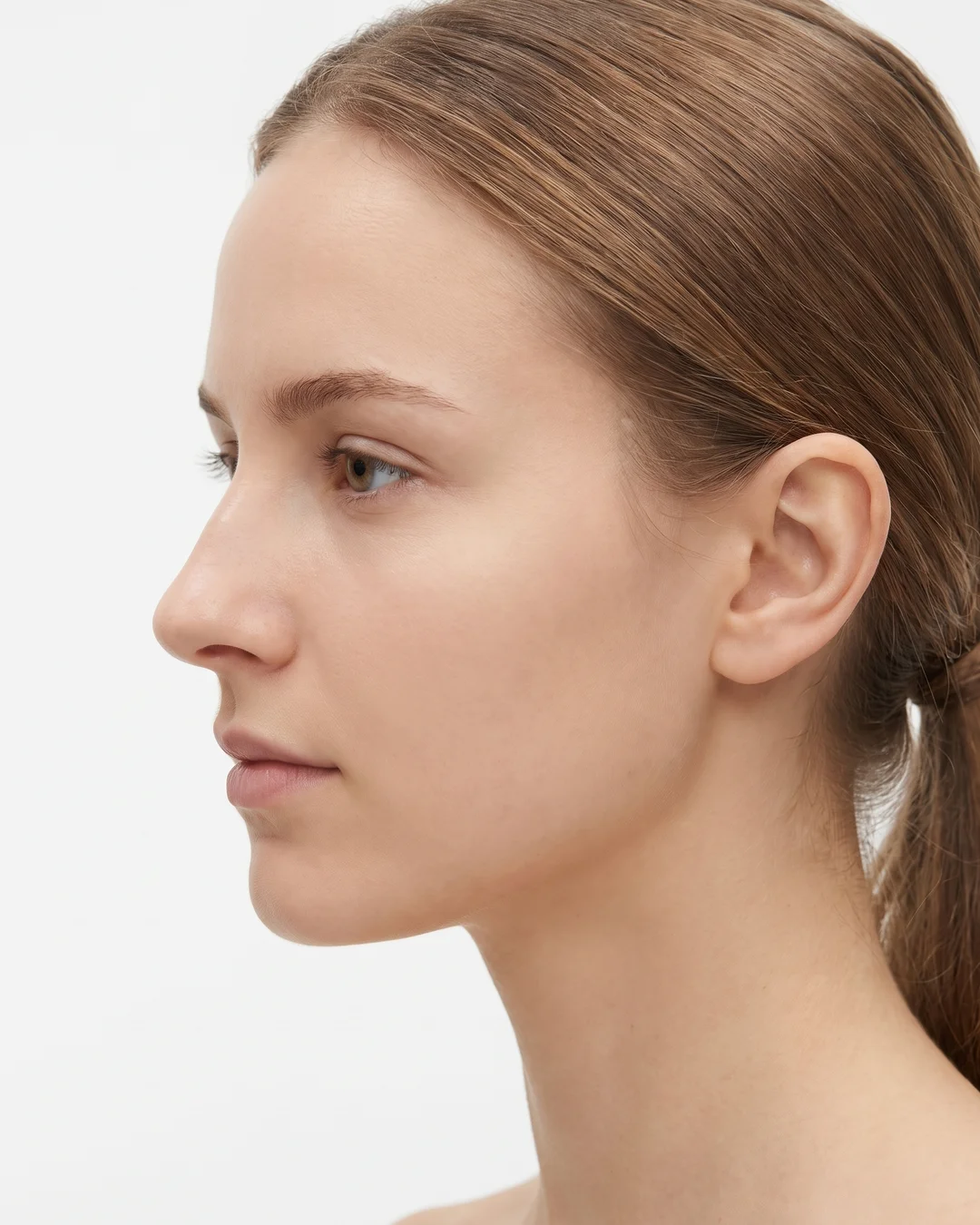
Nasal hump correction
After a fracture, crookedness and a hump are usually the same subject.
Learn more → -
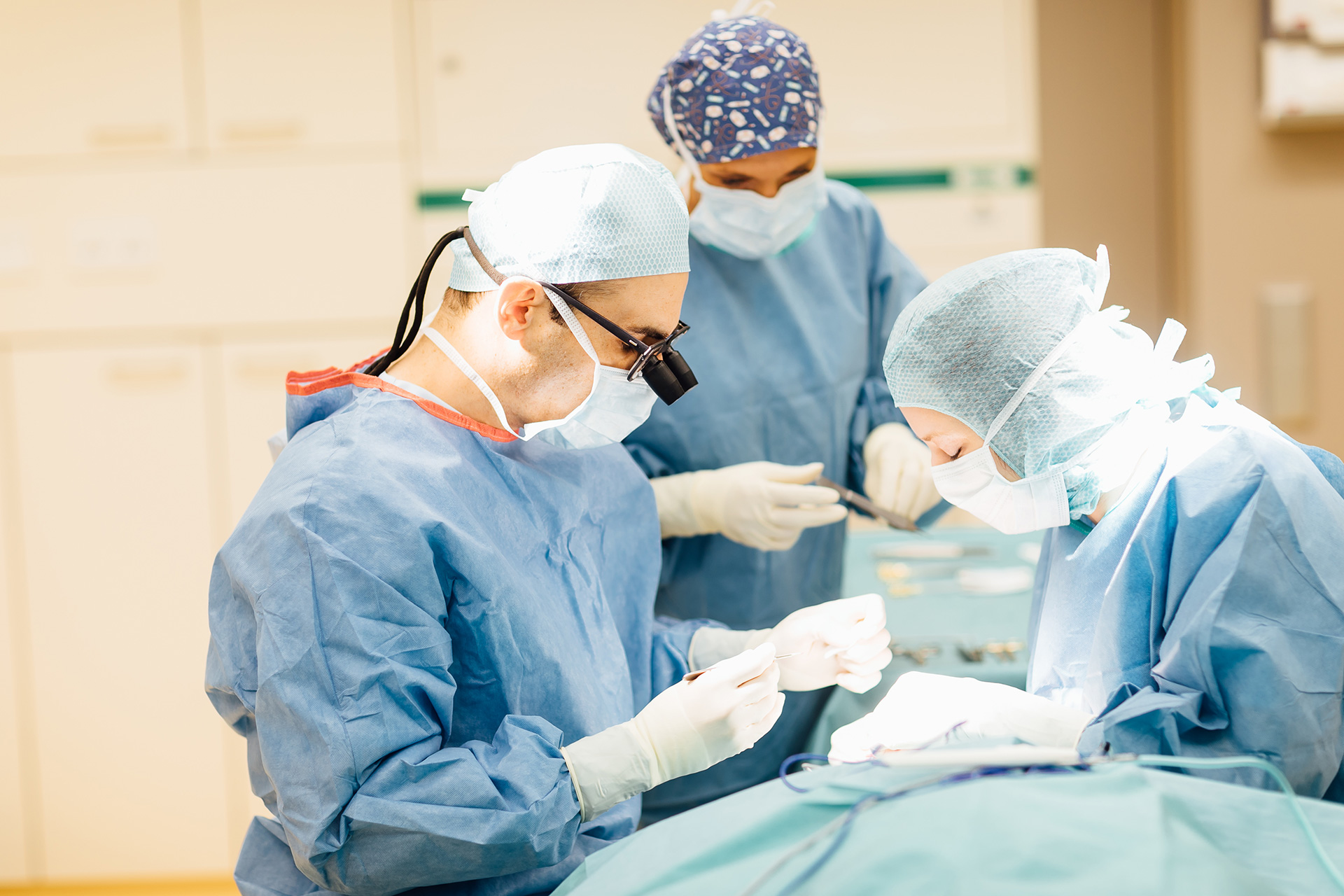
Surgical methods
Nose-bridge-preserving, structural, hybrid — which technique is used when.
Learn more →
Your crooked nose correction from beginning to end
Before the operation
- Initial consultation of around an hour, without obligation
- Examination of the nose from the outside and from the inside
- Assessment of the narrow points: nasal septum, turbinates, nasal valves
- Vectra 3D simulation from three perspectives
- Written cost estimate
- Informed-consent consultation and pre-anaesthetic assessment
On the day of the operation
- Our own operating theatre at the Kuzbari Centre
- One to four hours — according to the findings, not to a plan
- Straightening of the nasal septum with the marginal strip preserved
- Piezotome for aligning the bony base
- Stabilisation with your own cartilage
- One night as an inpatient with round-the-clock care
After the operation
- A follow-up talk on the morning after the operation
- The mobile number of your surgeon
- Removal of splints and sutures after about a week
- All follow-up appointments up to the final result included
- Comparison of the axis with the photographic documentation and the 3D plan
Three surgeons for your crooked nose correction
-
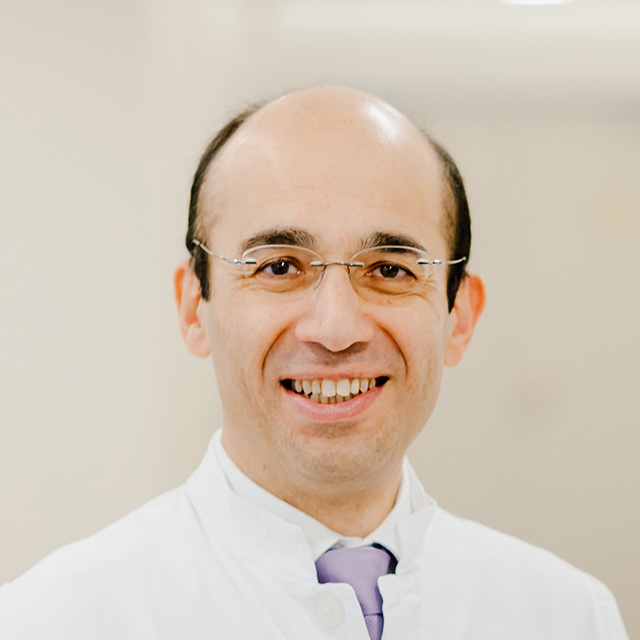
Univ. Doz. Dr Rafic Kuzbari
Specialist in Plastic, Aesthetic and Reconstructive Surgery
Over 30 years of experience; internationally regarded as an expert in revision procedures and complex rhinoplasty.
-
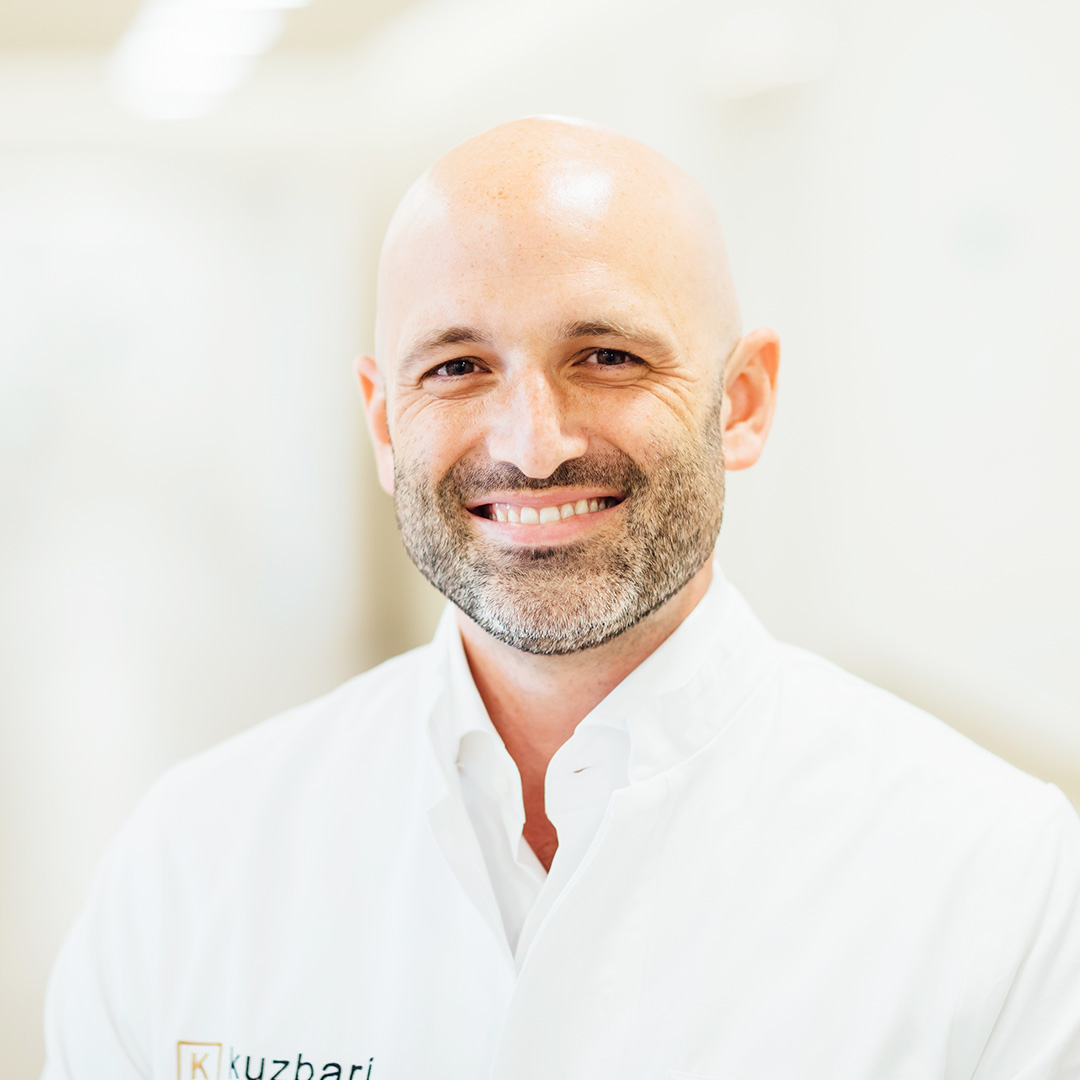
Dr Christoph Grill
Specialist in Plastic, Aesthetic and Reconstructive Surgery
A specialist in aesthetic and functional rhinoplasty with a focus on natural results.
-

DDr. Jessica Wittmann
Specialist in Oral and Maxillofacial Surgery
Combines the surgical and the aesthetic eye: precise nasal surgery with a sense for harmonious proportions.
Answers about crooked nose correction
Can every crooked nose be straightened completely?
The aim is always a nose that is as straight and symmetrical as possible. How far a crooked nose can be straightened depends on the cause and on the individual anatomy — you receive a realistic assessment at the first consultation, supported by the 3D simulation.
Is the breathing improved too?
A crooked nose frequently goes together with a deviated septum. Our specialists take the function of the nose into account and correct the narrow points at the same time where necessary, so that you can breathe freely after the operation.
Is a crooked nose correction painful?
During the operation you feel nothing thanks to the anaesthesia. After the procedure our patients usually report only mild pain — easily treated with painkillers.
How long does healing take?
You are fit for work after 3 – 7 days and presentable in company after 1 – 3 weeks; after 4 – 6 weeks you can take up sport again. The final result is visible after 6 – 12 months, in rare cases only after 18 months.
What does a crooked nose correction cost?
The cost depends on the extent of the procedure. At the first consultation you receive a transparent quotation.
Does the result stay straight permanently?
Where necessary, the straightened structure is stabilised with your own cartilage in order to secure the result in the long term. Slight changes due to natural ageing are possible, but they scarcely affect the result. The nose-bridge-preserving technique also helps: because the nose bridge is aligned as a naturally grown unit, certain forms of crookedness recur less often.
Why does the nasal septum have to be operated on as well?
Because in the great majority of cases it is the driving force behind the crookedness. Deviated cartilage is under tension and pushes the nose bridge continuously to one side. If only the outer nose is straightened, that tension frequently reasserts itself over the following months. A supporting marginal strip of the nasal septum always remains in place — it is the support of the nose.
What is the difference between a C-shape and an S-shape?
With the C-shape the nose describes a single curve: it deviates to one side in the middle third and returns towards the tip. With the S-shape there are two opposing curves, and the bony and cartilaginous sections deviate in different directions. The S-shape is the more demanding variant and requires a correction on several levels as well as particularly consistent stabilisation.
Can the nose become crooked again after the operation?
The risk exists above all where the tension in the nasal septum has not been released and the nose has not been sufficiently stabilised — scar tissue pulls over a period of months. We therefore release the tension, realign and support with your own cartilage, frequently asymmetrically, because the two sides need differing amounts of counter-support. And at every check-up we assess the axis against the photographic documentation.
My nose looks crooked two weeks after the operation. Is that a problem?
In this phase the swelling is rarely distributed evenly — usually the side on which more work was done is the more swollen one. As a result a nose can look slightly crooked even though it sits straight. The axis becomes assessable only once the swelling has subsided symmetrically, that is, after several months at the earliest. We say so beforehand, so that this impression does not worry anyone.
My face itself is not symmetrical. Can the nose still be made straight?
No face is symmetrical, and that is entirely normal. If the midline of the face is not itself straight, a nose placed exactly in the centre can still look crooked. We therefore align the nose to the face it sits in — to the eyes, the forehead, the chin and the centre of the lips — and tell you beforehand which part of the crooked impression does not come from the nose.
I broke my nose as a child, but I am not certain. Could that be the cause?
Very often. Broken noses in childhood frequently go unnoticed or are taken for a harmless knock; the nose then continues to grow crookedly. For the operation this is no disadvantage — what matters is today's findings, not the history. Do tell us what you remember all the same: it helps in judging how heavily scarred the tissue might be.
Is straightening the nasal septum alone enough?
If breathing is the only problem and the outer nose sits straight, that can suffice. If the outer nose deviates visibly, a purely internal correction will have no effect on the shape. The reverse applies just as much: a purely aesthetic reshaping without treatment of the nasal septum would be risky with a crooked nose. What is needed in your case is established during the examination.
How transparent are the costs when shape and breathing are corrected together?
After the initial consultation you receive a written cost estimate in which the entire procedure is broken down transparently — all check-up appointments included. On request, payment in instalments over up to five years is possible, at an effective annual interest rate of 9.99%. We tell you openly what makes up this price: individual planning, modern technology and operating time that is governed by the findings.
Is the nasal tip corrected as well?
Frequently, yes. If the nasal tip sits crookedly or the columella is displaced, a correction of the bridge alone would stop halfway. In addition, we stabilise the tip with cartilage support as a matter of principle, so that it does not return to its old direction — this considerably reduces the risk of drooping of the nasal tip over the years, or of it deviating again.
Can a crooked nose that has already been operated on still be straightened?
Yes. Four in ten nose operations at the Kuzbari Centre are revision rhinoplasties on a nose that has already been operated on. Procedures of this kind call for particular experience: the tissue is scarred, cartilage is sometimes lacking, and the starting position is different with every patient. Crookedness after previous surgery is usually a matter of building up and of a stabilisation that is stronger than the pull of the scar tissue.
A nose that stays straight.
An initial consultation with three-dimensional simulation, a technique that suits your nose, and an operating time that follows the findings — this effort is the reason why rhinoplasty with us has its price. It is also the reason why the result is meant to hold: for a lifetime, not for a few years.
Book your rhinoplasty consultation now
Our rhinoplasty specialists
Univ. Doz. Dr Rafic Kuzbari
Specialist in Plastic, Aesthetic and Reconstructive Surgery
Dr Christoph Grill
Specialist in Plastic, Aesthetic and Reconstructive Surgery
DDr. Jessica Wittmann
Specialist in Oral and Maxillofacial Surgery